In this article
Y Combinator’s public directory currently lists 208 companies across the three most recent batches: Summer 2026, Fall 2026, and Winter 2027. We pulled all of them from YC’s own search index on August 11, 2026, classified every company using YC’s own industry taxonomy, and counted what actually got funded rather than what people assume gets funded.
The short version: AI is no longer a category in these batches, it’s the substrate. But the more interesting finding is where that AI is pointed. Robotics and physical-world companies now match AI infrastructure company-for-company, and the median YC company in these batches has two people.
Summary
The dataset: 208 companies from the official YC directory on August 11, 2026. The split is lopsided: Summer 2026 has 197, Fall 2026 has 10, Winter 2027 has 1, because Fall 2026 decisions were not out yet. Read it as a portrait of Summer 2026.
Top areas: Other vertical B2B / AI apps 33, AI infrastructure & data 32, Robotics & physical AI 32, Developer tools & agent tooling 24, Fintech & financial ops 23, Healthcare & bio 19.
Three numbers: 145 of 208 (69.7%) carry an AI tag, 148 (71.2%) are in San Francisco, and the median team size is 2.
Examples: Atomarine, Tensr, Agent FM, Financial Datasets, Trident, Antropi Robotics.
The deal: $125,000 for 7% on a post-money SAFE plus $375,000 on an uncapped MFN SAFE (terms).
First, a caveat about the three batches
If you open the filtered directory link for these three batches, the results are dominated by one batch, and it’s worth understanding why before reading anything into the numbers.
Summer 2026 accounts for 197 of the 208 companies. It is the batch YC’s own site currently marks as the active one. Fall 2026 contributes just 10 companies and Winter 2027 exactly one.
That’s not a signal about batch sizes shrinking or growing. It’s a timing artifact. YC’s application page states that the Fall 2026 batch “will take place from October to December in San Francisco,” that the on-time deadline “was July 27 at 8pm PT,” and that companies applying on time receive decisions by August 28. In other words, on the day we pulled this data, most of the Fall 2026 batch had not been decided yet, let alone published. The ten Fall 2026 companies already listed are early admits who chose to make their profiles public.
So treat everything below as a portrait of Summer 2026, with a small forward-looking sample from Fall 2026 and Winter 2027. Where a company comes from one of the later batches, we say so.
Top areas these startups work in
We assigned each of the 208 companies to exactly one primary theme, using YC’s own industry, subindustry, and tags fields rather than keyword guessing on marketing copy. Each company appears once, so the counts sum to 208.
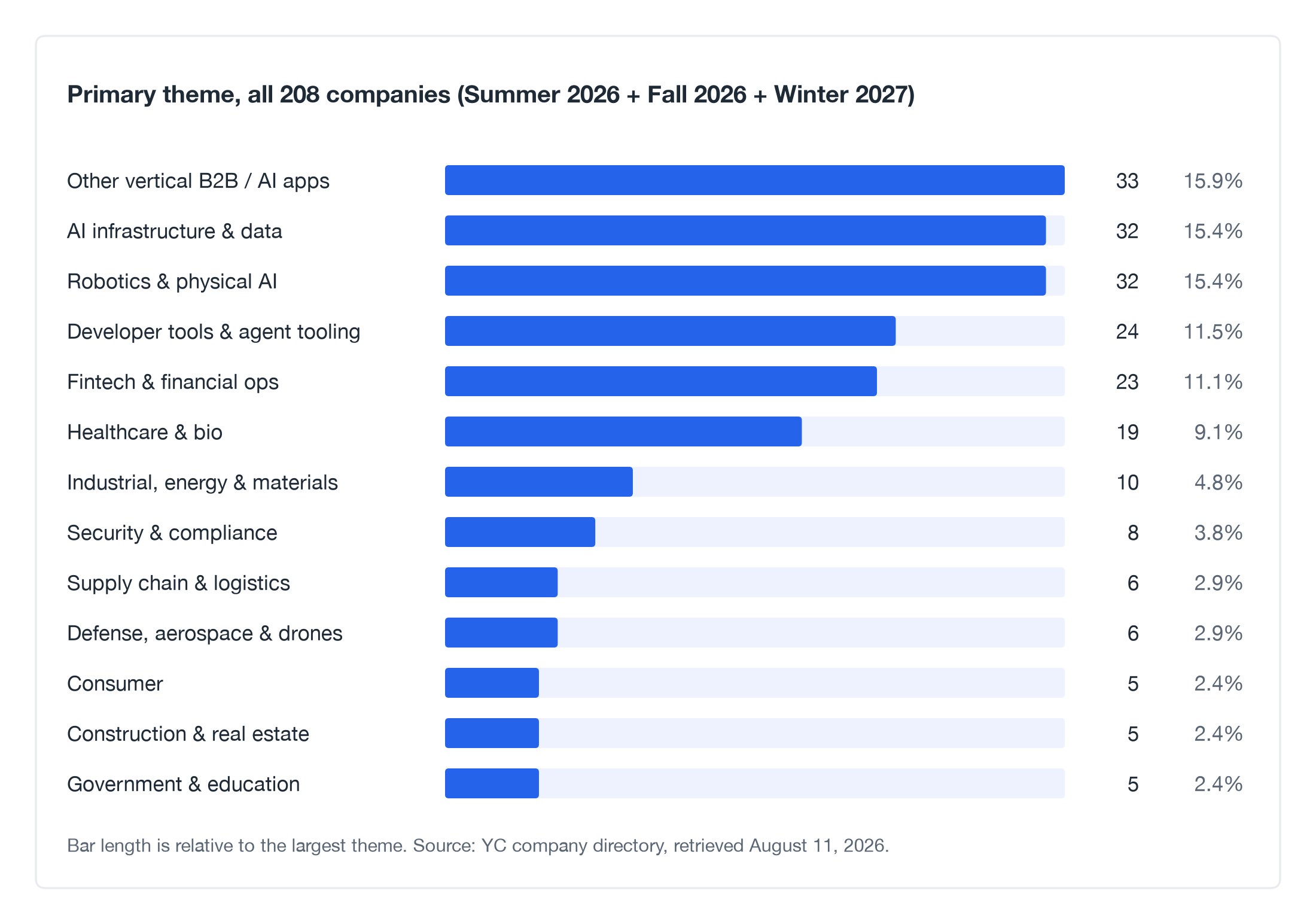
Two things jump out of that chart.
Robotics is now as big as AI infrastructure. Thirty-two companies each. If your mental model of YC is “SaaS with a chatbot bolted on,” it is roughly two years out of date. Nearly one in six companies in these batches builds something that moves, senses, or manufactures in the physical world.
The largest single bucket is a residual. The 33 companies in “Other vertical B2B / AI apps” are the ones that don’t fit a clean technical category because they are AI applied to a specific industry: law firms, restaurants, hotels, auto shops, field service, enterprise IT. This is the “AI-native services company” pattern, and we’ll come back to it because it’s the most under-discussed trend in the batch.
How much of this is actually AI?
145 of 208 companies (69.7%) carry at least one explicitly AI-related tag in YC’s directory. That undercounts reality, because YC’s tags are self-reported and inconsistent. Reading the one-line descriptions, the number of companies where an LLM or a learned model is load-bearing is meaningfully higher.
The more useful signal is what kind of AI. Ten companies tag themselves with Reinforcement Learning, which is unusually high, and they cluster around a specific idea: building RL environments as a product. Standard Machines is doing “RL Environments For Chip Design,” Maingen is doing “RL environments for industrial operations,” and Olam Labs is “building multi-agent simulations for model evals and training.” Selling the training environment rather than the model is a distinctly 2026 position.
The broad themes, with the companies in them
Robotics and physical AI
Thirty-two companies, and the striking thing is how few of them are building a general-purpose humanoid. The batch is mostly picking narrow, unglamorous physical problems and automating them end to end.
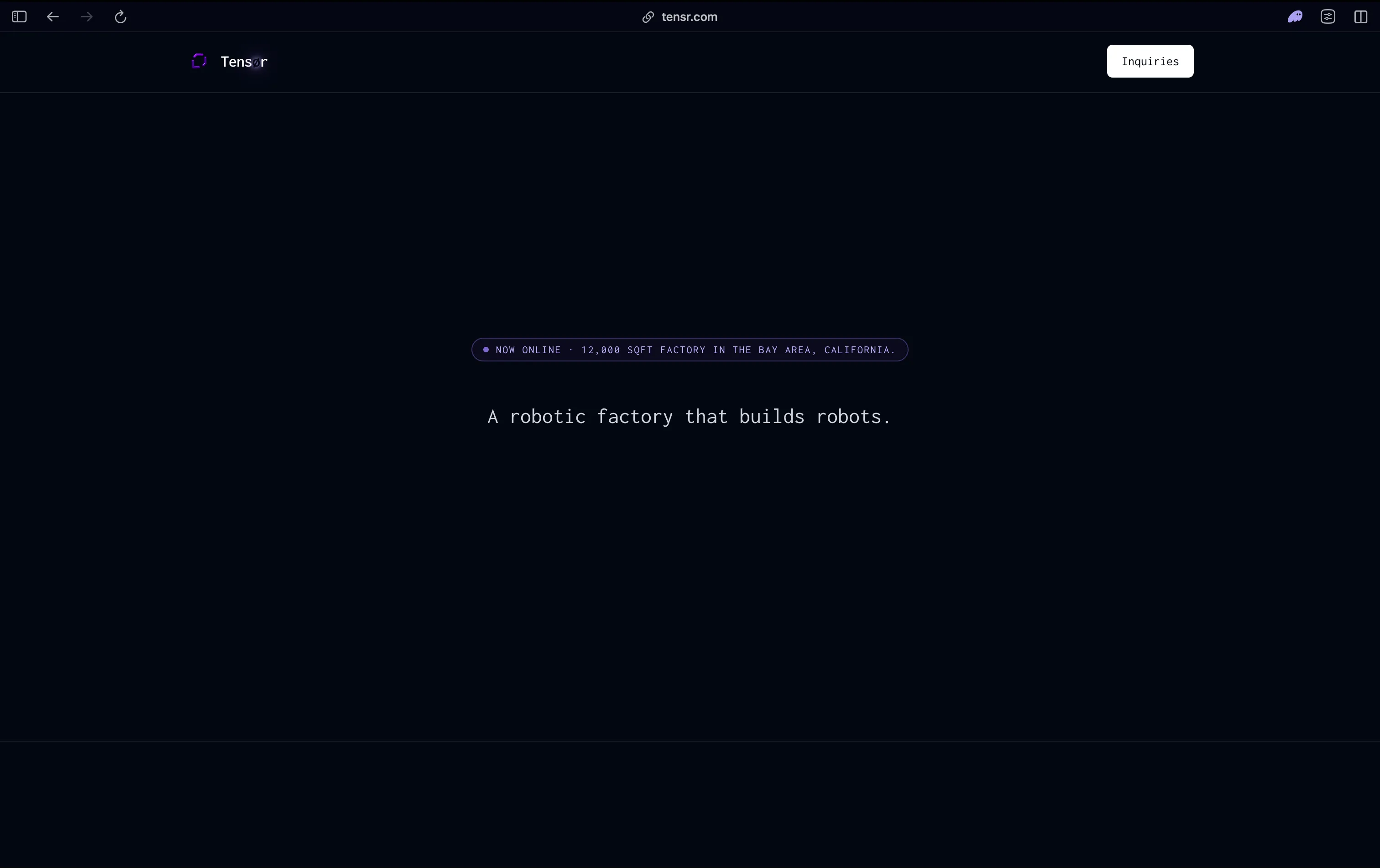
Tensr is the clearest statement of the thesis. Its one-liner is “Fully autonomous robotic factories,” and the homepage is blunter: a robotic factory that builds robots, with a 12,000 sqft facility in the Bay Area already online.
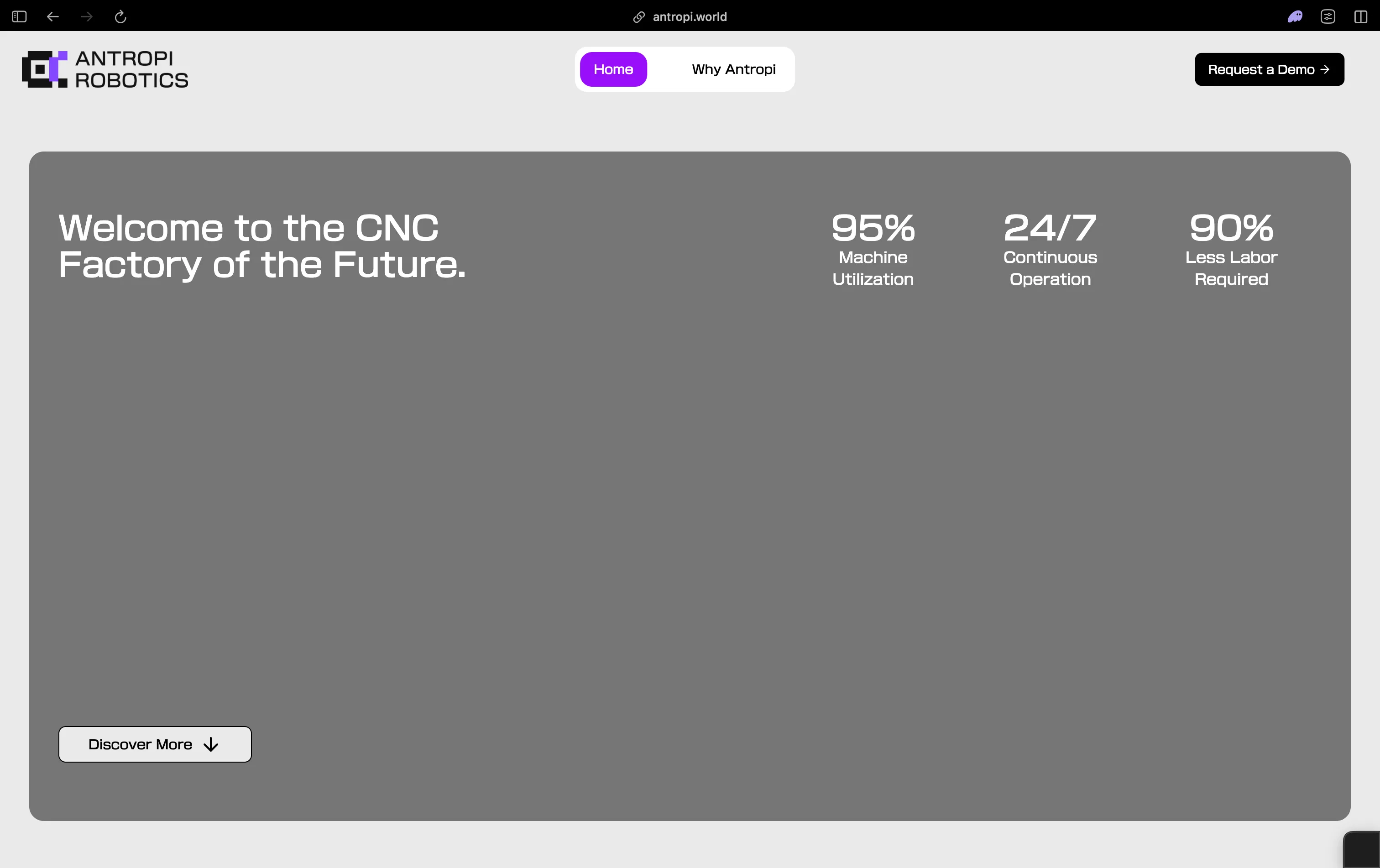
Antropi Robotics, one of the Fall 2026 companies, is the same instinct pointed at machining: “Autonomous CNC factories for faster hardware,” pitching 95% machine utilization and continuous 24/7 operation.
Around those sit companies picking specific environments rather than specific machines. Salem Robotics is “deploying robots for inspections in hazardous spaces, like nuclear.” Manifold is building “low-cost, deployment-ready robotic labor for warehouses.” Grip is doing “physical AI for waste management.” Cosmic Robotics is doing “autonomous construction on Earth and beyond,” and Libra Robotics is narrower still, with autonomous robots for solar farm construction.
There’s also a distinct tooling layer forming underneath robotics, which mirrors what happened to web development a decade ago. Osseus calls itself “the intelligent development platform for robotics.” Robocurve is “evaluating robots in the real world” and Instance is doing “automated evals for robot policies,” which is a real tell: when two companies in one batch sell evaluation infrastructure for a field, that field has enough production deployments to need regression testing. Enact is “the post-training layer for robotics,” and Neuromorphic is “building embodiment agnostic robot brains.”
AI infrastructure and data
Also 32 companies, but the composition has shifted away from “we host models for you.” Very few of these are inference-serving plays. Instead there are three recognizable sub-patterns.
The first is compute as a traded commodity. Computable lets you “buy, sell, and redeem GPU hours for any week with instant liquidity,” and Touchmark is building a “market for future inference capacity.” Both are effectively forward markets for compute, which only makes sense if you believe compute pricing is volatile enough to hedge. If you want the current state of the hardware those contracts settle against, we covered it in Fastest AI Inference Hardware.
The second is cost and portability pressure. Conifer is a “local-first least cost routing system to reduce 80%+ token spend,” Tracer is “combining open-source AI models for better answers at lower cost,” and Understudy Labs helps you “effortlessly move to open weight models.” That last one is a business built entirely on the assumption that teams want off the frontier APIs. We wrote about the routing layer these depend on in Best AI LLM Routers, and about the models they’d switch to in Best Open Source Self-Hosted LLMs for Coding.
The third is agent-specific infrastructure, which barely existed as a category two batches ago. OneCLI is “the identity gateway for AI agents.” Click and Context.dev both sell web access and realtime context to agents. Rindler describes itself as “the translation layer between AI agents and the web.” Machine0 sells “cloud computers for AI agents.”
At the deep end, Baud is building “AI chips for ultra-fast model training and inference,” and Parasma is “training human brain cells for AI compute,” which is the most speculative company in the entire dataset.
Developer tools and agent tooling
Twenty-four companies, and the center of gravity has moved decisively from “help humans write code” to “help humans supervise machines that write code.”
Agent FM is the cleanest example. Its pitch is “one group chat to hear and steer your coding agents,” and the product is a command center for live audio updates, computer use, and group chat with agents running across your repos. The screenshot shows agents named Vera, Kai, and Otto reporting in from different branches and models.
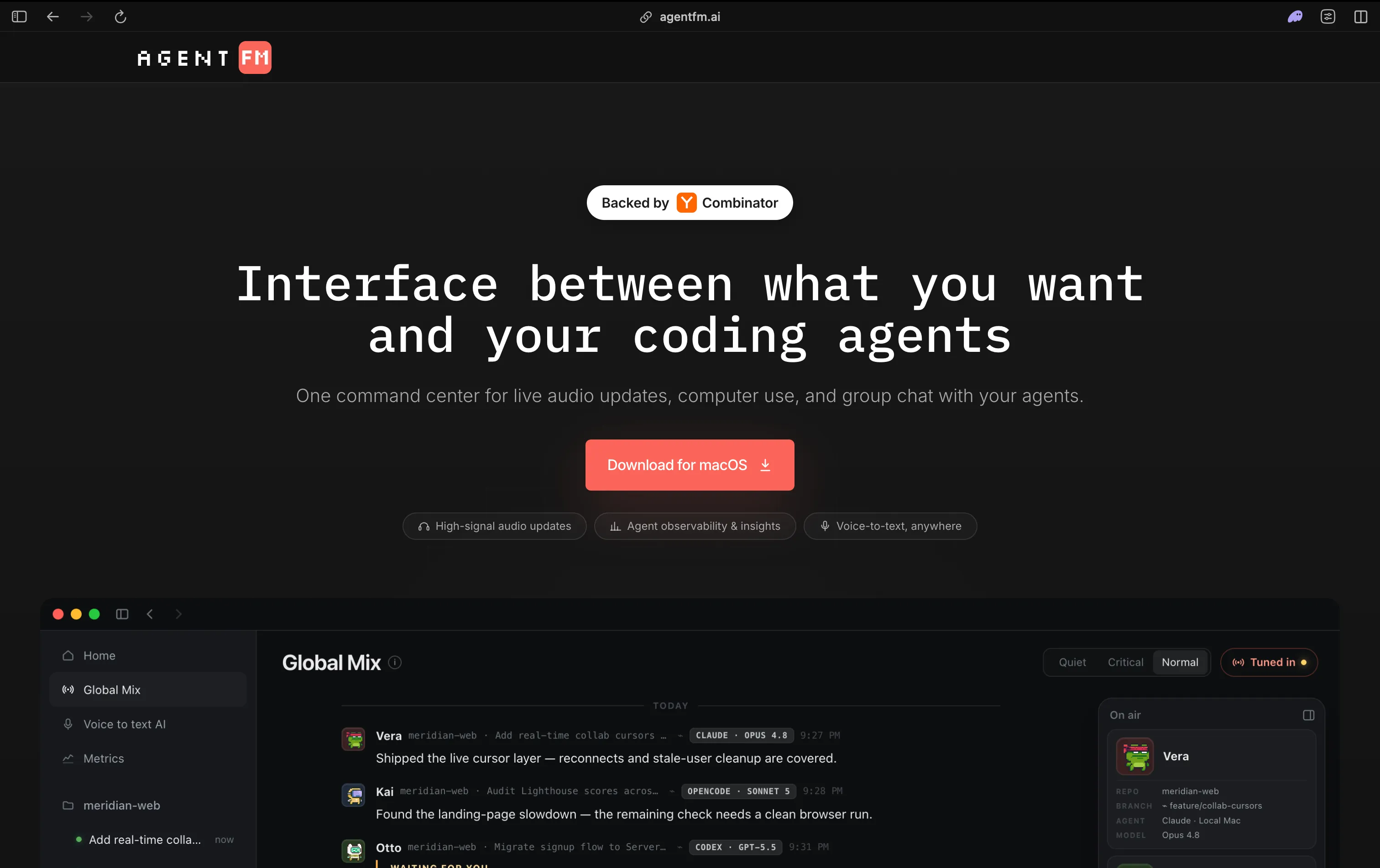
The same assumption, that you are now running many agents rather than one, shows up repeatedly. Jcode promises “20x more coding agents, 20x more productivity.” HyperProbe’s line is sharper: “Your coding agent writes code. Now let it fix prod too.” Archal is “the improvement loop for AI agents,” Agnost AI is “product analytics for AI agents,” and Buildbox helps you “understand how users experience your AI agents.” Codag is doing “log compression for agents,” and Amulet is building a “high performance file system for agents,” both of which are the kind of unglamorous plumbing you only build once a workload is real.
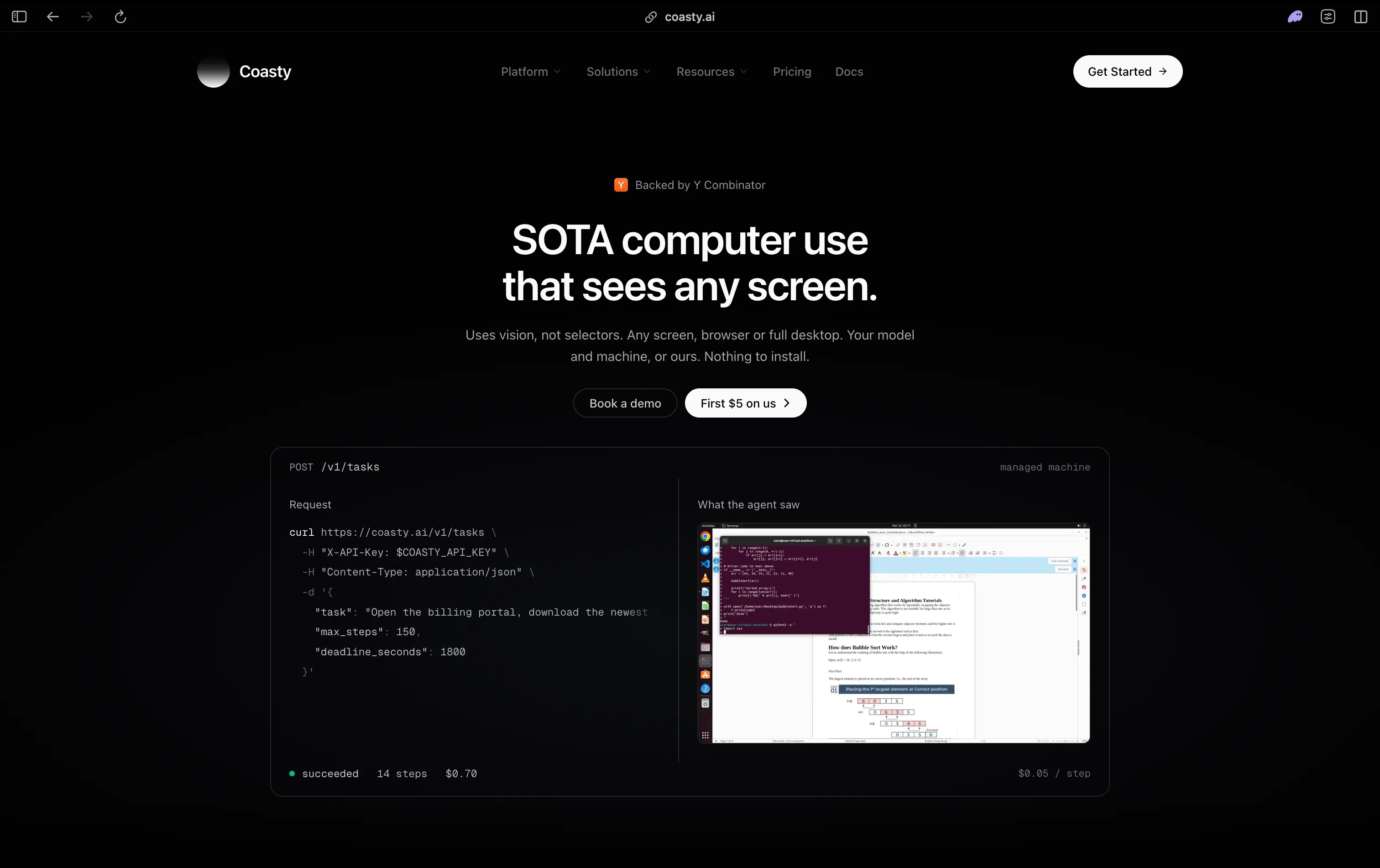
Coasty is worth calling out separately because it names the hardest problem in the space: “the computer-use agent that doesn’t break on real software.” If you’re comparing the underlying agents these tools wrap, see Best Open Source CLI Coding Agents and Best AI Tools for Coding. Several of these products also expose themselves to agents over MCP, which we walk through in How to Expose an MCP Server.
Fintech and financial operations
Twenty-three companies, and this is where the “AI-native services firm” pattern is most obvious. Rather than selling software to accountants, several of these companies are becoming the accounting firm. Billow AI Labs bills itself as an “AI-native Accounting Firm to Replace the Big-4,” and Last Accounting Company is an “agent-native accounting firm.” Florin is “the insurance carrier with zero underwriters,” which is the same move applied to insurance.
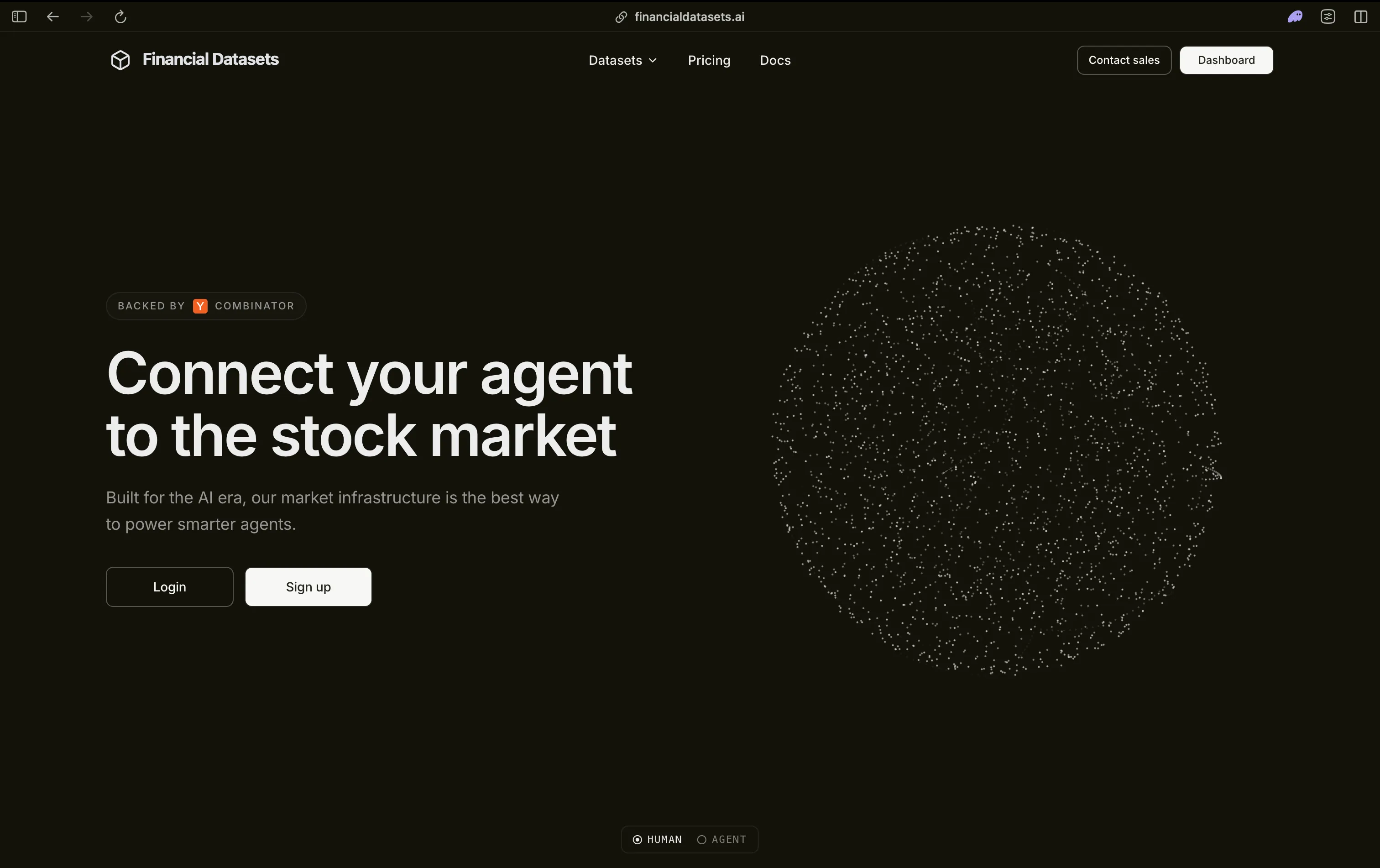
The other half is infrastructure for agents that handle money. Financial Datasets sells exactly what its name suggests, market infrastructure built so agents can query the stock market. Its homepage even carries a HUMAN / AGENT toggle at the bottom, which is a small but telling design decision.
Agentcard is doing “debit cards for AI agents,” and Zomma is building “computer use agents for back offices in finance.” Prodigy Research is training “the world’s best foundation model for quantitative finance.”
Healthcare and bio
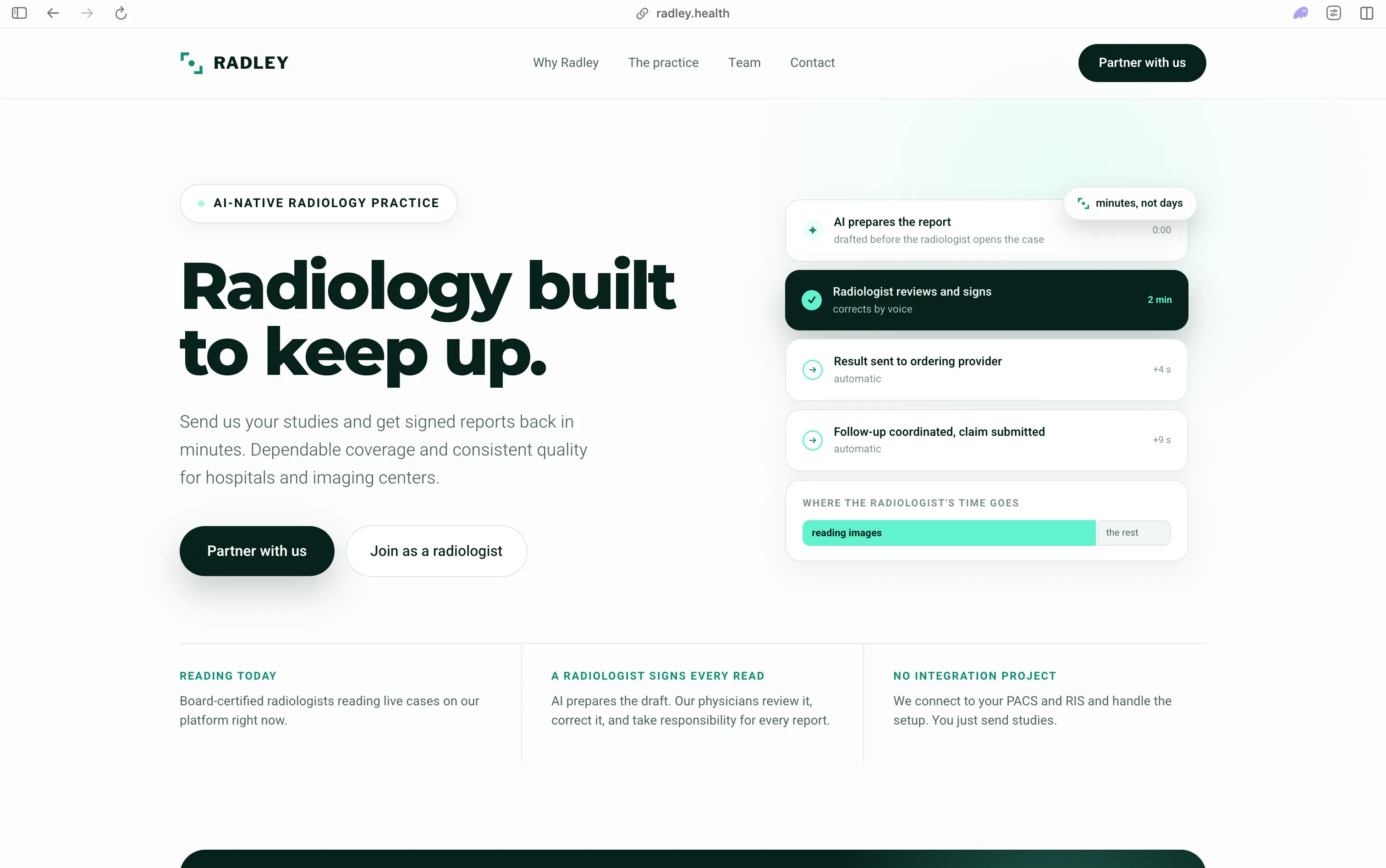
Nineteen companies, split between operations and discovery. On the operations side the pattern matches fintech: Radley is an “AI-native, full-stack radiology practice,” Denta is “the dental practice that runs itself,” and Cova is an “AI-native home care agency.” These are service businesses, not software vendors.
On the science side, TareBio is working on “vaccines for any cancer or infection in weeks,” Atlas Discovery is “predicting human response to drugs in clinical trials,” and Rasyn is working “towards a general intelligence for chemistry.”
Security and compliance
Only eight companies, which is smaller than you might expect given how much attack surface the rest of the batch is creating. What’s notable is that most of them are securing AI systems rather than using AI to secure conventional ones.
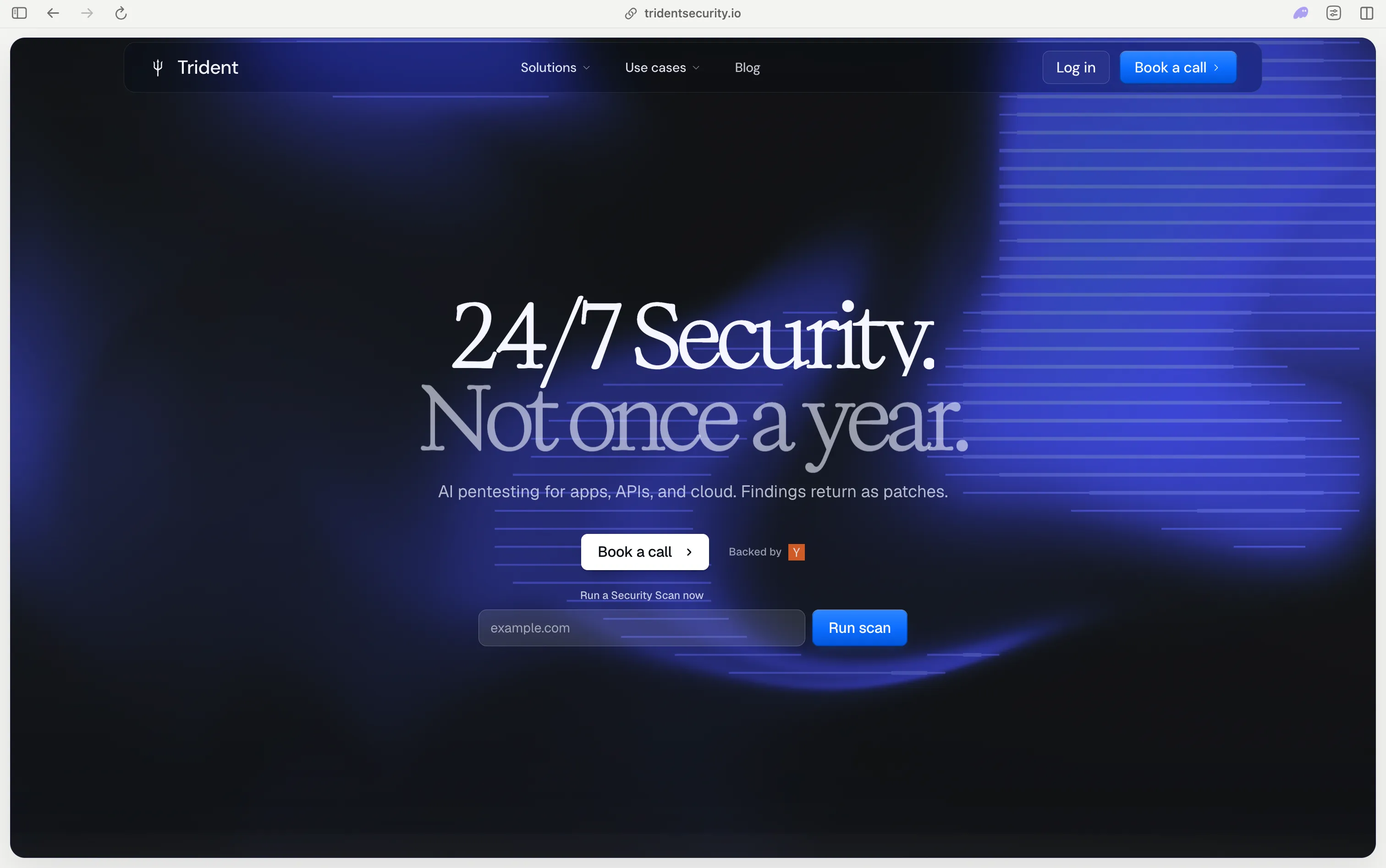
Trident sells continuous AI pentesting for apps, APIs, and cloud, with the neat framing that “findings return as patches” rather than as a PDF.
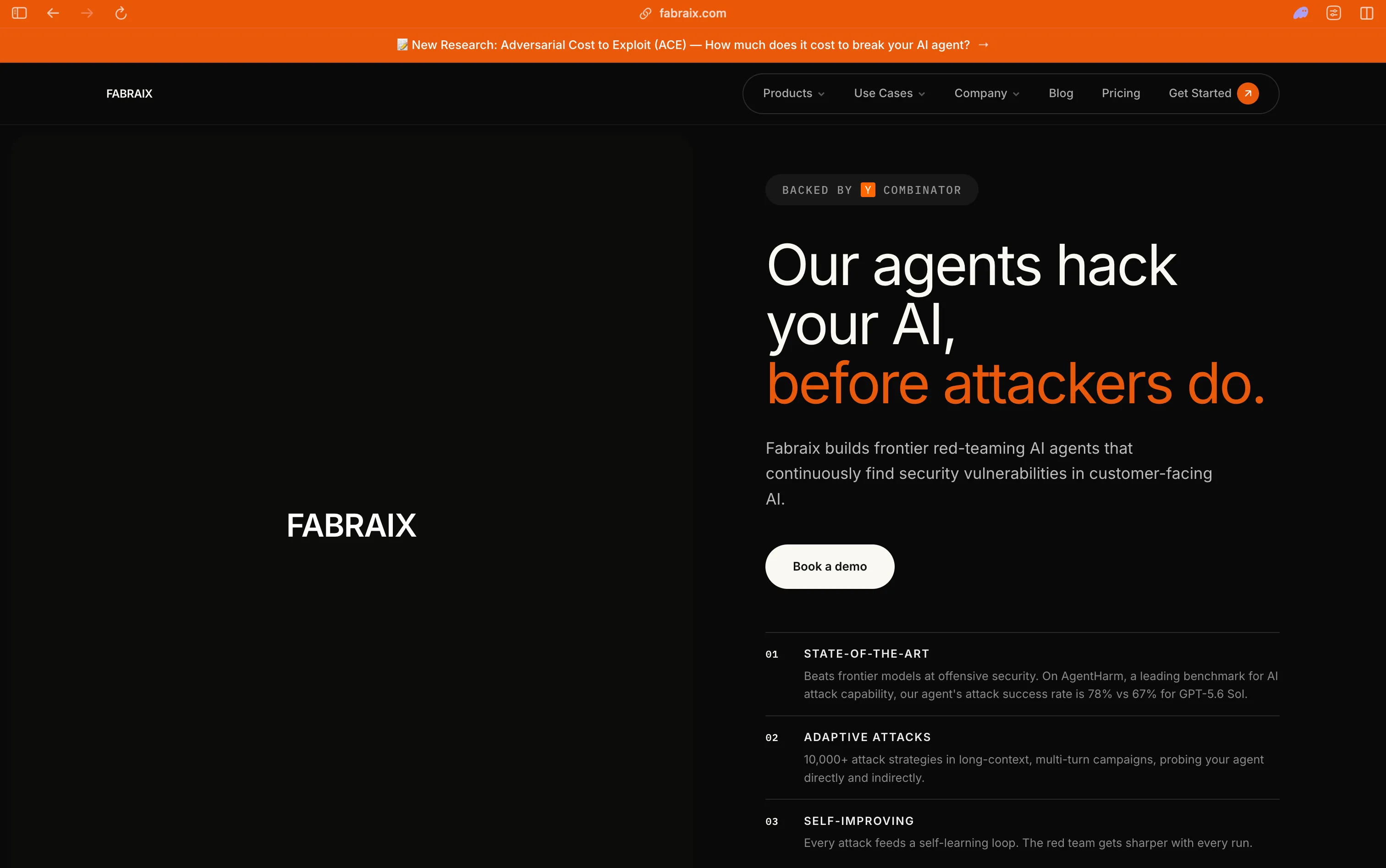
Fabraix calls itself “the world’s frontier hacker for AI agents.” TrustAI does “continuous compliance and governance for agents on sensitive systems.” Traceforce is “securing AI native apps directly on devices,” and Datoric is selling “security-first training data.” For a concrete example of why this category exists, see our writeup on agentjacking and AI coding agents.
Industrial, energy, and defense
These are small buckets individually, 10 and 6 companies, but together they represent the batch’s clearest bet that AI demand becomes an energy and manufacturing problem.
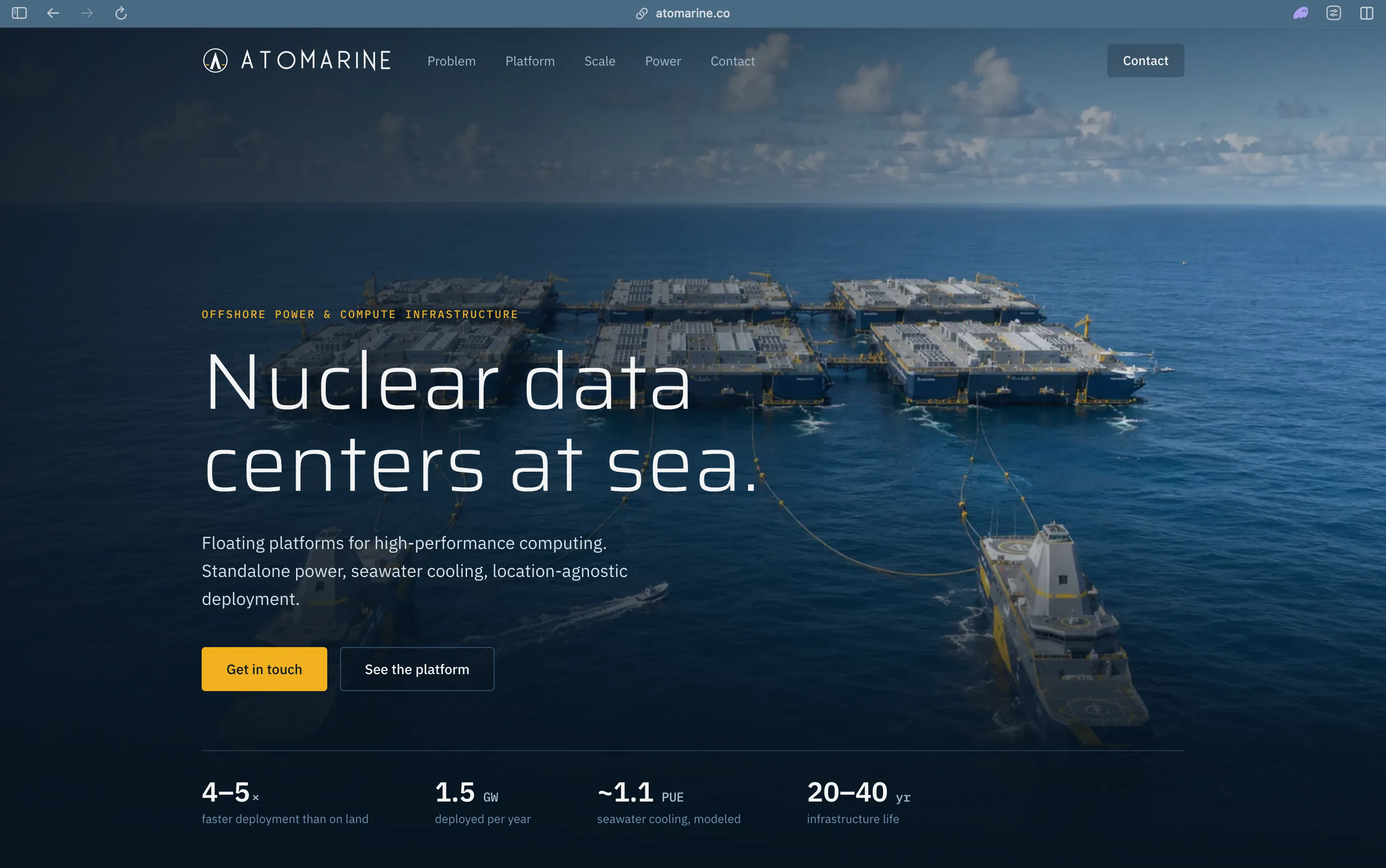
Atomarine is the most literal version: offshore nuclear-powered data centers, floating platforms with standalone power and seawater cooling.
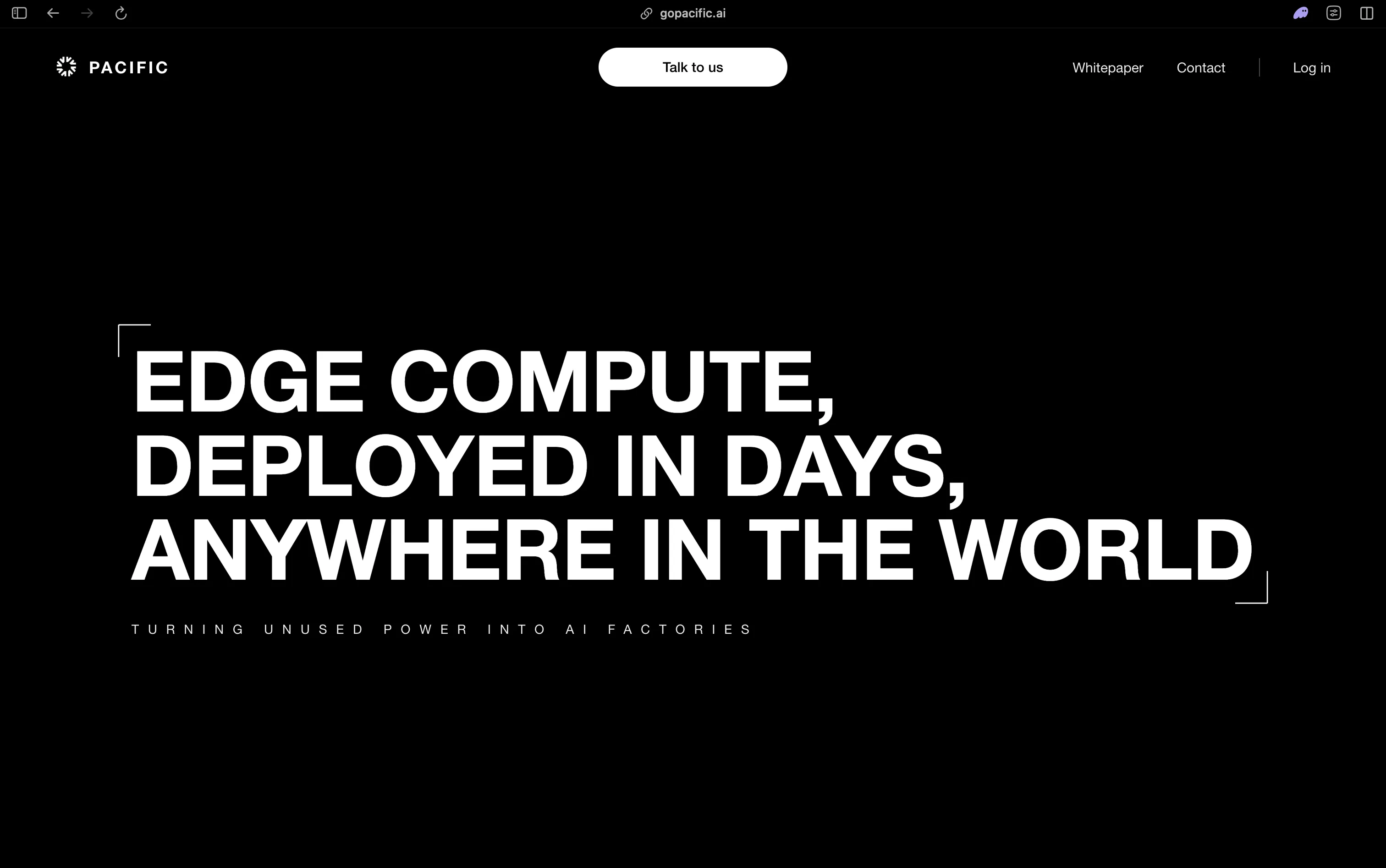
Nearby, Pacific is “mass-producing and deploying micro data centers for Earth and Space,” Proprio Robotics is “building autonomous data centers,” and Marengo is “automating engineering design, starting with data centers.” Four separate companies attacking data center buildout from four angles is not a coincidence.
The defense companies are unusually direct about what they are. Isengard Industries builds “mass-produced AI strike systems and Counter-UAS.” Greypoint Industries is “manufacturing the future of autonomous swarm warfare.” Earendil Robotics does “drone swarm defence at a small-unit level,” and Hop Aero is doing “rocket cargo delivery to contested environments.” A decade ago YC funded almost nothing in this category.
What YC asked for versus what YC funded
YC publishes Requests for Startups, a list of ideas it explicitly wants founders to build. The live edition is for Fall 2026 and contains 13 categories. Comparing it against what actually got funded in Summer 2026 is a useful reality check, and the hit rate is higher than you’d expect.
| RFS category (Fall 2026) | Already funded in Summer 2026 |
|---|---|
| Compute at Sea | Atomarine (offshore nuclear data centers), Pacific (micro data centers) |
| Multiplayer AI | Mosaic ("defining the frontier of multiplayer AI"), Dock, Agent FM |
| The Future of American Defense | Isengard Industries, Greypoint Industries, Earendil Robotics, GUILD |
| Data for the Real World | Hebbian Robotics, Markov, Praxis AI, Qokedas (Fall 2026) |
| New Operating Systems for the Physical World | OS3, Bizmark, Neuron Industries, Control Seat |
| Self-Maintaining APIs | GodHands (Fall 2026), HyperProbe |
| Proving You're Human | OneCLI (identity gateway for agents) |
| AI-Native Compliance Infrastructure | Thin: TrustAI is the one clean match; only 2 companies tag Compliance at all |
| The Primer (AI tutoring for young children) | Thin: Bloomy (K-12 mastery learning), Wondering |
| AI for the Aging Population | Thin: Cova (home care), Illume Labs |
| The Best Time to Build in Crypto | Thin: Arbital, and only 3 companies tag Crypto / Web3 |
| AI-Powered Consumer Products for 1 Billion People | Thin: only 5 consumer companies in the whole dataset |
| A Cloud for Small Software | Thin: Vendo, Prized ("Lovable for internal tools") |
The top seven rows are well covered. The bottom six are where YC is asking for things it has not funded much of yet, and if you’re deciding what to apply with, that gap is the most actionable thing in this post. Consumer is the standout. YC explicitly asks for “AI-powered consumer products for 1 billion people,” yet consumer companies are 5 of 208, or 2.4% of the dataset. Crypto is similar: it has a dedicated RFS entry written by a YC partner, and three companies in the batch tag themselves with it.
Where these companies are, and how small they are
Two structural facts are worth stating plainly, because they shape what “getting into YC” now looks like.
It is overwhelmingly a San Francisco program. 148 of 208 companies (71.2%) list San Francisco as their location, and 183 (88.0%) are in the United States. New York is a distant second at 12 companies, followed by Boston with 7, and London and Los Angeles with 5 each. YC’s application page states the Fall 2026 batch “will take place from October to December in San Francisco.”
Teams are tiny. The median team size is 2, the mean is 2.7, and 146 of the 208 companies (70.2%) have three people or fewer. The largest team in the dataset has 30 people, and it is an outlier. A two-person team shipping an AI-native product to a vertical industry is the modal YC company in 2026.
How to use this if you’re building
If you’re evaluating your own idea against these batches, the process is fairly mechanical.
Start by checking whether your category is saturated or empty. Filter the YC directory for the tags closest to your idea. Twenty-four developer-tools companies means a crowded, well-understood market where differentiation has to be sharp. Five consumer companies against an explicit RFS request means the opposite.
Then read the RFS against the actual batch, not on its own. The seven well-covered categories above tell you what YC has already validated with a check. The six thin ones tell you where they have appetite that founders haven’t met yet. Those are different bets with different risks: the first is competitive, the second may be thin because the problem is genuinely hard.
Check the deal terms before you model dilution. YC’s standard deal is $500,000 total, split as $125,000 for a fixed 7% on a post-money SAFE plus $375,000 on an uncapped MFN SAFE that converts on the terms of the lowest-cap SAFE issued before your priced round. YC charges no fees.
Finally, note the timing. The Fall 2026 on-time deadline was July 27, 2026 at 8pm PT, with decisions by August 28. YC says it still accepts late applications, without a guaranteed response timeline.
One practical note for anyone building an agent-facing product in these categories: a large fraction of these companies need to expose a local service, webhook endpoint, or MCP server to something running outside their laptop. If that’s you, webhook testing tools for local development and exposing an MCP server cover the workflow.
Conclusion
These batches aren’t an “AI wave” any more, because there’s nothing left for AI to be a wave against. Nearly 70% of the companies tag themselves as AI and most of the rest use it anyway, so the useful distinctions are downstream of that: robotics has caught up with software infrastructure at 32 companies each, the AI-native services firm is a real pattern with startups becoming the accounting firm and the radiology practice rather than selling them tools, and agent supervision is now its own tooling market.
Worth watching: consumer AI and crypto both have partner-written RFS entries and almost nothing funded behind them. And the caveat bears repeating - 197 of these 208 companies are Summer 2026, so once the Fall decisions land in late August this picture is worth redrawing.