In this article
AI image generation is no longer a hosted-API-only game. Open-weight models now hold their own on photorealism, follow prompts closely, and give you more low-level control than most hosted services. If you’re weighing up the best open-source AI image generators, the draw goes beyond image quality: you decide where the model runs, what hardware it uses, how it’s customized, and who sees your data. Self-hosting is now a practical option rather than a weekend experiment, with no rate limits and costs you can predict. If you’d rather not manage GPUs at all, a hosted AI Image Generator like Higgsfield is still a fair trade. It’s a full AI creative suite, and what it buys you today is convenience, not better model quality.
As of October 7, 2026, the open-weight leader on the Artificial Analysis Text-to-Image Arena is Alibaba’s Qwen-Image-2.1 at 1,035 Elo, released on September 20, with Ideogram 4.0 (1,012) and FLUX.2 [dev] (1,000) next. The bigger story is licensing: several of the strongest “open” models are open weights under non-commercial licenses. This guide covers the models worth self-hosting, what each license actually lets you do, and the interfaces to run them.
Summary
- Quality leader: Qwen-Image-2.1 tops the open-weight Arena at 1,035, but its license allows research and evaluation only. The closed frontier is still 163 points ahead.
- Best you can ship commercially: Qwen-Image-2512 (Apache 2.0, 999) and Ming-Image-0.1-Design (MIT, 997) sit within 3 points of the FLUX.2 [dev] anchor, and Cosmos3-Super-Text2Image (OpenMDW) reaches 994 with its agentic recipe.
- On one consumer GPU: Z-Image Turbo and FLUX.2 [klein] 4B are Apache 2.0 and fit in 16GB or less.
- Non-commercial models: Qwen-Image-2.1, Ideogram 4.0, FLUX.2 [dev], FLUX.2 [klein] 9B and FIBO. FLUX’s license still lets you use the generated images commercially.
- Run them with: ComfyUI, SwarmUI or Forge Neo, and share the UI with one Pinggy command.
How the open-weight models rank
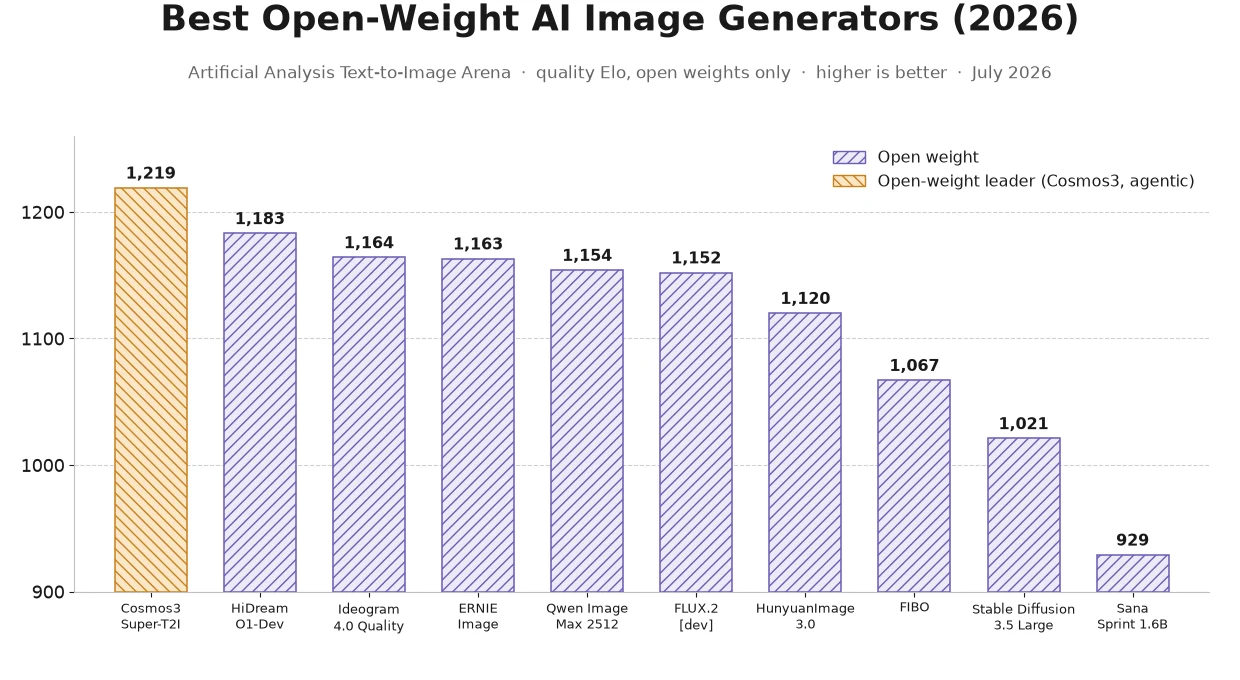
The cleanest independent lens on image quality is the Artificial Analysis Text-to-Image Arena, which ranks models by Elo from blind head-to-head votes rather than a fixed benchmark. Artificial Analysis re-anchored the board in early September so that FLUX.2 [dev] sits at exactly 1,000, and relaunched it as “AA-Image-T2I v2.0” at the turn of October, ranking current models on votes from its recruited human panel. Scores from before September, including the numbers in older versions of this post, aren’t comparable with today’s.
Filtered to open weights and collapsed to one row per model (the board also lists fal’s FLUX.2 [dev] Turbo and Flash LoRAs at 998 and 987, and fal’s Ideogram 4.0 distills at 986, 983 and 969), the October 7 snapshot looks like this:
| Rank | Model | Organization | Arena Elo | License |
|---|---|---|---|---|
| 1 | Qwen-Image-2.1 | Alibaba (Qwen) | 1,035 | Qwen Research (non-commercial) |
| 2 | Ideogram 4.0 (Quality)* | Ideogram | 1,012 | Ideogram 4 Non-Commercial |
| 3 | FLUX.2 [dev] | Black Forest Labs | 1,000 (anchor) | FLUX non-commercial |
| 4 | Qwen Image Max 2512 | Alibaba (Qwen) | 999 | Apache 2.0 (as Qwen-Image-2512) |
| 5 | Ming-Image-0.1-Design | InclusionAI | 997 | MIT |
| 6 | HunyuanImage 3.0 Instruct | Tencent | 996 | Tencent Hunyuan Community (not EU, UK, South Korea) |
| 7 | Cosmos3-Super-Text2Image (agentic) | NVIDIA | 994 | OpenMDW 1.1 (commercial use allowed) |
| 8 | HiDream-O1-Image | HiDream | 981 | MIT |
| 9 | FLUX.2 [klein] 9B | Black Forest Labs | 941 | FLUX non-commercial |
| 10 | Z-Image Turbo | Alibaba (Tongyi-MAI) | 941 | Apache 2.0 |
*Artificial Analysis generated the Quality entry through Ideogram’s own API and notes it differs from the downloadable weights, which add safety training and quantization. The plain “Ideogram 4.0” entry scores 1,004.
Qwen-Image-2.1 leads open weights at 1,035, ahead of a tight 994-1,012 cluster of Ideogram 4.0, FLUX.2 [dev], Qwen Image Max 2512, Ming-Image, HunyuanImage 3.0 Instruct and Cosmos3. The closed frontier is still clearly ahead: OpenAI’s GPT Image 2.5 Sunburst (max) tops the overall board at 1,198, which puts the best open model 163 points behind and at #18 overall. Further down the open list sit HunyuanImage 3.0 (base, 945), ERNIE Image Turbo (924), FIBO (881), Stable Diffusion 3.5 Large (840) and Sana Sprint 1.6B (754). Scores move by a point or two from day to day, so check the live leaderboard for today’s numbers.
Leading open-weight models
1. Qwen-Image-2.1 (Alibaba)
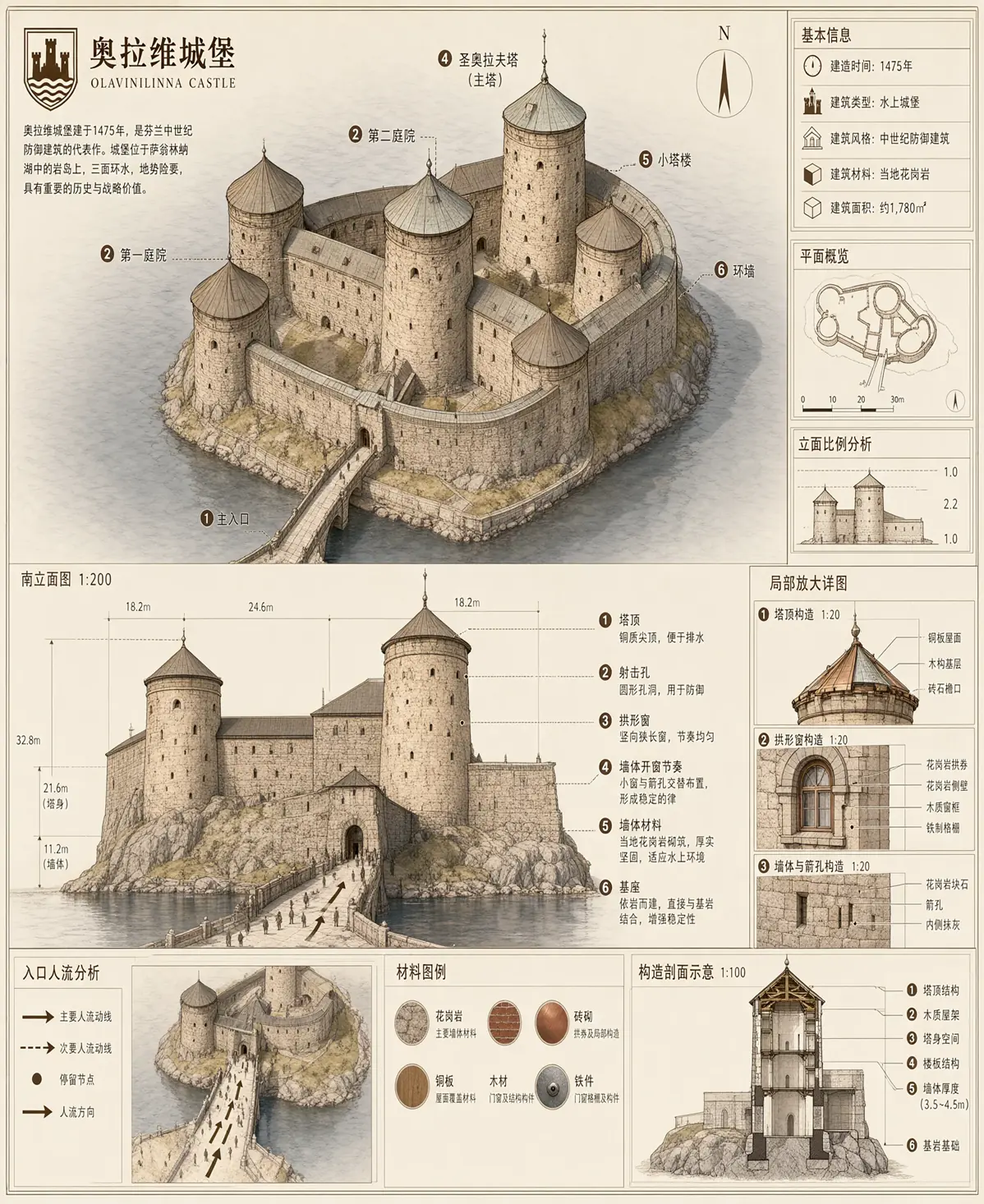
Text-rendering sample from the Qwen-Image-2.1 model card. Source: Qwen on Hugging Face.
Qwen-Image-2.1 is a unified text-to-image and image-editing model released on September 20, 2026, and it went straight to the top of the open-weight Arena. It’s compact for a leader: the visual generation component is 7B parameters (32 single-stream DiT layers). Three features stand out. It generates native transparent (RGBA) images, so logos and stickers need no background-removal step. It accepts up to 10 reference images for editing and composition, which is how the model card’s group photo was built from six separate portraits. And one checkpoint handles both generation and editing, through the QwenImage21Pipeline, which ships in the stable Diffusers v0.41.0 release (October 6) with CPU offload for smaller GPUs.
The catch is the license. The Qwen Research License allows use “FOR NON-COMMERCIAL PURPOSES ONLY”, which it defines as research or evaluation, and commercial use needs a separate license from Alibaba. That’s a step back from Qwen-Image-2512’s Apache 2.0, so if you’re building a product, start with section 4. Alibaba hasn’t published a VRAM figure for 2.1.
Best for research and evaluation, especially transparent assets and multi-reference editing. Weights: Qwen-Image-2.1 on Hugging Face.
2. Ideogram 4.0 (Ideogram)
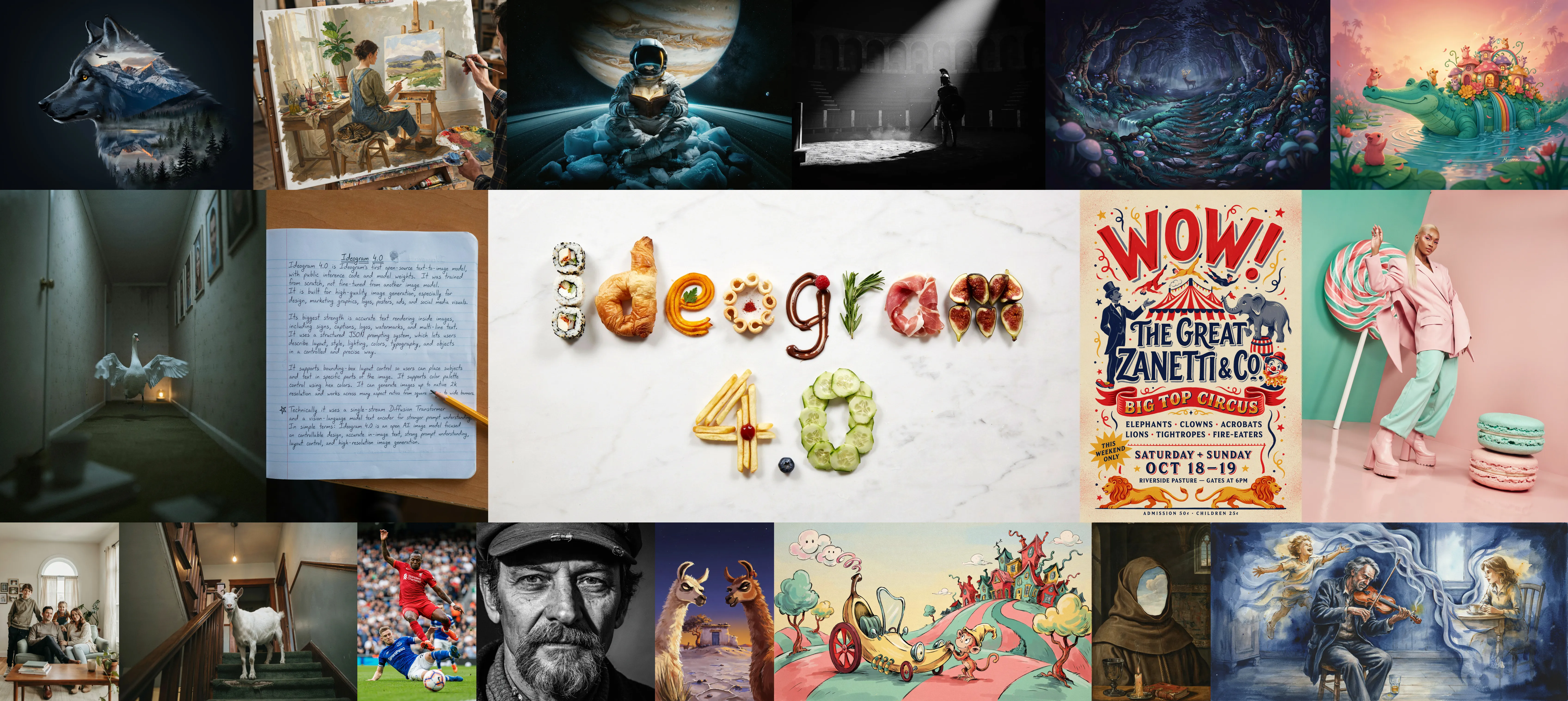
Ideogram’s first open-weight release, shipped June 3, 2026, is a 9.3B diffusion transformer built around structured JSON prompts: you specify layout, color palettes and text placement directly, with bounding boxes, instead of hoping the model interprets your wording. The nf4 quantized checkpoint fits a single 24GB consumer GPU, and there’s an fp8 checkpoint too. On the Arena, the Quality entry (generated through Ideogram’s API) is the #2 open-weight model at 1,012, and the plain entry scores 1,004. Ideogram’s newer 4.5 model (September 30) has no open weights yet.
Read the license before you deploy anything: the weights are under the Ideogram 4 Non-Commercial license, which counts generating material to advertise or promote revenue-generating products as commercial use. With a commercial agreement from Ideogram in place, the marketing layouts, product brochures and brand assets it produces can be assembled into an interactive digital flipbook.
Best for posters, logos, UI mockups and any job where exact text and layout placement matter more than photorealism. Code: ideogram-oss/ideogram4 on GitHub.
3. FLUX.2 (Black Forest Labs)
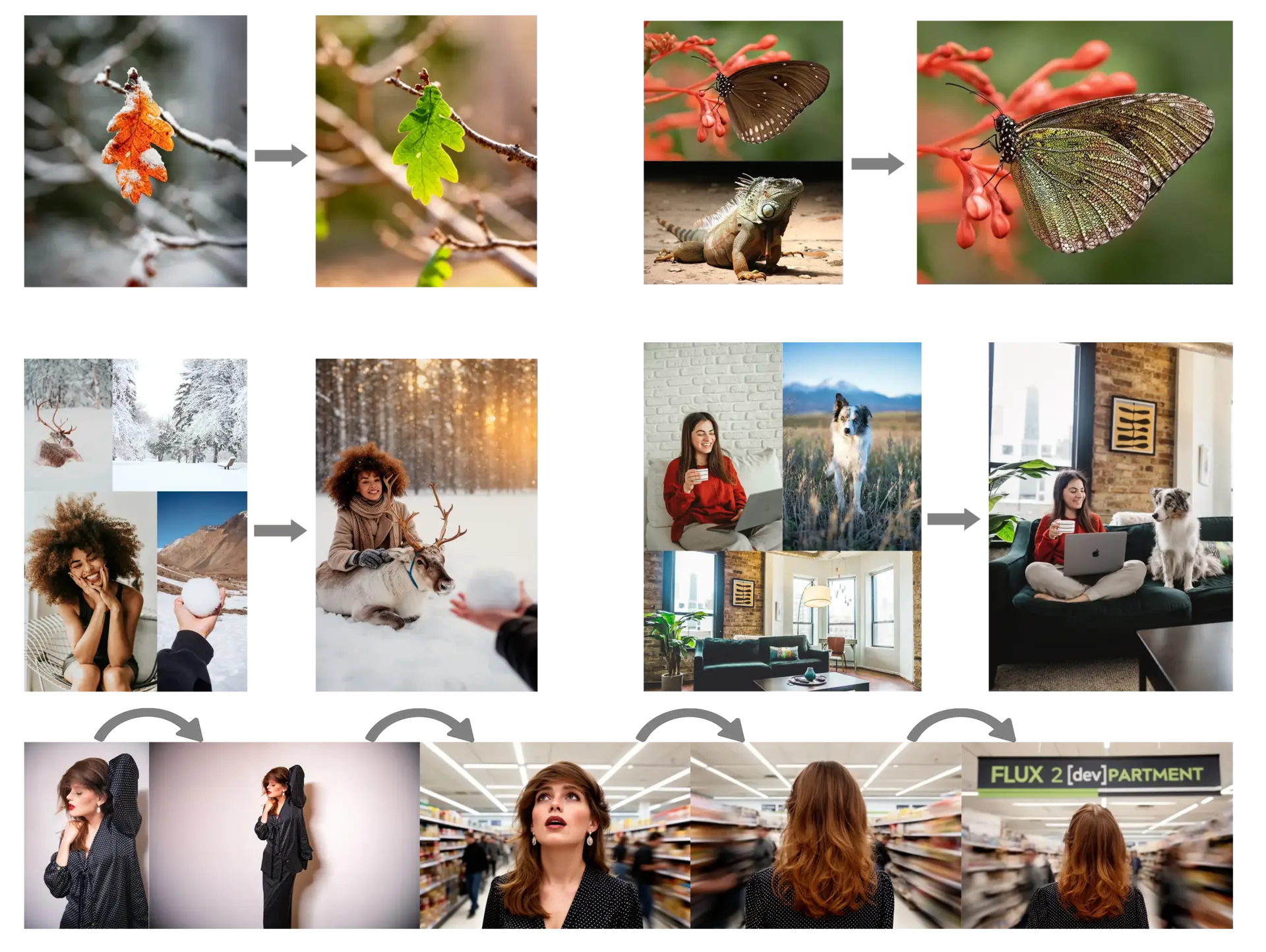
FLUX.2, released November 25, 2025, succeeds the FLUX.1 architecture that set the bar for open-weight quality. FLUX.2 [dev] is a 32B-parameter model with 4-megapixel output and built-in multi-reference support: pass up to 10 reference images (a character, an art style, a product) and it combines them without fine-tuning or LoRAs. It runs well on NVIDIA RTX hardware with FP8 quantization, and it’s the reference point the whole Arena is scored against (exactly 1,000).
FLUX.2 [dev] ships under the FLUX non-commercial license, which lets you use the generated images for any purpose, including commercially, but needs a BFL license to run the model commercially. If you need a permissive license or a small GPU, look at FLUX.2 [klein] 4B (January 2026): 4 billion parameters, Apache 2.0, multi-reference editing, and as little as 13GB of VRAM (Black Forest Labs names the RTX 3090 and 4070). The larger [klein] 9B scores 941 but goes back to the non-commercial license. As for FLUX 3, FLUX 3 Image launched on BFL’s API on October 1 without open weights, the only open FLUX 3 weights so far are the robotics model FLUX 3 Action, and the promised FLUX 3 Dev release isn’t out yet.
Best for high-resolution assets, character consistency and multi-reference composition ([dev]), and commercial work on a consumer GPU ([klein] 4B). Weights: Black Forest Labs on Hugging Face.
4. Qwen-Image-2512 (Alibaba)
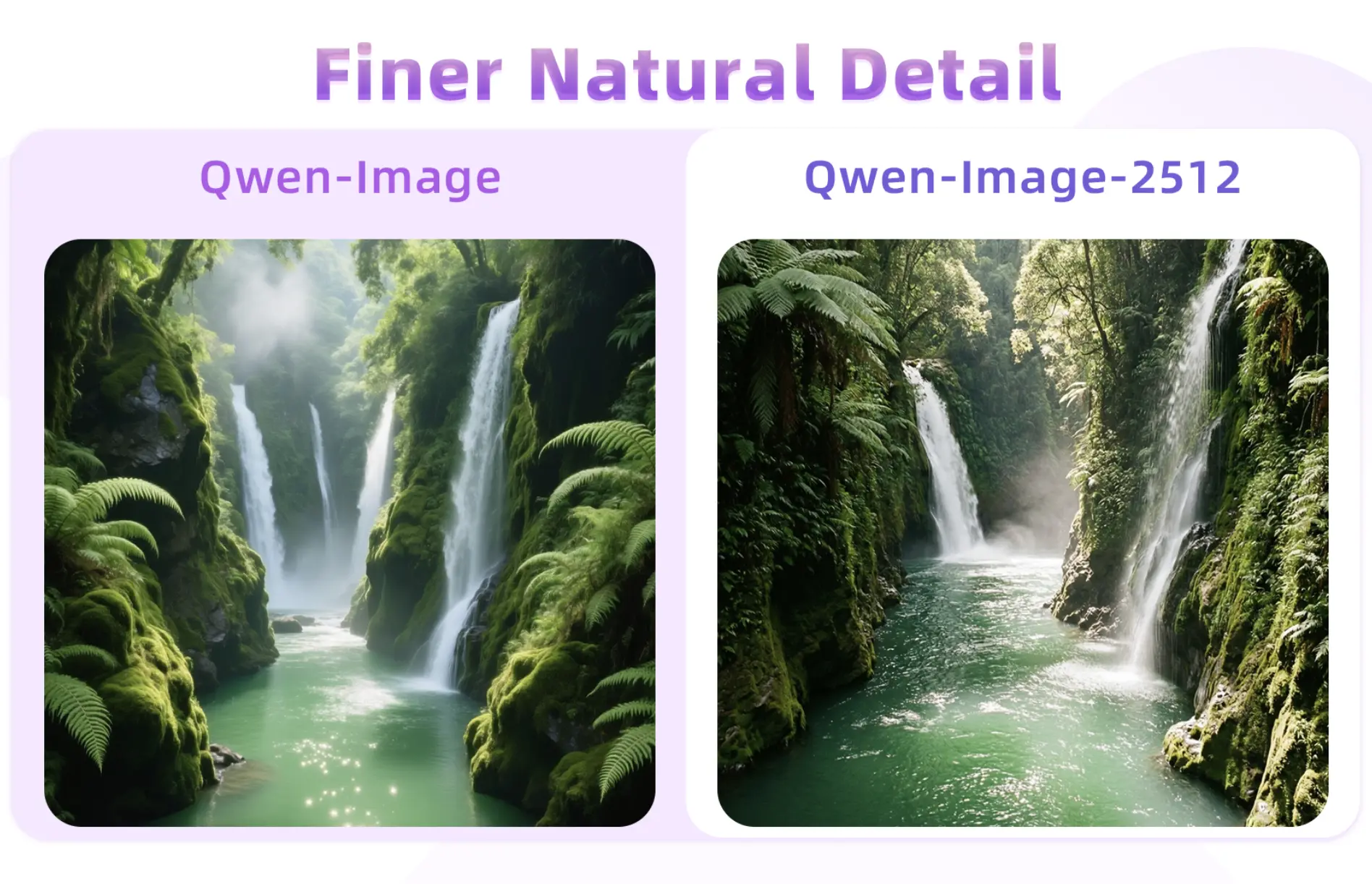
Qwen-Image-2512 is the December 2025 update of the original Qwen-Image, a roughly 20B-parameter model under Apache 2.0. Artificial Analysis lists it as “Qwen Image Max 2512” (999 Elo), though that score rests on only about 2,200 votes, so it’s the least settled number in the table. The update brought three improvements: more realistic people (less of the waxy, over-smoothed “AI look”), finer natural detail in landscapes and fur, and better text rendering for slides, infographics and posters.
With Qwen-Image-2.1 non-commercial, 2512 is the strongest Qwen model you can put in a product without a separate license. One naming note: “qwen-image-max” is also a hosted model on Alibaba Cloud’s API, and Alibaba doesn’t say whether it runs these exact weights, so use the Hugging Face name when you self-host.
Best for photorealistic portraits, commercial marketing material and text-heavy designs under a permissive license. Weights: Qwen on Hugging Face.
5. Ming-Image-0.1-Design (InclusionAI)

Sample outputs from the Ming-Image-0.1-Design model card. Source: InclusionAI on Hugging Face.
Ming-Image-0.1-Design, from Ant Group’s InclusionAI, arrived in September 2026 and is the most specialized model here: a 6B text-to-image model for UI layouts, infographics, posters and other text-rich designs. It generates complete compositions rather than single objects, supports RGBA output with transparent backgrounds, and scores 997 on the Arena, statistically level with FLUX.2 [dev] at a fraction of the size. It’s MIT licensed, so commercial use is fine.
The recommended settings are 2048x2048 at 12 sampling steps in BF16, served through vLLM-Omni. The only hardware configuration InclusionAI has validated is one GPU with 80GB of VRAM, so on consumer cards you’re in unsupported territory.
Best for landing pages, app mockups, infographics and posters where the layout and text are the point. Weights: InclusionAI on Hugging Face.
6. HunyuanImage 3.0 (Tencent)
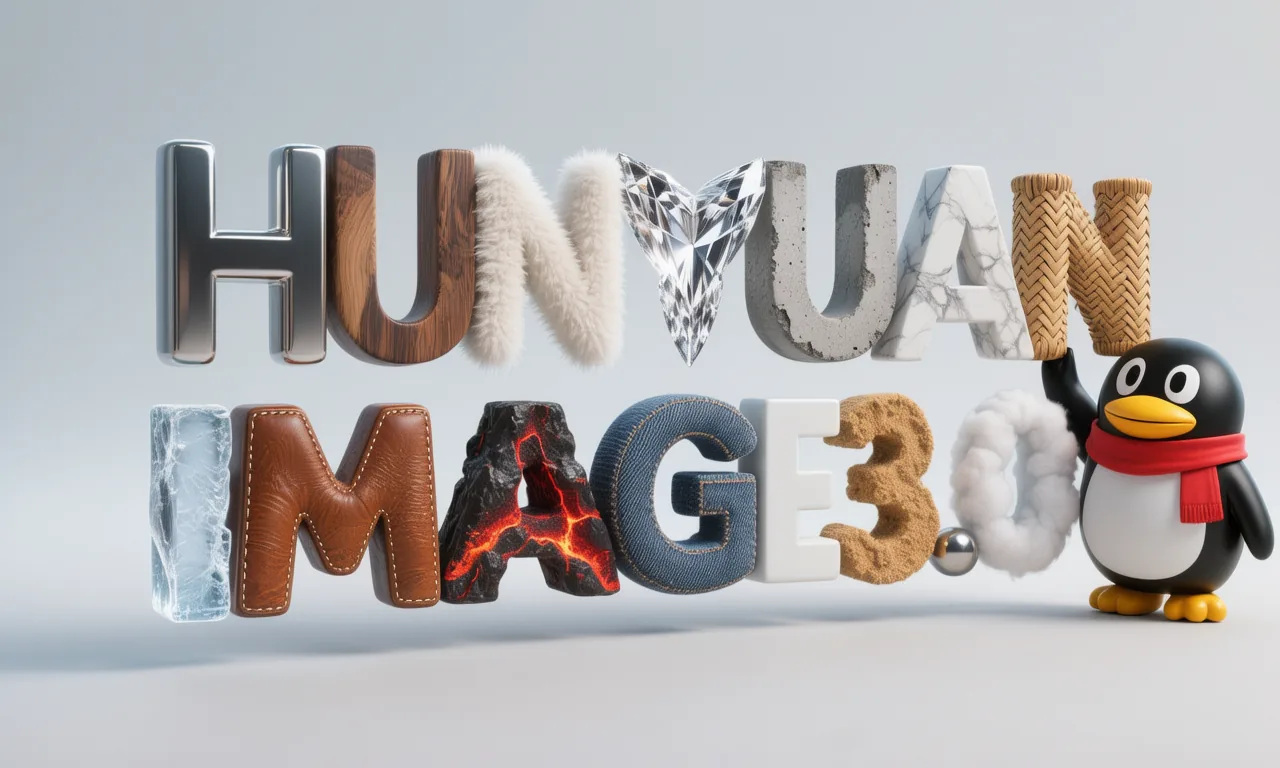
Banner from the HunyuanImage 3.0 README. Source: Tencent on GitHub.
Tencent’s HunyuanImage 3.0 is the largest model in this guide: a Mixture-of-Experts design with 64 experts and 80 billion total parameters, 13 billion active per token. That scale gives it broad world knowledge and strong handling of spatial relationships and long, detailed prompts. In January 2026 Tencent added HunyuanImage 3.0 Instruct and an Instruct-Distil variant, and Instruct is the checkpoint on the open-weight Arena at 996 (the base model scores 945).
Two practical constraints. Hardware: the base model needs at least three 80GB GPUs and Instruct needs at least eight. License: the Tencent Hunyuan Community License doesn’t apply in the European Union, the United Kingdom or South Korea, and services with more than 100 million monthly active users need a separate license from Tencent.
Best for narrative generation, complex prompts and teams with a multi-GPU server outside the excluded regions. Code: Tencent on GitHub.
7. Cosmos3-Super-Text2Image (NVIDIA)
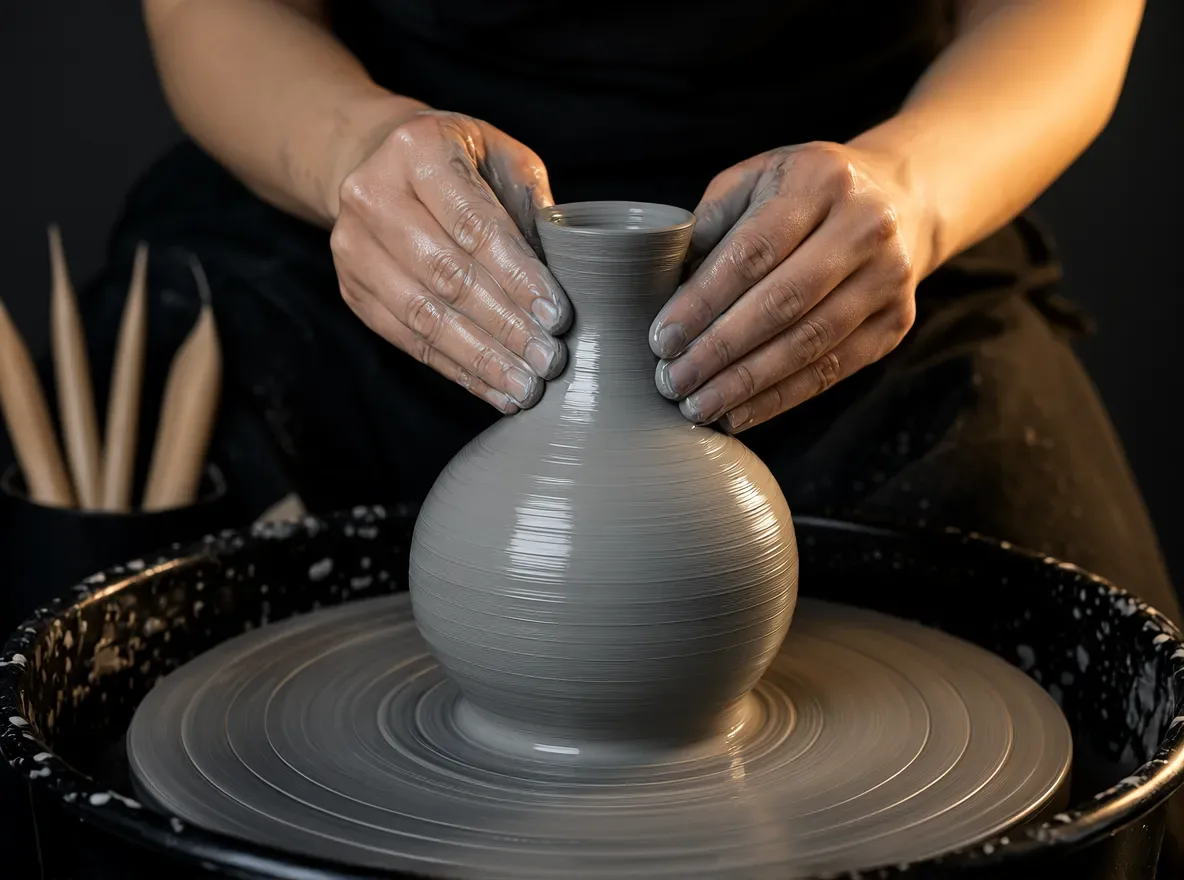
Cosmos3-Super-Text2Image is the text-to-image model in NVIDIA’s Cosmos 3 family, built for Physical AI work such as robotics, autonomous driving and simulation. It went up on Hugging Face at the end of May 2026 as a 64B-parameter Mixture-of-Transformers model with an autoregressive tower and a diffusion tower, and its grounding in physical scenes shows in lighting, materials and spatial layout. It led the open-weight Arena from its late-May debut into July, and sits at 994 after the September re-anchoring.
The “(agentic)” label refers to a sampling loop, not built-in reasoning. NVIDIA’s agentic upsampling recipe generates candidates, scores each with a vision-language critic, and rewrites the prompt from the critic’s feedback, and its defaults call hosted third-party models for the rewriting and the critique. The non-agentic run scores 986, and a 4-step distilled checkpoint released in July scores 971. The weights are under the permissive OpenMDW 1.1 license and serve through vLLM-Omni, SGLang and Diffusers, but NVIDIA recommends an 8xH100 node, or 4xH200/GB200, and has only tested BF16.
Best for physically grounded scenes, and teams with data-center GPUs who want a commercially licensed model near the top of the board. Weights: NVIDIA on Hugging Face.
8. Krea 2 (Krea AI)
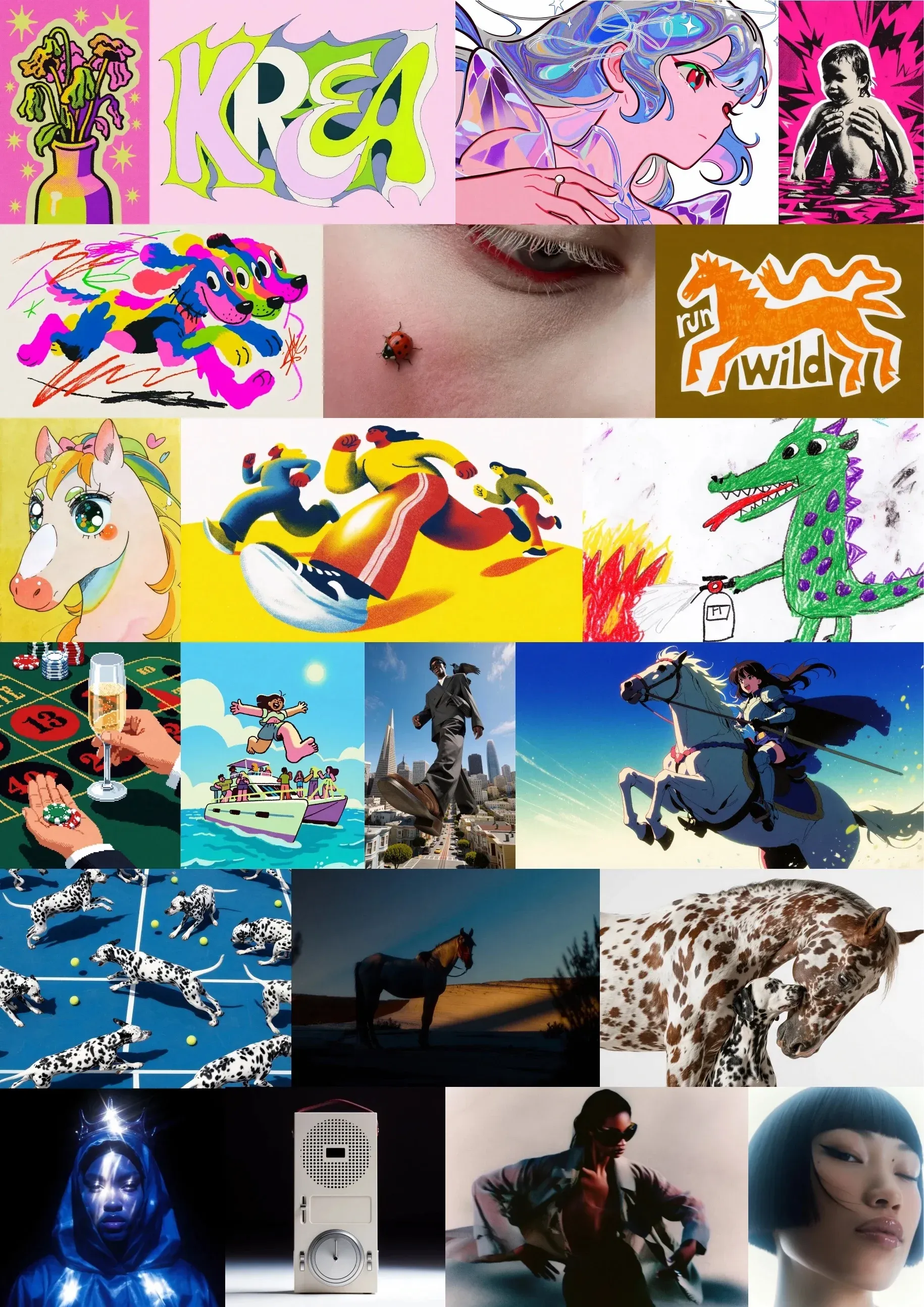
Krea 2 launched as a hosted model in May 2026, and on June 22 Krea released its weights as two downloadable 12B-parameter checkpoints: Raw, an undistilled base for fine-tuning and LoRA training, and Turbo, an 8-step distilled version for fast iteration at 1K to 2K resolution. Krea pitches it on aesthetic range rather than a single polished default style. On the Arena, the Krea 2 entries are hosted builds that Artificial Analysis doesn’t list as open weights, so there’s no Arena score for the files you can download.
Read the Krea 2 Community License before deploying commercially. It’s free for organizations under $1 million in annual revenue, you must run your own content filtering, any AI model you distribute that contains or derives from it must have a name starting with “Krea”, and Krea can terminate the license on 30 days’ notice. That’s a lot more conditions than an Apache or MIT grant.
Best for aesthetic quality out of the box, LoRA training on the Raw checkpoint, and small teams under the revenue threshold. Details: Krea 2 Technical Report.
9. FIBO (Bria AI)

FIBO, from Bria AI, is an 8B-parameter DiT that is JSON-native: it reads structured prompts that control parameters like camera focal length (“85mm”), lighting direction and depth of field. Bria trained it exclusively on licensed data, which is why enterprises look at it when copyright provenance matters. The open weights are non-commercial (CC BY-NC 4.0), and commercial use goes through a license from Bria. It scores 881 on the Arena.
Best for precise product and architectural visualization, and evaluating a licensed-data model before buying a commercial license. Weights: Bria AI on Hugging Face.
10. Stable Diffusion 3.5 (Stability AI)

Stable Diffusion was once the default for self-hosted image generation, and 3.5 Large (8.1B parameters, October 2024) is its latest open release. It has dropped to #36 among open-weight models on the Arena (840), so pick it for the tooling rather than raw quality. It’s free under the Stability AI Community License for organizations with less than $1 million in annual revenue. Hundreds of fine-tunes, LoRAs and ControlNets target it, and SwarmUI and ComfyUI support it (Forge Neo dropped SD3). It no longer has the biggest adapter library, though: on Hugging Face, SDXL and FLUX.1 [dev] each have far more LoRAs than SD 3.5 Large’s roughly 400.
Best for general-purpose generation, older workflows, and hardware that can’t fit the larger models. Weights: Stability AI on Hugging Face.
11. NVIDIA Sana
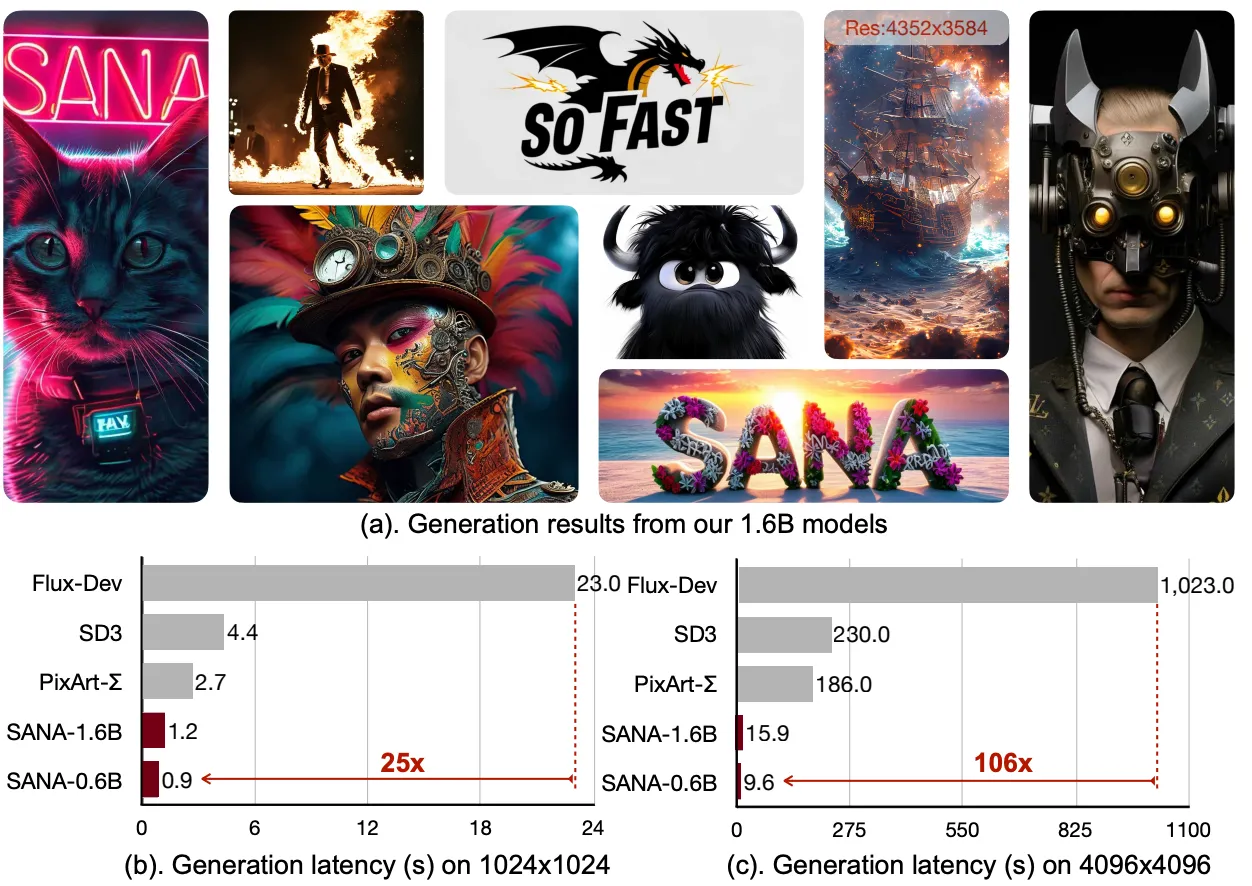
Sana optimizes for speed instead of parameter count. Sana-0.6B generates a 1024x1024 image in under a second on a 16GB laptop GPU, roughly 20x smaller and 100x faster than FLUX by NVIDIA’s own comparison, thanks to a linear-attention DiT and a deep compression autoencoder. It’s a family: Sana-1.5 scales up quality, and Sana-Sprint distills generation to 1-4 steps (0.1-second images on an H100; the 1.6B Sprint checkpoint scores 754 on the Arena). The code and weights are Apache 2.0. Its Elo is the lowest here, the tradeoff for running where nothing else will.
Best for consumer and laptop GPUs and rapid iteration. Code: NVlabs/Sana on GitHub.
12. SenseNova U1.5 (SenseTime)

SenseNova-U1.5-8B-MoT, released in final form on August 20, 2026 after a July preview, uses a Mixture-of-Transformers backbone that runs understanding and generation as separate streams sharing attention, instead of bolting a diffusion head onto a language model (about 17.5B parameters in total). That split reduces the interference that usually hurts one capability when a single model is trained for both, and it shows up as native 4K generation plus multi-reference instruction editing, like merging a product shot with a separate background reference in one pass. It’s Apache 2.0 and isn’t on the Arena yet.
Best for native 4K output, multi-image instruction editing, and teams that want an Apache-licensed unified model. Weights: SenseTime on Hugging Face.
13. Mage-Flow (Microsoft): research only, official weights pulled

Mage-Flow, published by Microsoft in July 2026, is a 4B-parameter model for text-to-image generation and instruction-based editing, built from a co-designed tokenizer (Mage-VAE) and diffusion transformer (NR-MMDiT). The distilled Turbo checkpoint generates a 1024px image in 0.59 seconds on an A100 with about 18-20GB of memory. The code and weights are MIT licensed, but Microsoft’s README says the models are “released for research purposes only” and not intended for products, and the official Hugging Face repositories now return an error, though community mirrors still host copies. Treat it as a research reference, not a production pick.
Best for studying efficient generation-plus-editing designs. Sources: microsoft/Mage on GitHub and the Mage-Flow paper.
Also worth a look
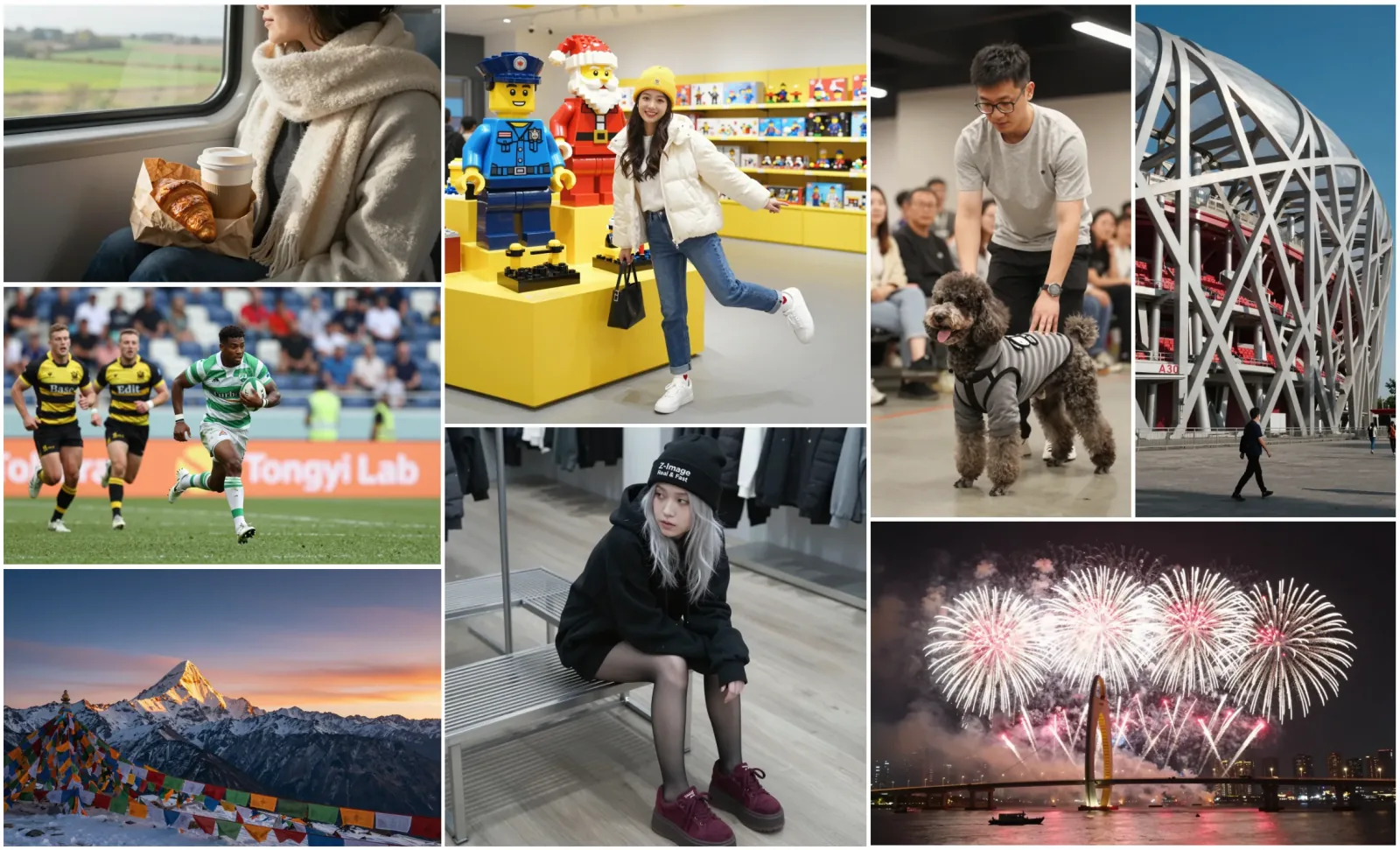
Z-Image Turbo (Alibaba Tongyi-MAI) is a 6B, Apache 2.0 model that needs only 8 function evaluations per image and “fits comfortably within 16G VRAM consumer devices”. At 941 Elo it’s the highest-scoring permissively licensed model whose maker says it fits a 16GB consumer GPU.
HiDream-O1-Image (May 2026, about 8.8B, MIT) scores 981. ERNIE-Image from Baidu (April 2026, 8B, Apache 2.0) runs on 24GB consumer GPUs and scores 912, with a Turbo variant at 924.
Which models you can use commercially
Licensing now separates these models more than quality does. Check each license yourself before shipping; this is a summary, not legal advice.
- Permissive (commercial use allowed): Qwen-Image-2512, Z-Image Turbo, FLUX.2 [klein] 4B, ERNIE-Image, Sana and SenseNova U1.5 (Apache 2.0); Ming-Image-0.1-Design and HiDream-O1-Image (MIT); Cosmos3-Super-Text2Image (OpenMDW 1.1).
- Commercial with conditions: Stable Diffusion 3.5 and Krea 2 (free under $1 million in annual revenue, plus Krea’s content-filter and naming rules); HunyuanImage 3.0 (not licensed in the EU, UK or South Korea, and a separate license above 100 million monthly users).
- Non-commercial models: Qwen-Image-2.1, Ideogram 4.0, FLUX.2 [dev] and [klein] 9B, and FIBO. All of their makers sell commercial licenses separately. FLUX’s license does allow commercial use of the generated images; running the model commercially needs a BFL license.
- Research only by the maker’s stated intent: Mage-Flow, whose code and weights are MIT but which Microsoft says isn’t meant for products.
Essential user interfaces
To run these models locally, you need an interface. These three are the ones most people use, and all three are actively maintained as of October 2026.
1. SwarmUI
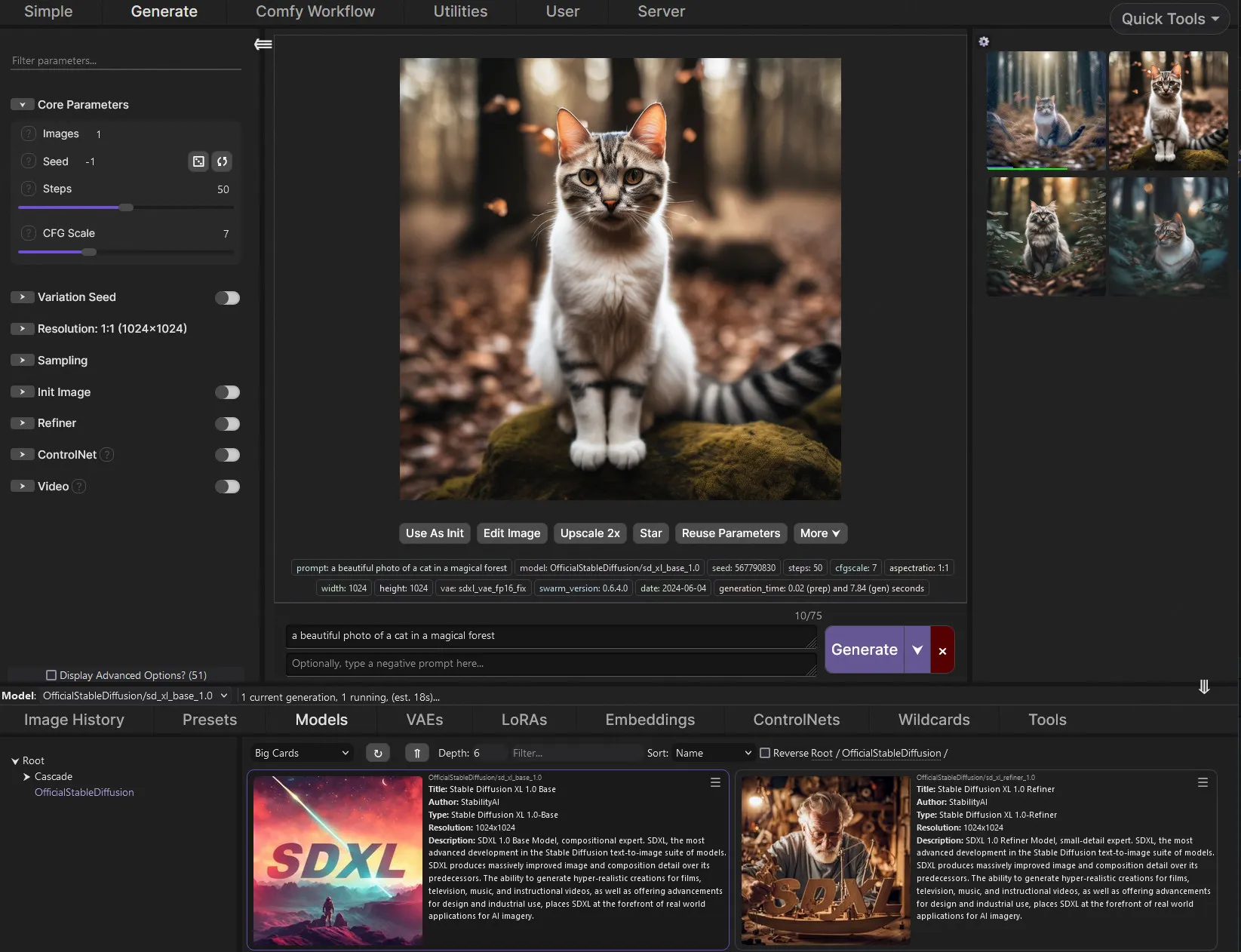
SwarmUI is built for efficiency and organization. It supports multiple backends, so you can spread generation across several GPUs or machines on your network, and its “Grid” feature is the fastest way to see how different models or settings change a prompt. It tracks new models quickly: its model support docs cover FLUX.2, Krea 2, Ideogram 4, Qwen Image 2.1, Ming, HiDream O1, ERNIE, MageFlow and SenseNova-U1. The last tagged release dates from February 2026, but development continues on the main branch, with commits into October 2026. It serves on port 7801 by default.
Source: SwarmUI on GitHub.
2. ComfyUI
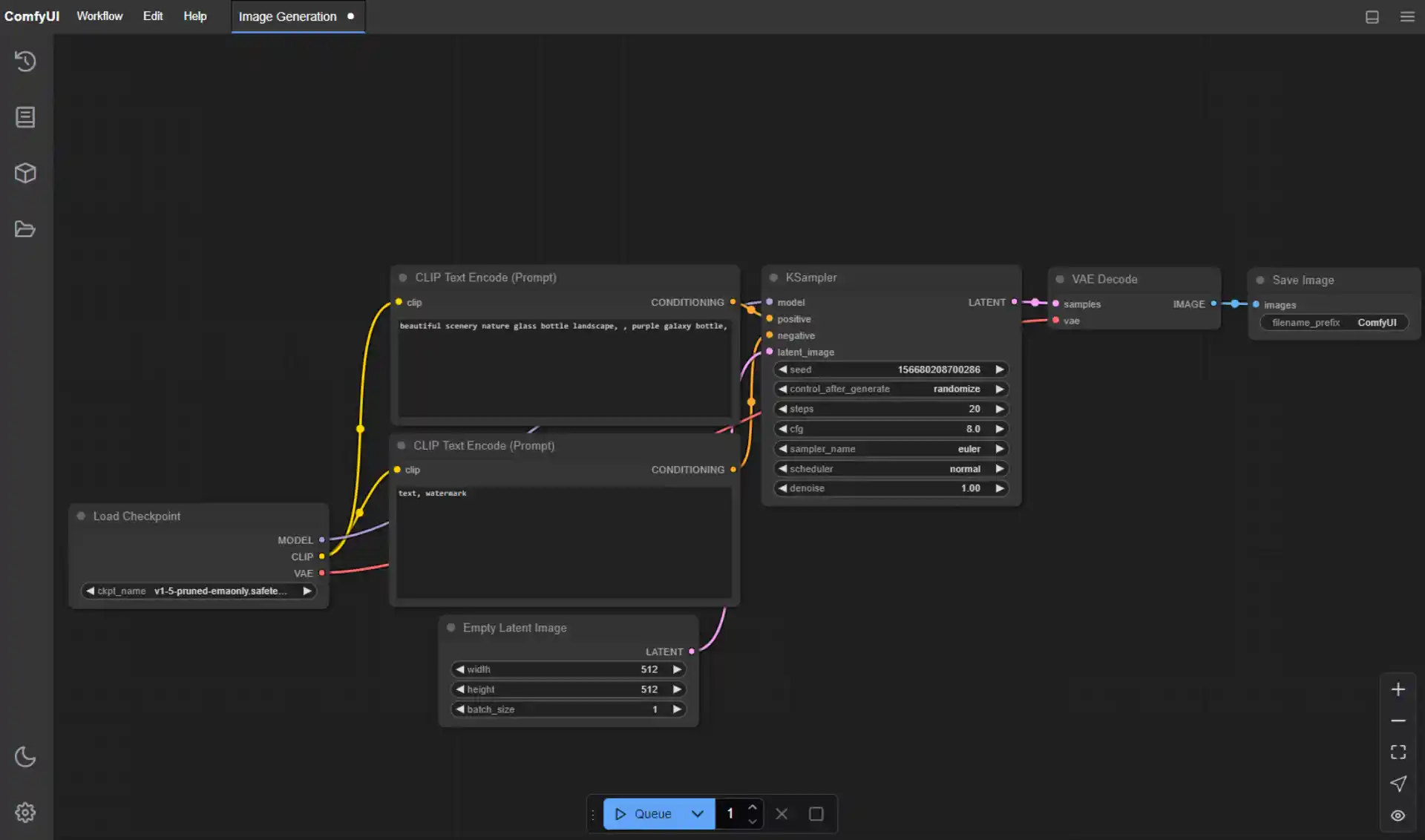
ComfyUI is the power users’ choice. Its node-based interface lets you build “workflows”, visual graphs of the generation pipeline, and it’s usually the first interface to support new model families. Version 0.39.0 shipped on October 5, 2026, adding Partner Nodes (formerly API nodes) for FLUX 3 Image and Ideogram 4.5 alongside its local model support, and its README lists FLUX.2, Ideogram 4, Krea 2, MageFlow and ERNIE Image among many others. With more than 135,000 GitHub stars, it also has the largest library of shared workflows. It serves on port 8188.
Source: ComfyUI on GitHub.
3. Forge Neo
The original Forge, an optimized fork of the classic Stable Diffusion WebUI, hasn’t had a commit since mid-2025 and never added FLUX.2 support. Its maintained successor is Forge Neo, the neo branch of Haoming02’s sd-webui-forge-classic, which describes itself as a continuation of the latest version of Forge. It keeps the familiar single-page interface on a memory-management backend rewritten from ComfyUI’s, and it supports Krea 2, Z-Image, ERNIE, Qwen-Image and FLUX.2 [klein] (but not FLUX.2 [dev]). For new users on consumer hardware, it’s still the gentlest way in. It serves on port 7860.
Source: Haoming02/sd-webui-forge-classic (Forge Neo) on GitHub.
Sharing your self-hosted instance online
Once ComfyUI, SwarmUI or Forge Neo is running on your GPU box, the next problem is access. The interface only listens on localhost, which is fine solo but breaks down when a client needs to review outputs, a teammate wants to queue a render from their laptop, or you want to check a batch job from your phone.
Pinggy solves this with one SSH command, with no signup or install. For ComfyUI on its default port:
ssh -p 443 -R0:localhost:8188 free.pinggy.ioThat prints a public HTTPS URL you can hand to anyone, without opening firewall ports or setting up a reverse proxy. For SwarmUI or Forge Neo, swap in port 7801 or 7860. Free tunnels last 60 minutes and show browser visitors a one-time screening page before the UI loads. Our guides to sharing ComfyUI online and running ComfyUI on Google Colab cover password protection, custom domains, and running the whole stack on a free Colab GPU.
Conclusion
Self-hosting AI image generation is no longer just for enthusiasts. Qwen-Image-2.1 leads the Artificial Analysis open-weight Arena, and seven other open-weight models sit within 55 Elo points of it. The closed frontier is still 163 points ahead, so hosted APIs keep a quality edge, but for most jobs the open models are good enough. What decides the pick is mostly the license and the hardware. Qwen-Image-2512, Ming-Image, Z-Image Turbo and FLUX.2 [klein] 4B are the permissive choices for a single GPU. Cosmos3 is the commercially licensed option near the top if you have a data-center node. Qwen-Image-2.1, Ideogram 4.0 and FLUX.2 [dev] are the quality leaders you can evaluate freely but need a separate license to use in a commercial product or service. Pick the model that matches your job, your license and the hardware you can spare, pair it with one of the interfaces above, and you have a private image pipeline you control end to end.