In this article
AI video generation in 2026 has crossed from tech demo to practical tool. The leading models output 1080p or 4K with lip-synced dialogue, hold character identity across multiple shots, and now produce 20-30 second clips in a single pass. The question isn’t whether any of this works for real projects anymore; it’s which model is the right fit for a given job.
What “best” means here depends on what you’re making. A model that tops a benchmark for general quality is rarely the right pick for spoken dialogue, HDR color pipelines, vertical social clips, or self-hosted commercial use. So this isn’t a single ranking - it’s a working shortlist of hosted models worth paying for, open-weight models worth running yourself, and a set of honorable mentions. Each entry covers what the model does well, where it falls short, and current pricing.
The picks below are dated to October 12, 2026. The summer changed a lot: Alibaba’s Wan 3.0 and ByteDance’s Seedance 2.5 took the top of the leaderboard, Google made Gemini Omni Flash its default video model, MiniMax released strong open weights, and OpenAI’s Sora API shut down. Anything benchmark-related (Artificial Analysis Elo positions, version numbers, leaderboard order) still moves quickly, so treat it with the usual half-life of an AI release cycle.
Comparison table (as of October 2026)
| AI Model | Best For | Pricing | Key Strength |
|---|---|---|---|
| Wan 3.0 (Alibaba) | Long single-pass clips, top overall quality | API: $0.05-$0.20/sec (480p-1080p) | AA #1 text-to-video with and without audio; 30s clips, 20 references |
| ByteDance Seedance 2.5 | Multi-reference storytelling | Jimeng / Doubao; BytePlus API (not in the US) | 30s with audio; 30 images + 10 clips + 10 audio references |
| Google Gemini Omni Flash / Veo 3.1 | Google ecosystem, 4K, editing | Google AI plans; Veo 3.1 API $0.05-$0.60/sec | Omni Flash is Google's new default; Veo 3.1 for extension and last-frame control |
| Kling 3.0 (4.0 launching) | Mass-adopted, short-form social | Free tier, paid plans on top | Native 4K, 15s, speech in 5 languages; Kling 4.0 due in October |
| Renderforest AI ad generator | Template-based social and product ads | Free tier, paid plans on top | Not a model - brand kit, stock library, platform export presets |
| HappyHorse 1.1 (Alibaba) | Character consistency, fal access | fal, Model Studio, happyhorse.com | Up to 15s at 1080p with audio; strong image-to-video |
| Runway Gen-4.5 | Production toolkit, editing | From $12/mo (billed annually) | Aleph 2 editing, Ruby SDR-to-HDR, third-party models in one app |
| Luma Ray3.2 | HDR, keyframe control, video-to-video | Credit-based plans; Ray API | 20s at 1080p, native HDR with 16-bit EXR, up to 16 keyframes |
| MiniMax H3 (open weights) | Strongest open weights | Free weights (excludes US, EU, UK, South Korea); API from $0.08/sec | 33B, 15s, 32kHz stereo, dialogue in 11 languages |
| LTX-2.5 (open weights) | 4K with audio, self-hosted | Free under $10M annual revenue | 22B, up to 4K and 20s, 24kHz stereo audio |
| HunyuanVideo 1.5 (open weights) | One consumer GPU | Free (Tencent Hunyuan Community License) | 8.3B params, 75s render on a single RTX 4090 |
| Wan 2.2 (open weights) | Apache 2.0 local generation | Free (Apache 2.0) | 27B MoE (14B active); TI2V-5B runs 720p on an RTX 4090 |
Summary
- Best overall: Wan 3.0 (Alibaba) - #1 on Artificial Analysis text-to-video, 30-second clips with native audio, API only at $0.05-$0.20/sec. Seedance 2.5 is the closest rival, with 30-second clips and up to 30 image references.
- Pick by job, not rank: Gemini Omni Flash and Veo 3.1 for Google’s ecosystem and 4K, Kling 3.0 for short social clips (Kling 4.0 lands in October), Runway Gen-4.5 for editing tools, Luma Ray3.2 for HDR, and HappyHorse 1.1 for image-to-video.
- Best open weights: MiniMax H3 (#4 overall, but its license excludes the US, EU, UK, and South Korea) and LTX-2.5 (4K with audio, runs from 12GB of VRAM, free under $10M revenue). For Apache 2.0, use Wan 2.2; for one consumer GPU, HunyuanVideo 1.5.
- Making ads, not shots? The Renderforest AI ad generator turns a prompt into a finished ad with your brand kit.
- Also worth watching: FLUX 3 and Grok Imagine Video 1.5, plus the MIT-licensed Kandinsky 6.0 Video that landed October 6. OpenAI’s Sora 2 API shut down on September 24, 2026.
What actually changed since May
The interesting axis is no longer resolution - every serious model does 1080p, and several do 4K. What’s actually moved:
- The leaderboard was rebuilt and reshuffled. Artificial Analysis now runs a v2.0 text-to-video board whose Elo scale is pinned so that Kling 3.0 1080p (Pro) sits at exactly 1,000, so scores from earlier this year, including the ones in the May version of this post, aren’t comparable. On the new board, Wan 3.0 leads with audio (1,156 as of October 12) and without it (1,128 when last checked on October 2), followed by Utopai X (a MiniMax H3 derivative), Seedance 2.5, and MiniMax H3 itself. Seedance 2.0 and HappyHorse 1.0, the two May leaders, now sit at #7 and #14.
- Clips got longer. Wan 3.0 and Seedance 2.5 both generate 30 seconds in a single pass, Ray3.2 and LTX-2.5 reach 20, and Kling 4.0 is announced at 3-30 seconds. Eight seconds plus stitching is now the low end.
- Synchronized dialogue is standard. Wan 3.0, Seedance, Kling 3.0, HappyHorse, MiniMax H3, Omni Flash, Veo 3.1, and LTX-2.5 all generate speech with the video. The differences are now in language coverage (MiniMax H3 lists 11 dialogue languages, Kling 3.0 five) and lip-sync quality.
- Reference inputs keep growing. Seedance 2.5 takes up to 30 images, 10 video clips, and 10 audio clips per generation; Wan 3.0 takes up to 20 references; MiniMax H3 takes 9 images, 3 clips, and 3 audio clips. If you want the same character across shots, this is the modern path.
- HDR is no longer Luma-only. Ray3 introduced native 16-bit HDR, and Ray3.2 keeps it with EXR export, but Runway’s Ruby now converts any SDR video to HDR, and Kling 4.0 is announced with 10-bit HDR output.
- Open weights moved up the board. MiniMax H3 is #4 with audio, the first open-weight model in the top tier, and LTX-2.5 ships 4K plus audio. The catch is licensing: H3 excludes the US, EU, UK, and South Korea, LTX is free only under $10M revenue, and Alibaba stopped releasing Wan weights after 2.2.
- OpenAI exited video generation. The Sora app was discontinued April 26, 2026, and the Sora 2 models and Videos API shut down September 24, 2026. OpenAI lists no one-to-one replacement.
The hosted models worth paying for
Ordered roughly by current Artificial Analysis position with practical capability mixed in. Pricing varies by an order of magnitude across these. One entry (Renderforest) is an ad-building tool rather than a foundation model and doesn’t appear on the leaderboard at all - it’s included because it solves a job the models above don’t.
1. Wan 3.0 (Alibaba)
Wan 3.0 entered beta on August 6, 2026 and became generally available on Alibaba Cloud on August 24. It’s now #1 on the Artificial Analysis text-to-video board both with audio (1,156) and without (1,128), and #6 on image-to-video with audio. The jump from Wan 2.7 is mostly about length and references: a single generation now runs up to 30 seconds (2.7 topped out at 15), at 30fps and 480p, 720p, or 1080p, with dialogue, background music, and sound effects generated natively, and it accepts up to 20 multimodal reference inputs.
One thing to know before you plan around it: unlike Wan 2.1 and 2.2, neither Wan 2.7 nor Wan 3.0 has open weights. Both are hosted models on Alibaba Cloud Model Studio and the Wan website. If you need the Wan line on your own hardware, Wan 2.2 (covered below) is the newest open release.
Key Features of Wan 3.0:
- AA #1 on text-to-video with audio and without audio
- 30-second single-pass clips at 30fps, up to 1080p
- Native audio - dialogue, background music, and sound effects
- Up to 20 reference inputs across images, video, and audio
- Video extension and smart duration recommendation built in
Wan 3.0 Pricing:
Billed per generated second on Alibaba Cloud: $0.05 at 480p, $0.10 at 720p, and $0.20 at 1080p, with a time-limited launch offer at general availability.
2. ByteDance Seedance 2.5 (and 2.0)
Seedance 2.5 launched July 31, 2026 and sits at #3 on the with-audio board (1,143). Two changes stand out. It generates high-quality 30-second audio-video clips in a single pass, with multiple rounds of extension after that. And it takes far more references per generation: up to 30 images, 10 video clips, and 10 audio clips, with new reference types such as clay renders and motion references. Output is 480p, 720p, or 1080p, at 4 to 30 seconds.
Seedance 2.0 (February 12, 2026), which led the board in May, is still #7 and still a strong pick: 4-15 second multi-shot clips with audio, references of up to 9 images, 3 clips, and 3 audio files, and output up to 4K with 10-bit color through BytePlus, plus faster “2.0 fast” and “2.0 mini” variants. Both models are available in ByteDance’s Jimeng and Doubao apps and to developers through the BytePlus ModelArk API, which isn’t offered in the United States. Runway also offers Seedance inside its app outside the US.
Key Features of Seedance 2.5:
- AA #3 with audio on the v2.0 board
- 30-second clips in one pass, extendable in multiple rounds
- 30 images + 10 video clips + 10 audio clips as references per generation
- 480p to 1080p, 4 to 30 seconds
- Seedance 2.0 still available for 4K output and lower-cost “fast” and “mini” variants
Seedance Pricing:
Usage-based on BytePlus ModelArk, and bundled into Jimeng and Doubao subscriptions in China. ByteDance doesn’t publish a single Western price sheet, so check the console for your region.
3. Google Gemini Omni Flash and Veo 3.1
Google’s video lineup changed shape this year. Gemini Omni Flash, announced May 19, 2026 as “a model that can create anything from any input - starting with video”, is now the model Google’s API docs recommend as the default for video generation, with version 1.1 released in August. It takes text, images, video, and audio as input, outputs 3-10 second clips at 24fps from 360p up to 4K with native audio, and also handles video editing and extension. Omni Flash 1.1 is tied for #7-8 on the text-to-video with-audio board (1,113) and does better on image-to-video, where it’s #3 with audio and #1 without.
Veo 3.1 (released October 2025) is now the specialist: Google’s docs point to it for scene extension, last-frame control, and existing pipelines. “Ingredients to Video” takes up to three reference images to hold a character or product steady across shots, durations are 4, 6, or 8 seconds, and the API generates 720p, 1080p, or 4K directly (4K isn’t available on Veo 3.1 Lite). It has slipped to #18 on the new board (965). Every Veo video carries a SynthID watermark.
Both are reachable through the Gemini app, Flow, and the Gemini API and Vertex AI.
Key Features:
- Omni Flash: any-input video model - text, image, video, and audio in; 3-10s clips with audio, up to 4K
- Omni Flash: editing and extension in the same model
- Veo 3.1: three-image reference (Ingredients to Video) for consistency across shots
- Veo 3.1: native 4K in the API, plus scene extension and last-frame control
- Lite, Fast, Standard tiers for Veo 3.1
- SynthID watermarking on Veo output
Pricing:
In the Gemini API, Veo 3.1 Standard costs $0.40 per second at 720p or 1080p and $0.60 at 4K; Veo 3.1 Fast is $0.10-$0.30; Veo 3.1 Lite is $0.05 at 720p and $0.08 at 1080p. Omni Flash is billed per token rather than per second. For consumers, video comes with the Google AI plans (Plus, Pro, Ultra 5x, and Ultra 20x); in Flow, a Veo video costs 10 (Lite), 20 (Fast), or 100 (Standard) credits, and Google AI Pro includes an extra 1,000 credits.
4. Kling 3.0 (Kuaishou)
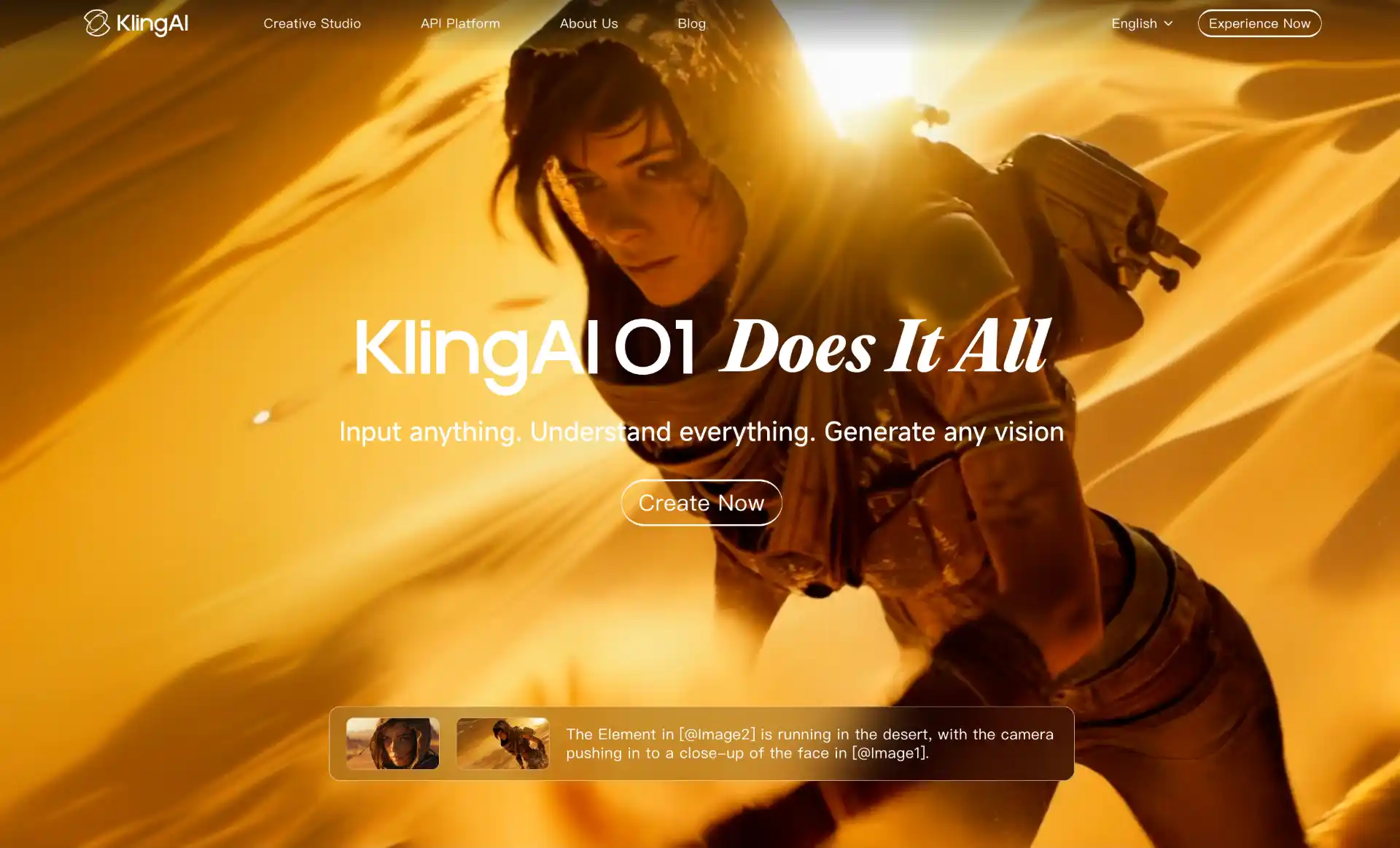
Kling 3.0 launched February 4, 2026, replacing Kling 2.6, first as early access for Ultra subscribers. It raised clip length to 15 seconds, introduced native 4K generation (8-bit SDR), and generates speech in five languages: Chinese, English, Japanese, Korean, and Spanish. Audio and video come out of a single pass, so dialogue, sound effects, and ambient sound stay in sync. Adoption is large: Kuaishou reported more than 60 million creators and 600 million videos generated since Kling launched in mid-2024.
On the v2.0 board, Kling 3.0 1080p (Pro) is literally the reference point at 1,000 Elo, with the Omni variant just above at 1,017, so it’s no longer near the top. The more interesting news is Kling 4.0: Kuaishou says it “will officially launch in October”, and Kling 4.0 Flash opened to a limited group of early-access users on September 28, 2026, announced with 3-30 second clips, up to 4K, stereo audio, and 10-bit HDR output.
Key Features of Kling 3.0:
- Native 4K - real 4K generation, not upscaling
- 15-second clips - up from 10 seconds in 2.6
- Joint audio-visual generation - dialogue, SFX, and ambient sound in one pass
- Speech in five languages - Chinese, English, Japanese, Korean, Spanish
- Text-to-video, image-to-video, multi-shot storyboarding and reference-based generation
- Scale - 60M+ creators, 600M+ videos generated since 2024
Kling 3.0 Pricing:
Free tier with limited daily generations. Paid plans add capacity and priority processing. Available through the kling.ai web platform and API.
5. Renderforest AI Ad Generator
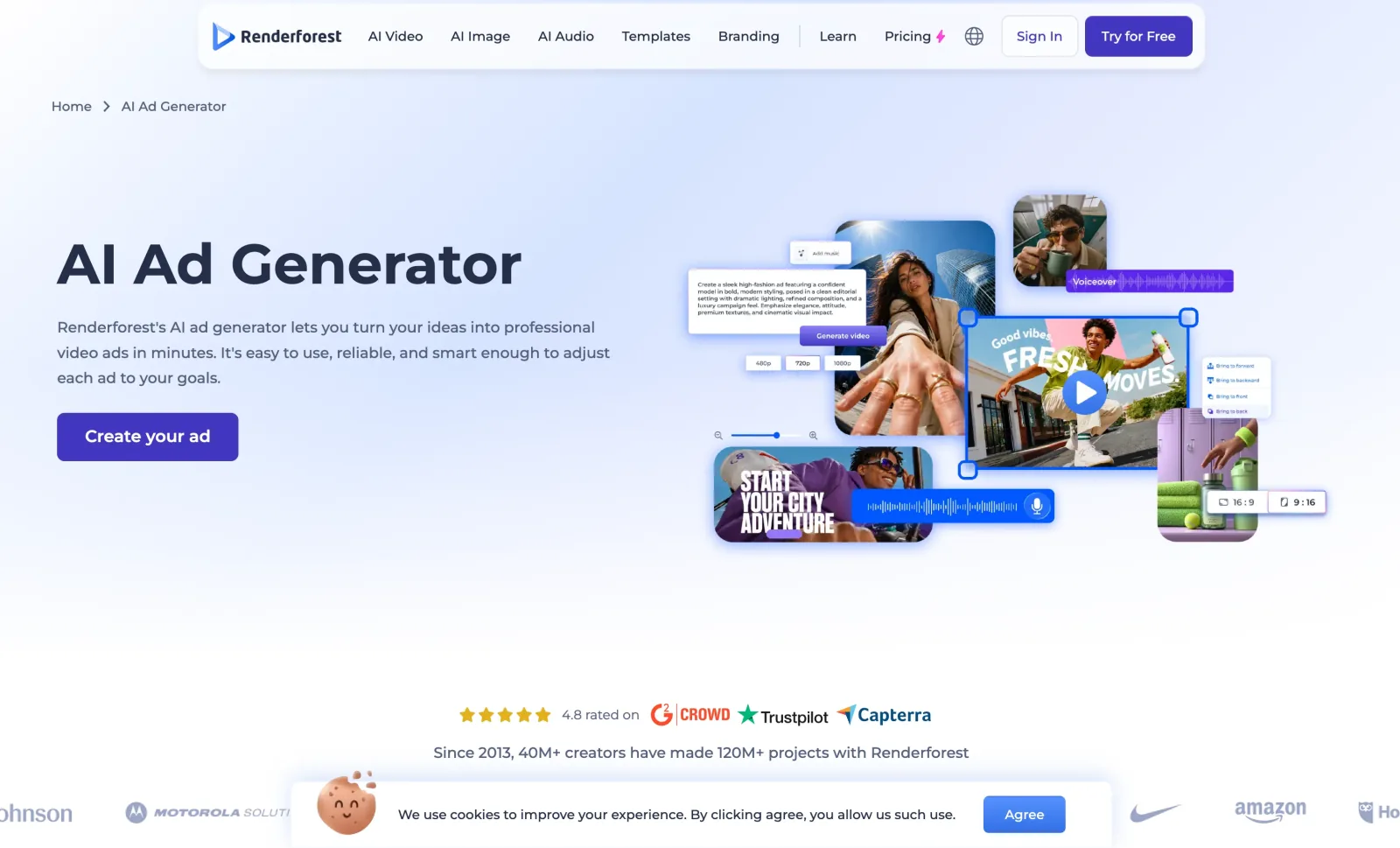
The Renderforest AI ad generator is the odd entry here: it isn’t a foundation model, it isn’t on the Artificial Analysis board, and it isn’t trying to be. It’s a template-driven ad builder with a generation step bolted to the front. You describe the product, service, or campaign, and it assembles a promo video - visuals, animation, on-screen text, music - that you then edit rather than re-prompt.
That distinction is the whole point of using it. Prompt Veo or Kling for an ad and you get footage; you still have to cut it, drop in the logo, pick a track, and export three aspect ratios. Renderforest starts from the ad-shaped output and lets you swap in your own logo, brand colors, fonts, and voiceover before export. It’s part of the wider Renderforest suite, so a brand kit set up once carries across projects.
The tradeoff is the one every template system has: you’re picking from a library rather than generating from scratch, so the ceiling on originality sits well below anything else in this section. If you want a specific shot, this is the wrong tool. For startups, ecommerce, and SaaS teams shipping social ads on a schedule, that ceiling rarely binds - it’s the same reason people reach for Canva over Illustrator.
Key Features of Renderforest AI Ad Generator:
- Text prompt to finished ad - describe the campaign, get a cut promo video back
- Brand kit - logo, colors, fonts, and voiceover applied on top of any template
- Template and stock library - animations, footage, and music to build from
- Platform export presets - YouTube, Instagram, TikTok, Facebook aspect ratios
- Browser-based - nothing to install, no GPU
- Editable output - the generated video is a starting point, not a locked render
Renderforest AI Ad Generator Pricing:
Free tier available. Paid plans raise export quality and video length, add AI credits, and unlock the advanced branding options and the rest of the creative toolkit.
6. HappyHorse 1.1 (Alibaba)
HappyHorse appeared on the Artificial Analysis arena in April 2026 and briefly led it: in late May, HappyHorse 1.0 was #1 without audio and a close #2 with audio. Alibaba’s Token Hub (ATH) business unit developed it, launched it in limited beta on April 27, and describes it as generating up to 15 seconds of 1080p video with multiple shots and lip-synced dialogue. It’s available on the HappyHorse website, Alibaba Cloud Model Studio, and the Qwen app, as well as through fal, where it went live on April 26 at $0.14 per second for 720p and $0.28 per second for 1080p.
HappyHorse 1.1 followed in June with better character consistency, motion, and visual quality. On today’s boards it’s #12 for text-to-video with audio and stronger on image-to-video, at #7 with audio. Its architecture details (parameter count, layer count) haven’t been published by Alibaba, so treat figures you see on third-party sites with caution.
Key Features of HappyHorse 1.1:
- Up to 15 seconds at 1080p with multiple shots
- Lip-synced dialogue and sound in one pass
- Text-to-video, image-to-video, and reference-to-video modes
- Wide access - fal API, Model Studio, Qwen app, and happyhorse.com
HappyHorse Pricing:
Per-second pricing on fal and Alibaba Cloud Model Studio; check the provider for current 1.1 rates.
7. Runway Gen-4.5
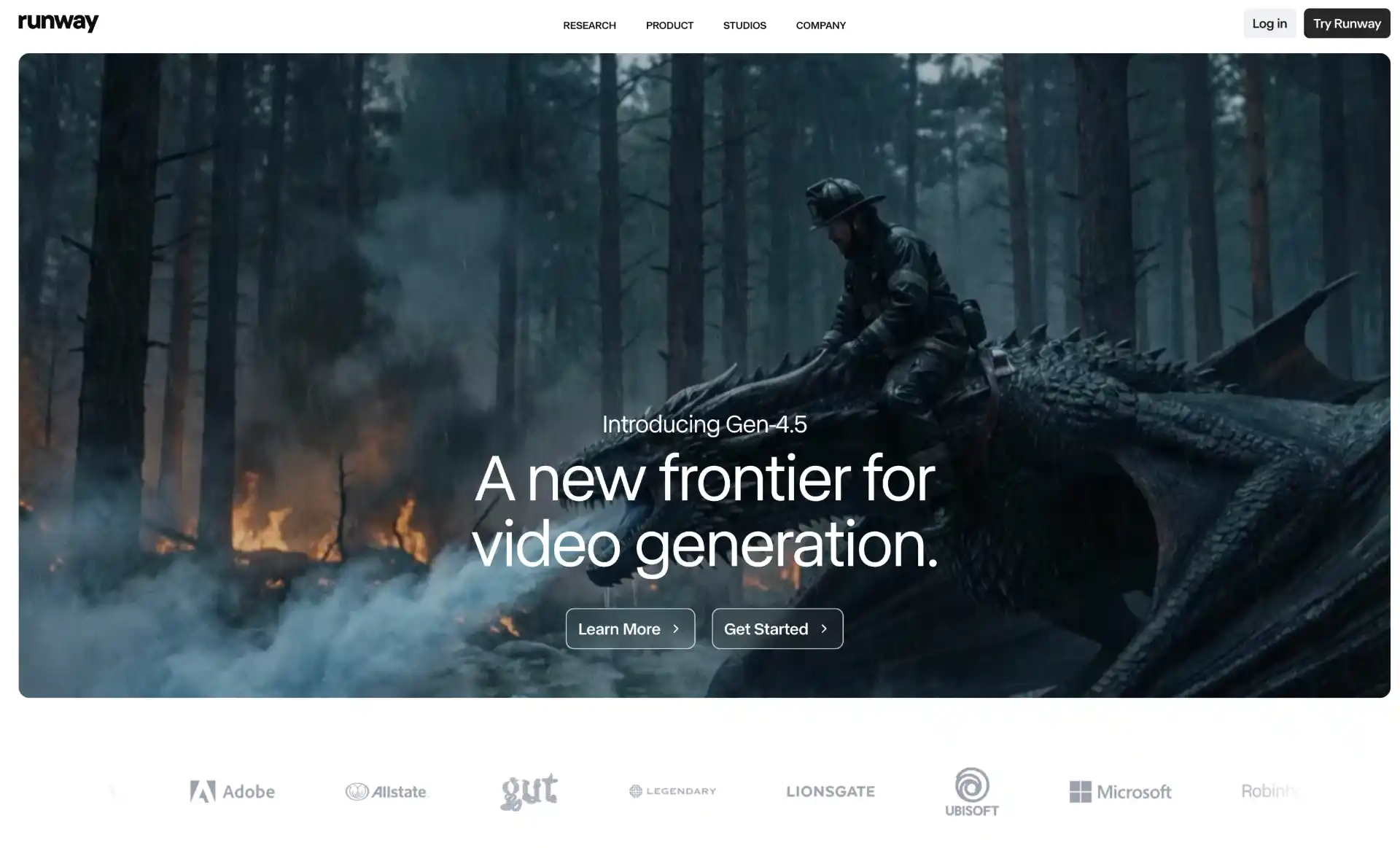
Runway Gen-4.5 was #1 on the Artificial Analysis Text-to-Video leaderboard at its December 2025 launch with 1,247 Elo on the old scale. It hasn’t been replaced by a Gen-5, and on today’s boards it’s a silent model (no native audio) at #23 on the text-to-video board without audio. Durations are 2-10 seconds at 720p. Runway doesn’t make the list for raw generation quality anymore; it makes it for the toolkit around generation.
Three things carry that. Aleph 2, released in May 2026, edits and restyles existing footage from text prompts, and it now runs in a Runway panel inside Adobe Premiere Pro and After Effects. Ruby, added in August, converts any SDR video into HDR, including Gen-4.5 output and footage from other models. And Runway now offers other labs’ models, including Seedance, Kling, and Veo, inside the same app, so you can generate with one and finish with Runway’s tools. Gen-4.5 is also the foundation for GWM-1, Runway’s General World Model for real-time interactive worlds, avatars, and robotics.
One correction from earlier versions of this post: Motion Brush belongs to the deprecated Gen-2 model and isn’t available on Gen-4.5.
Key Features of Runway Gen-4.5:
- Scene consistency - a reference image keeps characters and objects coherent across shots
- Aleph 2 - prompt-based editing of existing video
- Ruby - SDR-to-HDR conversion for any clip
- Third-party models - Seedance, Kling, Veo and others in the same workspace
- Gen-4 Turbo - roughly half the credit cost for iteration
- GWM-1 - real-time interactive world model built on Gen-4.5
Runway Gen-4.5 Pricing:
The Standard plan is $12/month billed annually ($15 billed monthly). Runway’s pricing page puts the same credits at about 52 seconds of Gen-4.5 or 104 seconds of Gen-4 Turbo, which is why Turbo is the right default for prototyping. API access has separate pricing.
8. Luma Ray3.2
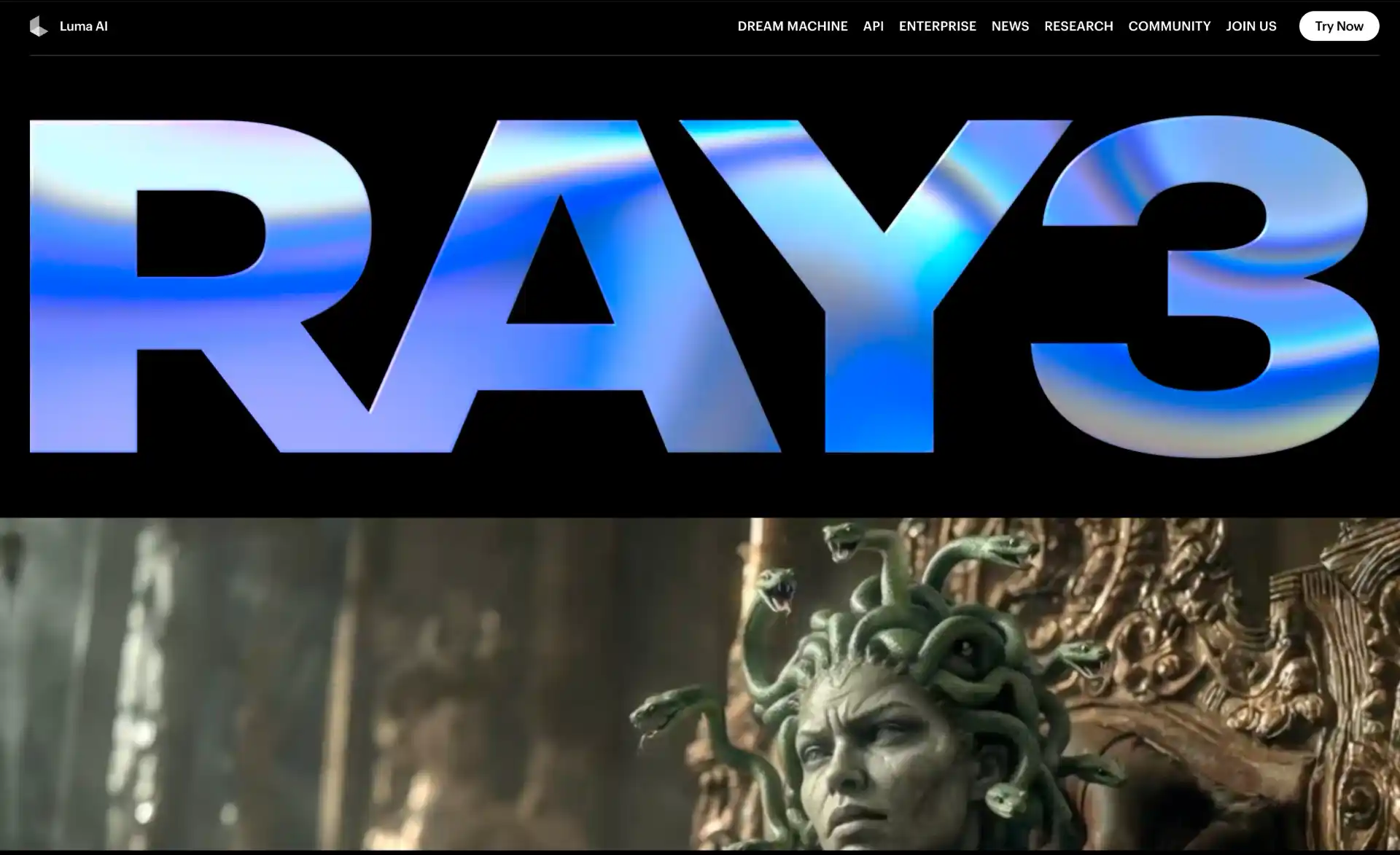
Luma Ray3 (September 18, 2025) was the first AI video model to generate native 16-bit HDR, exported as EXR for professional color pipelines. Luma has iterated quickly since. Ray3.14 (January 26, 2026) made 720p generation 4x faster and 3x cheaper and extended Modify Video to 18 seconds. Ray3 Modify (December 2025) edits real actor footage, with start and end frame control for longer camera moves.
The current flagship is Ray3.2, released June 9, 2026. It generates clips up to 20 seconds long at 1080p, accepts up to 16 keyframes for frame-level control over how action moves, keeps native HDR generation with 16-bit EXR output, and is the first Ray model with its full control surface available as a public API. HDR is no longer unique to Luma (Runway’s Ruby converts to HDR, and Kling 4.0 is announced with HDR), but Ray3.2 is still the model built around it.
Key Features of Luma Ray3.2:
- Native HDR with 16-bit EXR export - for professional color workflows
- 20-second clips at 1080p
- Up to 16 keyframes - frame-level control over action and timing
- Ray3 Modify - video-to-video editing of actor performances with start/end frame control
- Public Ray API - the full Ray control surface for developers
Luma Pricing:
Luma’s subscriptions are now credit-based individual plans (Plus, Pro, and Ultra) plus business plans, and the Ray3.2 API is priced per clip by resolution. The old Free and Lite tiers and Ray2 pricing listed in earlier versions of this post are gone; check Luma's pricing page for current numbers.
The open-weight models worth running yourself
Open weights in video now come with real license strings attached, so read the license before the benchmark. Of the models below, only Wan 2.2 and MAGI-2 are Apache 2.0.
1. MiniMax H3 (MiniMax)
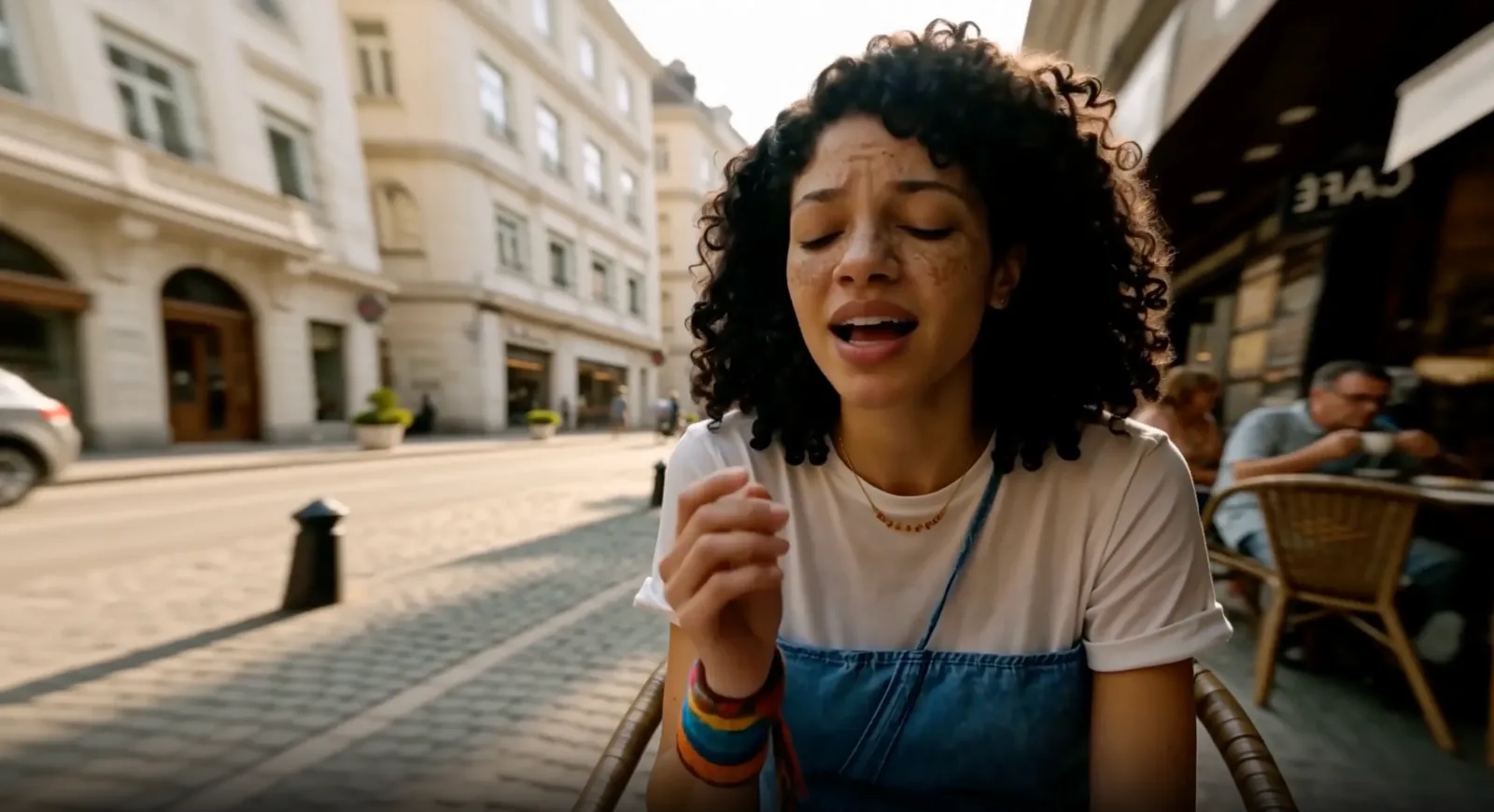
MiniMax H3, announced July 31, 2026 with weights released August 3, is the strongest open-weight video model on the leaderboard: #4 on text-to-video with audio (1,137) and #2 without. It’s a 33B-parameter dense, single-stream Transformer that takes text, images, video, and audio as context and generates video with native 32kHz stereo sound, up to 15 seconds at 24fps. It handles dialogue in 11 languages, and its omni-reference mode accepts up to 9 images, 3 video clips, and 3 audio clips. Open-weight output is 768p on the shorter side by default; 2K needs a separate regenerator that MiniMax hasn’t open-sourced yet.
The license is the catch. The MiniMax H3 Community License excludes the European Union, the United Kingdom, South Korea, and the United States, and companies with more than $20 million in yearly revenue need written authorization. If you’re in one of those regions, use the API instead. H3 replaced Hailuo 2.3, which MiniMax now lists as a legacy model, and fal’s optimized H3 Max (August 2026) is #1 on image-to-video with audio.
Key Features of MiniMax H3:
- Highest-ranked open weights - #4 with audio, #2 without
- 33B dense single-stream Transformer
- 15-second clips with 32kHz stereo audio and dialogue in 11 languages
- Omni-reference input - up to 9 images, 3 clips, and 3 audio clips
- 768p by default, 2K via a regenerator that isn’t open yet
MiniMax H3 Pricing:
Weights are free to download where the license applies. The MiniMax API charges $0.08 per second at 768p and $0.13 per second at 2K.
2. LTX-2.5 (Lightricks)
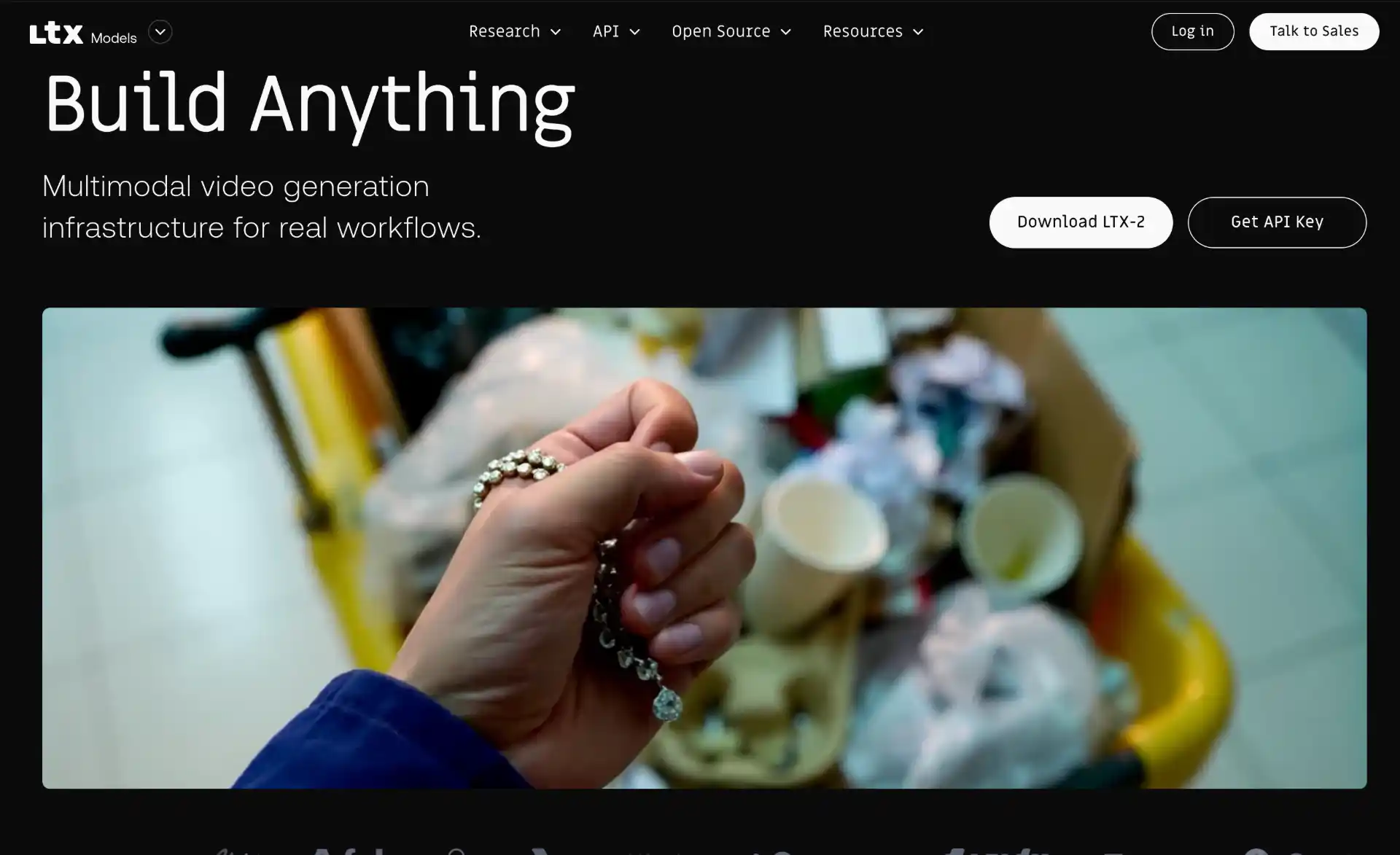
LTX-2.5, released August 11, 2026, is the current version of Lightricks’ LTX-2 family and replaces LTX-2.3 (March 2026), which LTX now labels “Previous Generation”. It’s a 22B-parameter audio-video model that adds a custom Gemma 4 12B text encoder and a diffusion-based video decoder, and LTX describes the upgrade as covering production-grade fidelity, multi-shot scene consistency, fine-tuning support, and deployment efficiency. Per LTX, it generates up to 20 seconds per generation at up to 4K and 50fps, with synchronized 24kHz stereo audio in the same pass. The previous release, LTX-2.3, added native portrait video up to 1080x1920, trained on portrait footage rather than cropped from landscape.
Hardware is more flexible than the 4K numbers suggest: the full model needs a GPU with 80GB or more of VRAM, but the distilled and FP8 variants run on a single GPU with as little as 12GB. The license is the LTX Model License, which LTX itself notes is not Apache 2.0: free for organizations under $10 million in annual revenue, with a commercial license required above that. The Hugging Face weights are gated.
Key Features of LTX-2.5:
- Up to 4K and 20 seconds per generation, extendable with the Extend pipeline
- Synchronized 24kHz stereo audio in one pass
- 22B params with a Gemma 4 12B text encoder
- Multi-shot scene consistency and fine-tuning support
- Runs from 12GB of VRAM with distilled or FP8 weights
LTX-2.5 Pricing:
Free for organizations under $10M in annual revenue. Companies above that need a commercial license through the LTX Licensing Program.
3. HunyuanVideo 1.5 (Tencent)
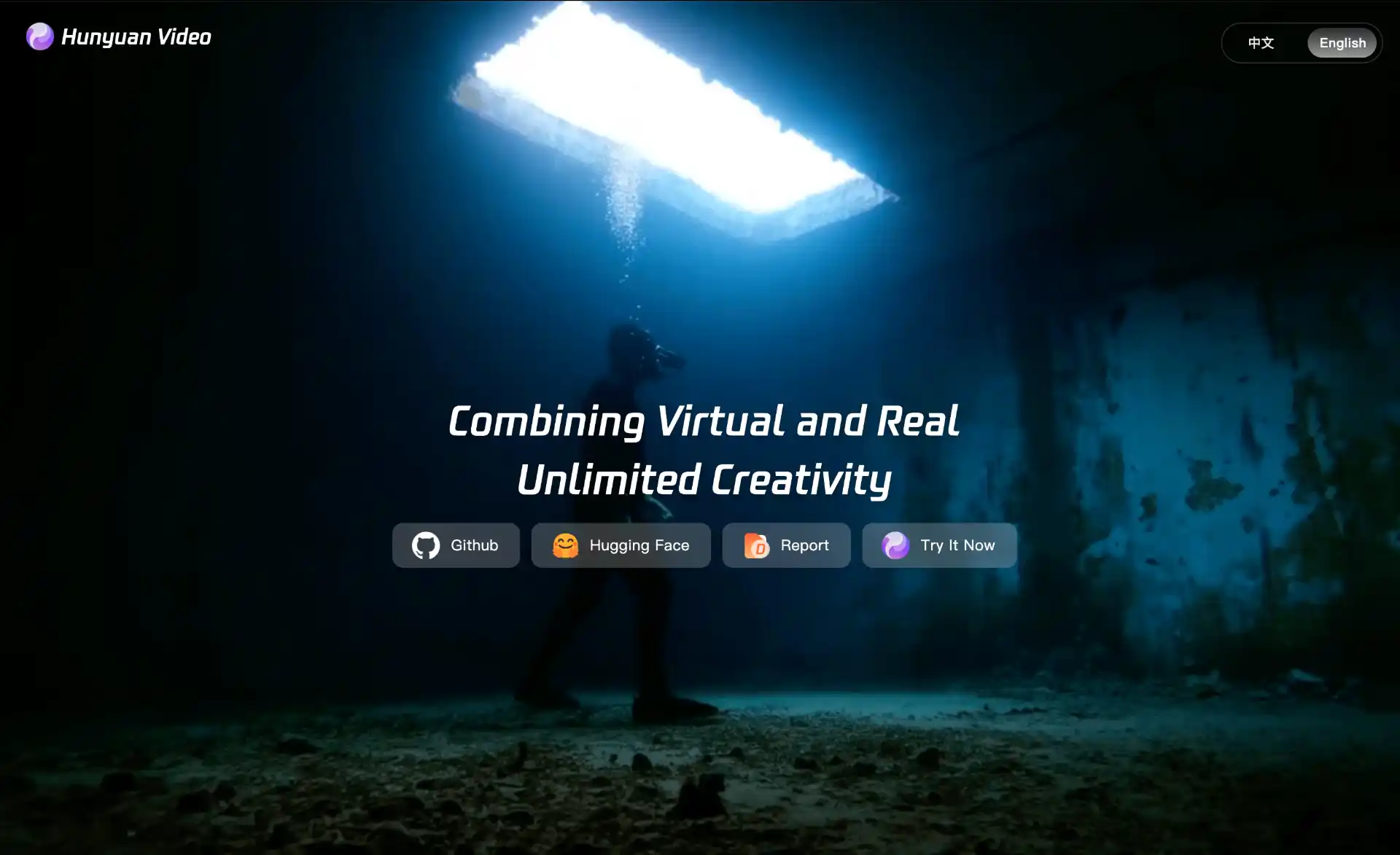
HunyuanVideo 1.5 (released November 2025) is still the best open model for a single prosumer GPU. It reaches strong quality at only 8.3 billion parameters, and the step-distilled release from December 2025 renders a video in about 75 seconds on a single RTX 4090. With model offloading, the minimum GPU memory is 14GB.
The architecture is a DiT with selective and sliding tile attention (SSTA), fed by a 3D causal VAE that compresses video 16x spatially and 4x temporally, with glyph-aware text encoding for better Chinese and English text in scenes. Tencent ships related models for image-to-video, audio-driven avatars (HunyuanVideo-Avatar), and customized generation (HunyuanCustom). The license is the Tencent Hunyuan Community License, not Apache 2.0: it doesn’t apply in the European Union, the United Kingdom, or South Korea, and services above 100 million monthly active users need a separate license. Tencent hasn’t released a newer HunyuanVideo since.
Key Features of HunyuanVideo 1.5:
- 8.3B parameters - small enough for one consumer GPU
- About 75-second renders on a single RTX 4090 (step-distilled)
- 14GB minimum VRAM with offloading
- DiT + SSTA attention with a 3D causal VAE
- Glyph-aware text encoding for Chinese and English text in scenes
- Model family - T2V, I2V, Avatar (audio-driven), Custom
HunyuanVideo 1.5 Pricing:
Free to download under the Tencent Hunyuan Community License. Weights and training code are on GitHub and Hugging Face.
4. Wan 2.2 (Alibaba)
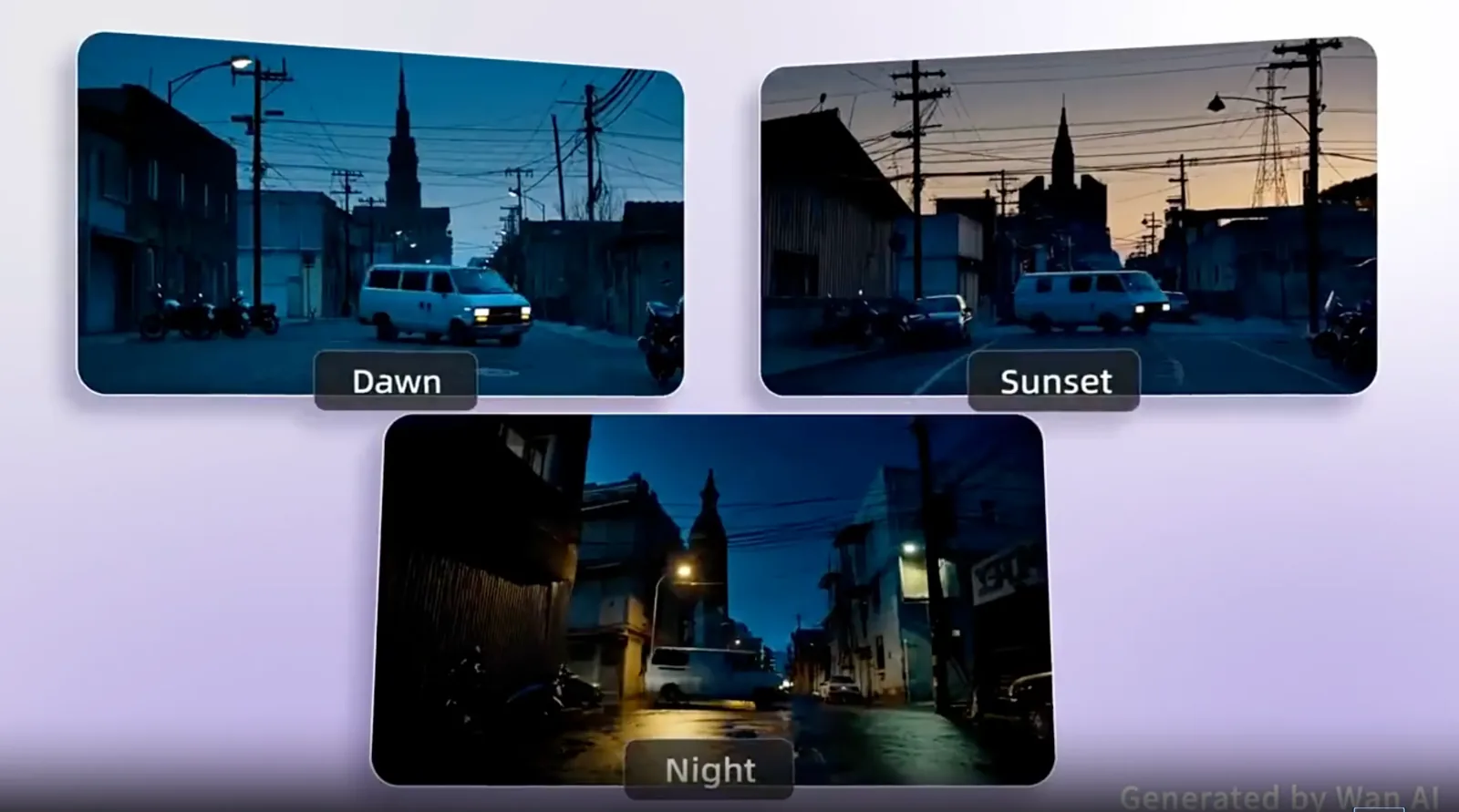
Wan 2.2 (July 2025) is the newest general-purpose Wan model with open weights; earlier versions of this post described Wan 2.7 as open source, but Wan 2.7 and Wan 3.0 are hosted-only. Wan 2.2 is a Mixture-of-Experts diffusion model: a high-noise expert handles early layout and a low-noise expert refines detail, for about 27B total parameters with 14B active per step. The TI2V-5B variant combines text-to-video and image-to-video in one model and generates 720p at 24fps on a consumer GPU like the RTX 4090. It’s licensed under Apache 2.0, the cleanest commercial story in this section, and it’s integrated into ComfyUI.
Key Features of Wan 2.2:
- Apache 2.0 - usable for commercial work without revenue caps or regional exclusions
- MoE diffusion - 27B total, 14B active per step
- TI2V-5B - 720p@24fps text- and image-to-video on an RTX 4090
- ComfyUI support since launch
Wan 2.2 Pricing:
Free, Apache 2.0 licensed, with code and weights on GitHub and Hugging Face.
5. MAGI-2 Preview (Sand.ai)
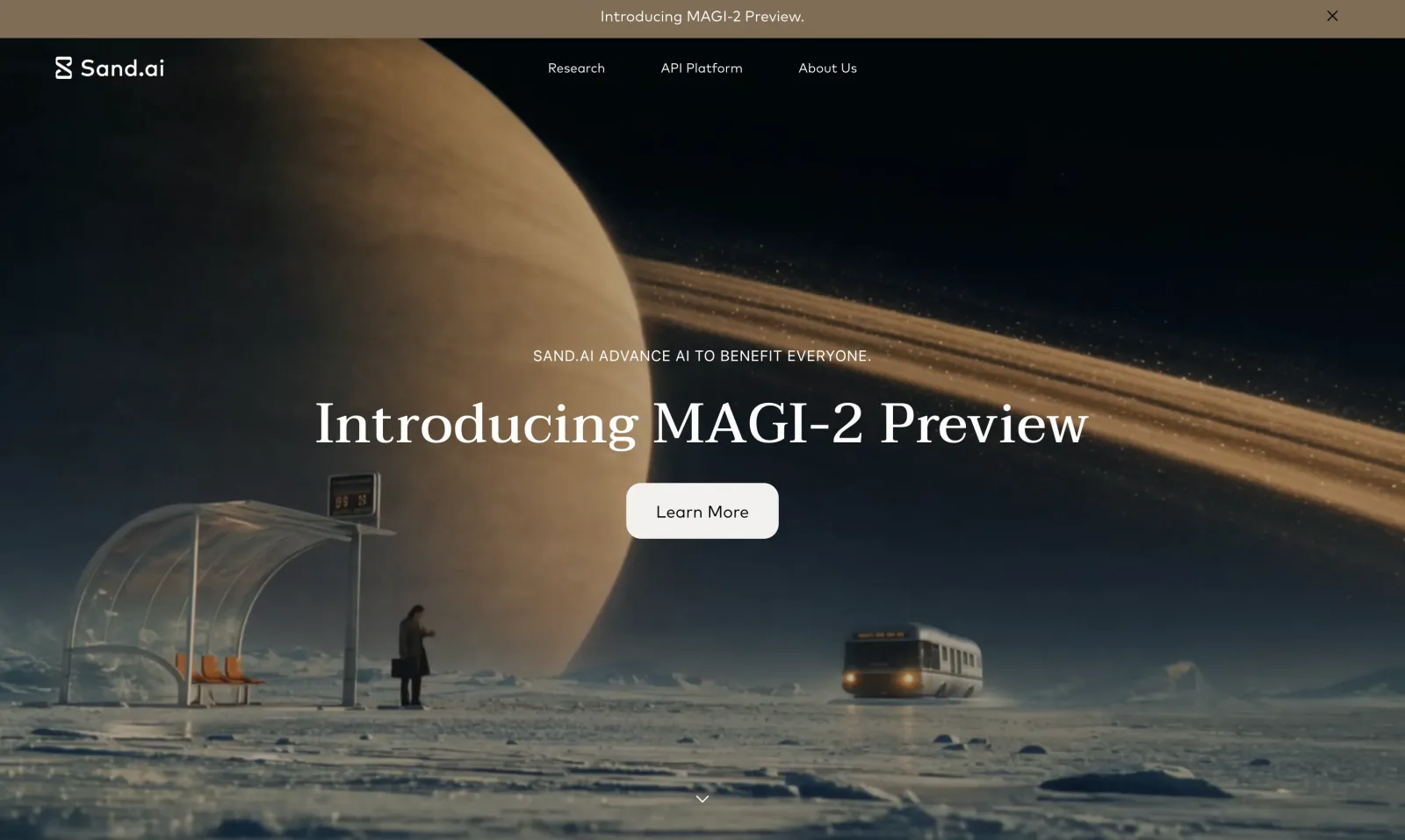
MAGI-2 Preview (August 2026) is the highest-ranked Apache 2.0 video model on the boards, at #9 on image-to-video with audio. It’s a 114B-parameter unified audio-video Mixture-of-Experts model that activates about 6B parameters per token, generating 10-second clips (the only duration it currently supports) with a refiner that takes output up to 1080p. It’s not a hobbyist model: the requirements call for eight NVIDIA Hopper GPUs.
6. Kandinsky 6.0 Video (Kandinsky Lab)
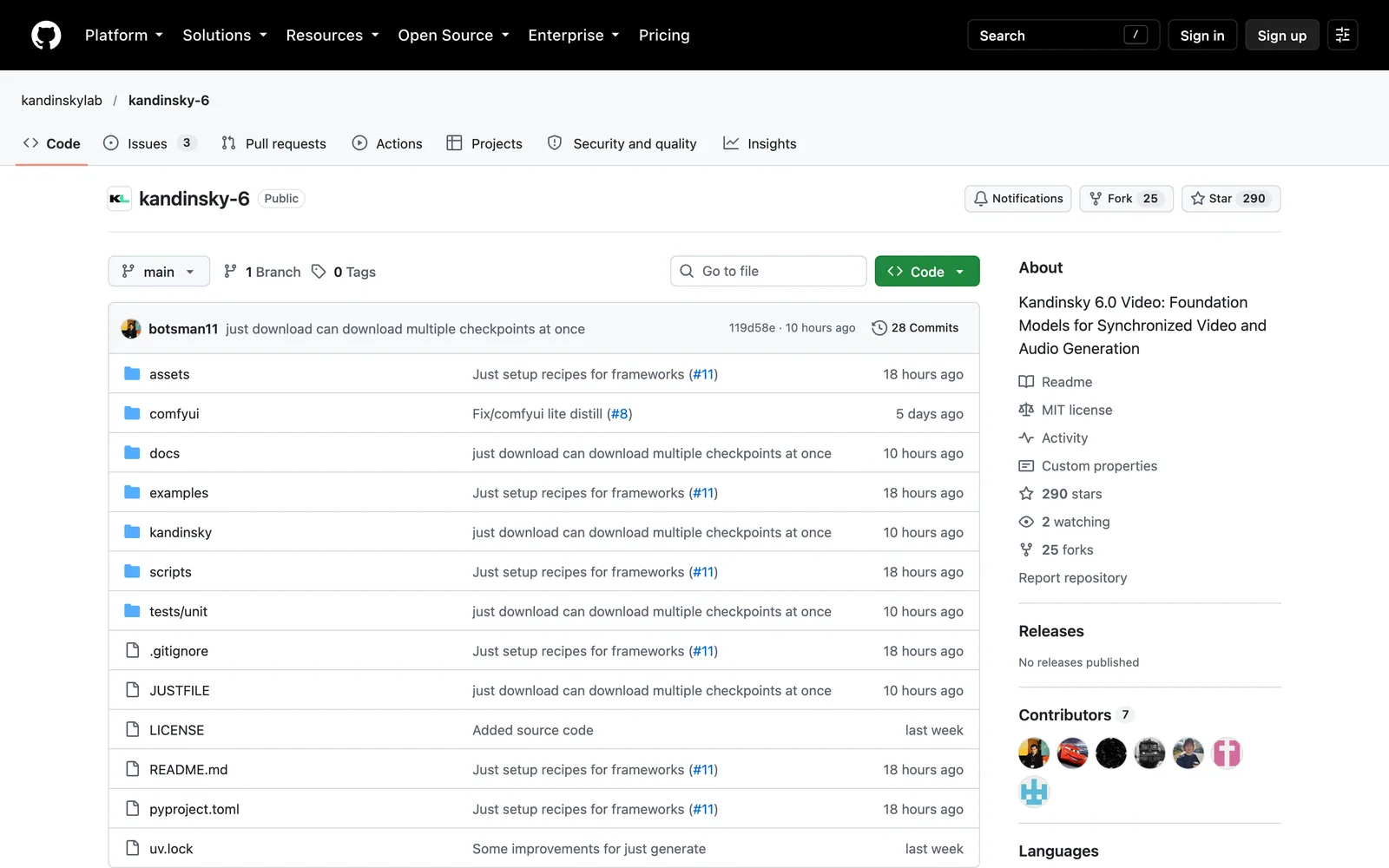
Kandinsky 6.0 Video is the newest open-weight release in this list. Kandinsky Lab published the code and weights on October 6, 2026 under the MIT license, in two sizes: a 29B Pro model and a 3B Lite model. Both generate 5-second clips with synchronized 44 kHz audio from text or an image, and a separate super-resolution model takes output to Full HD. The 3B Lite is the one a single consumer GPU has a chance of running; the 29B Pro is not. It isn’t on the Artificial Analysis board yet. The official repo and its MIT license are confirmed on GitHub; the clip length, audio rate and release date come from the repo’s update log as relayed by secondary sources (a ComfyUI wiki and a Japanese tech report), so check the README before building on it.
Specialized tools and notable mentions
A few models that don’t compete head-on with the list above but solve adjacent problems worth knowing about:
Models that didn’t make the top tier but are worth knowing:
 FLUX 3 (Black Forest Labs) - FLUX 3, in early access since July 2026, generates video with synchronized audio in the same call and sits at #6 on the with-audio board. Open weights for a multimodal backbone are planned but not released.
 Grok Imagine Video 1.5 (SpaceXAI) - Generally available on the Imagine API since June 16, 2026, with 1-15 second clips and native audio, at $0.08, $0.14, and $0.25 per second for 480p, 720p, and 1080p. It’s tied for #11 on the with-audio board. A cheaper Grok Imagine Video 1.5 Lite followed on October 8, 2026, listed from $0.02 per second at 480p (that price comes from the xAI Console listing as relayed by aggregators, so check xAI’s pricing page). xAI is now part of SpaceX, which acquired it in February 2026.
Avatar-specific tools (different category, not general video generators):
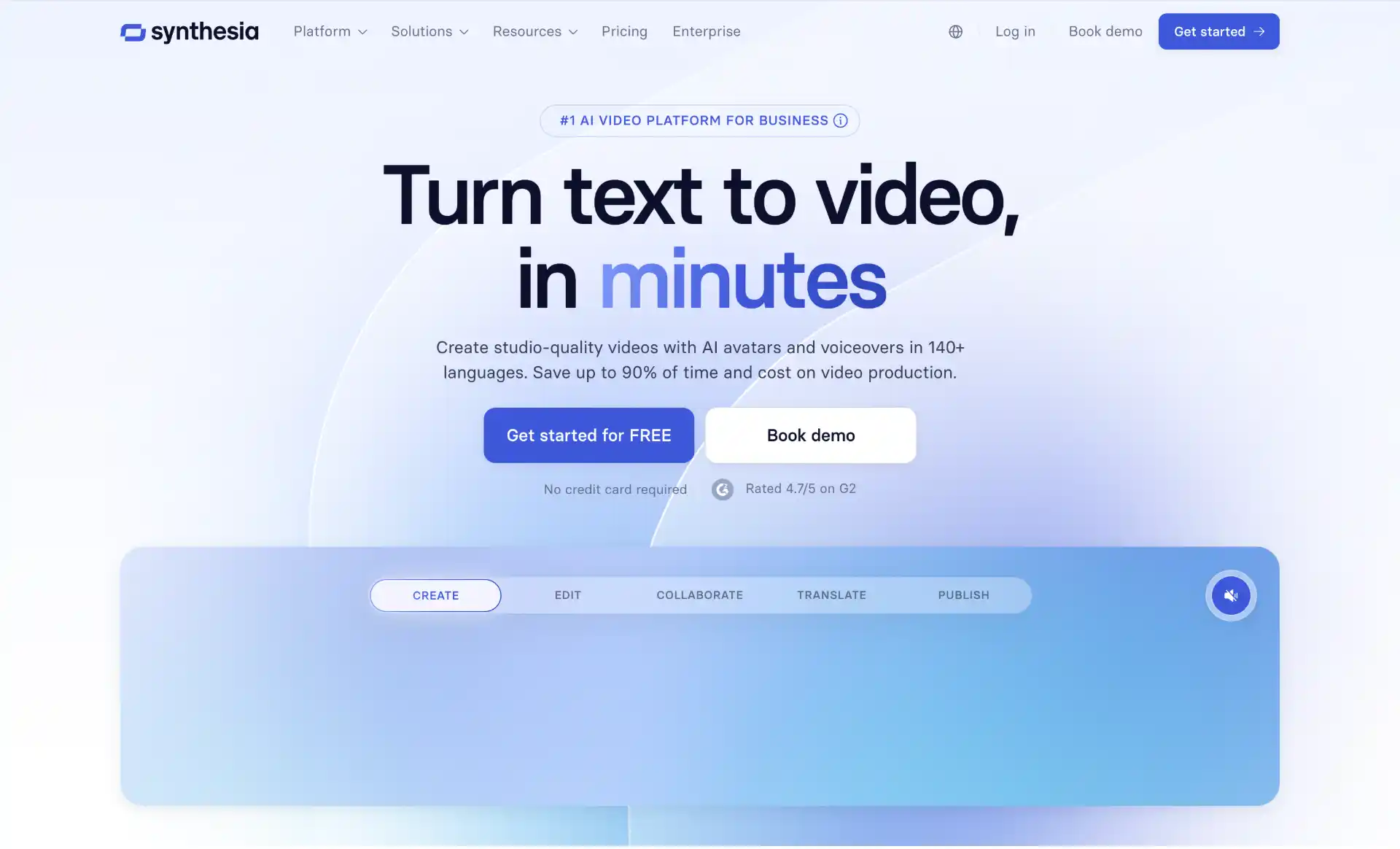 Synthesia - AI avatar video for corporate communications, training, marketing. More than 240 avatars and 140+ languages. The right pick for localized training content at scale.
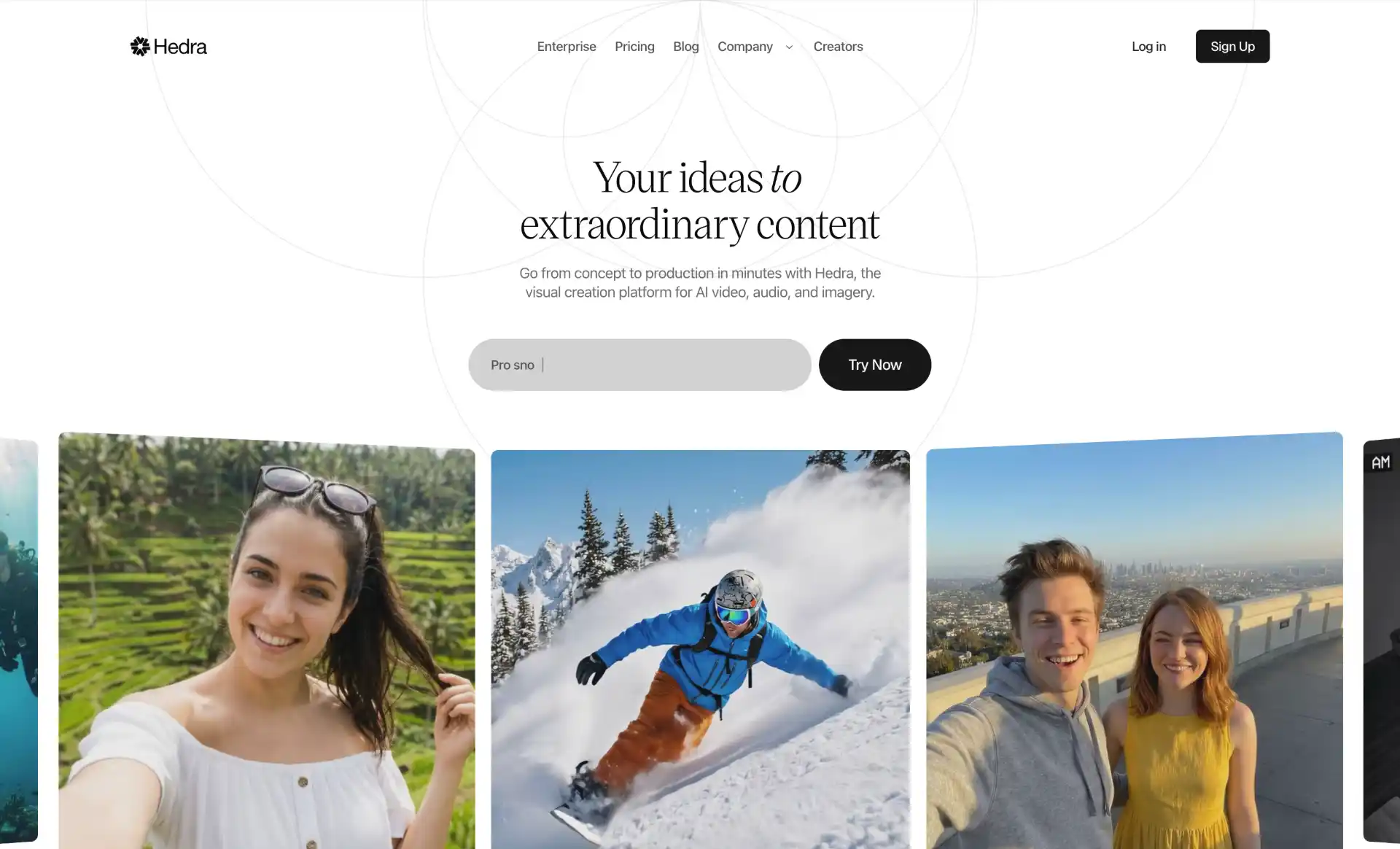 Hedra - Character-driven video with strong lip-syncing and emotional expression. Its Character-3 model generates talking-head videos up to 10 minutes long from audio inputs.
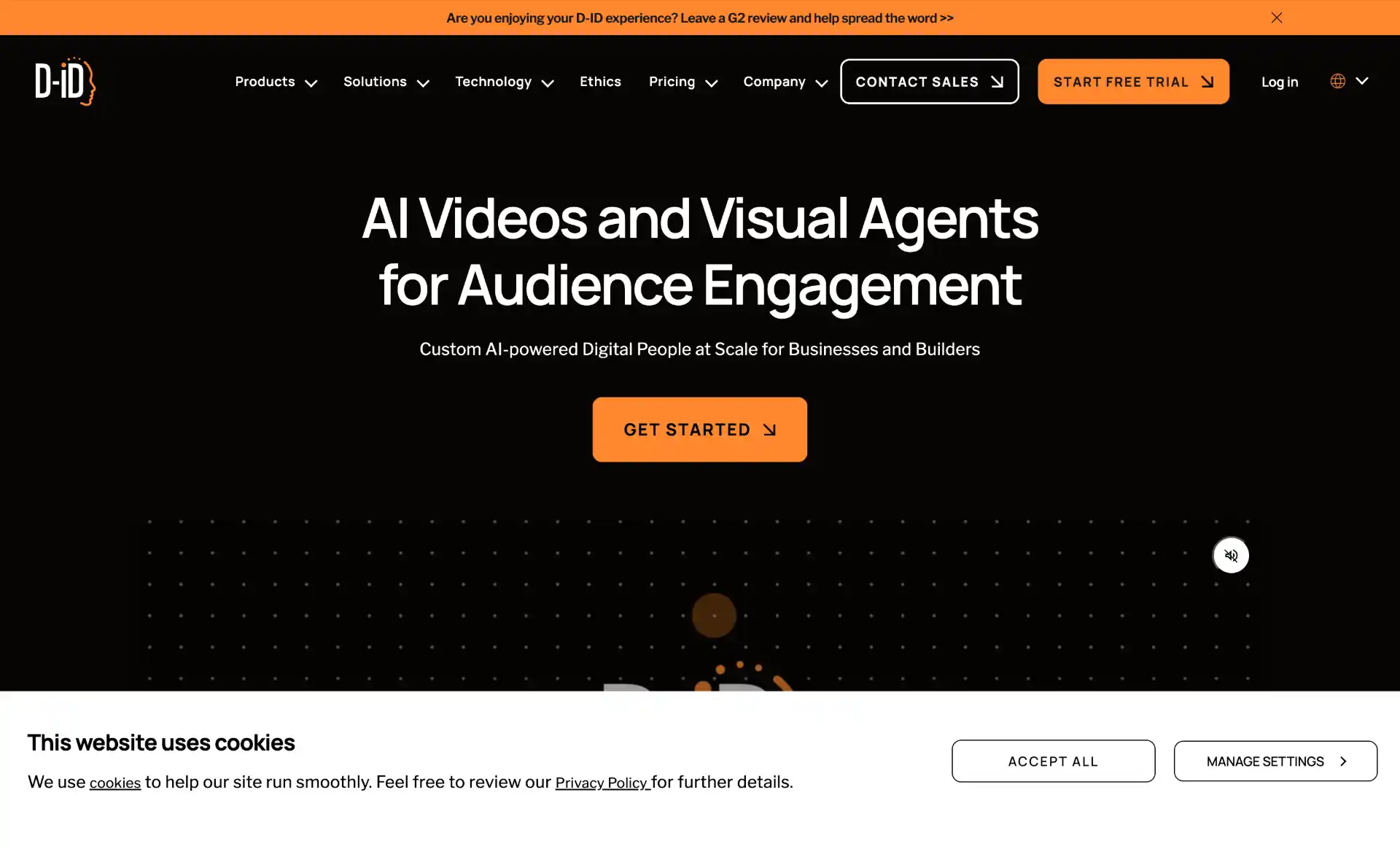 D-ID - Digital humans and real-time streaming avatars. Strong API support; common pick for customer-service and interactive web apps.
VideoDubber - AI video generation with translation and dubbing
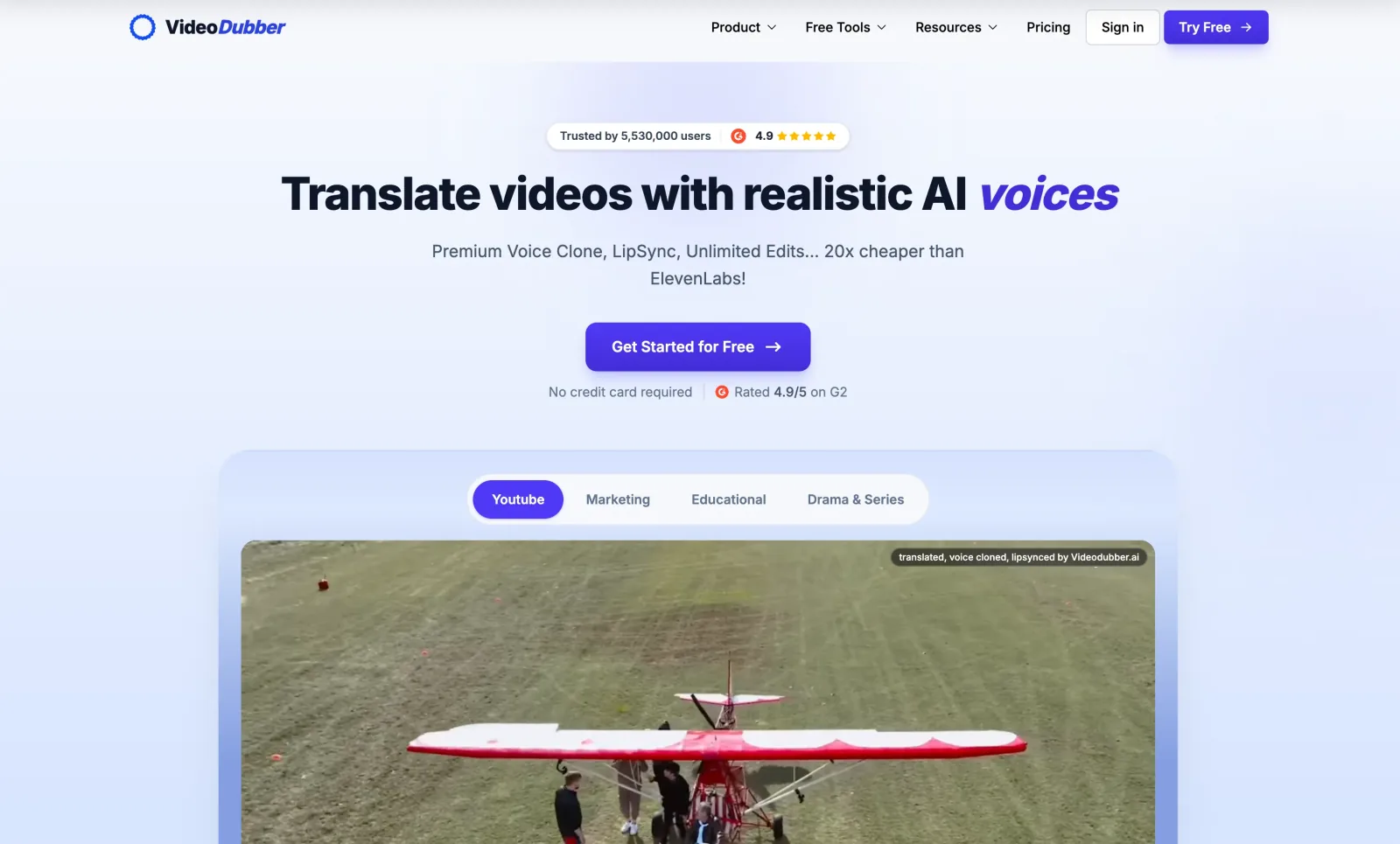
Most of the models above generate video in one language. If you’re shipping the same creative to YouTube, ads, or training content across markets, you still need a localization step after generation - and that’s usually a separate tool and a separate bill.
VideoDubber bundles the generator and the translator into one plan. Generate a clip, then dub it into the target language with synced subtitles, voiceover, and optional voice cloning. It covers 150+ languages, exports MP4 plus SRT/VTT, and ships a browser-based subtitle editor for fixing transcripts before re-export.
Key Features
- One-click dubbing into 150+ languages
- Built-in AI video generator with visual-style and music selection
- Voice cloning and multi-speaker support on all plans
- Subtitle editor with unlimited re-exports on paid tiers
- MP4 + SRT/VTT export
VideoDubber pricing
From $9/month for 25 translation minutes, with a free trial on every plan. If multilingual distribution is the goal, having translation sit inside the generation workflow is the practical part - no second tool, no separate export-import loop.
Invideo’s AI Models
Invideo’s AI is becoming one of the most popular platforms for AI video creation because it combines several powerful AI tools and all available video models in one place. Instead of using separate apps for scripting, editing, voiceovers, and video generation, users can do everything directly inside invideo. The platform supports advanced AI models like Kling, Veo, Runway, and Seedance, making it easier to create cinematic videos, social media reels, ads, and marketing content within minutes.
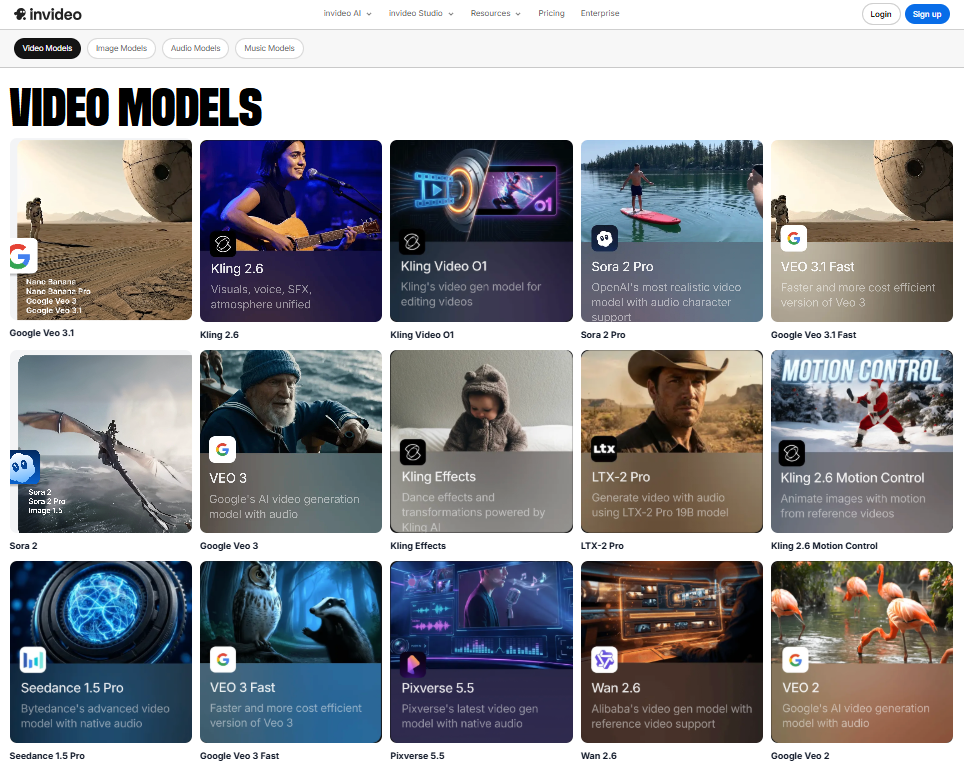
What makes invideo stand out is its beginner-friendly interface and fast workflow. Even users with no editing experience can generate professional-looking videos simply by entering a text prompt. The platform also includes AI voices, music generation, stock media, and smart editing features that save time during production. With access to hundreds of AI-powered tools and creative assets, invideo is a great choice for creators, filmmakers, marketers, businesses, and agencies looking to scale content creation quickly and efficiently.
Key Features
- Access to 200+ AI models, including Kling, Veo, Seedance, and Runway
- AI video generation from a single text prompt
- Built-in AI voiceovers, music, and sound generation
- AI-powered video editing and automation workflows
- Support for cinematic, social media, and marketing videos
- Team collaboration and shared project workflows
- Credit-based system for flexible AI model usage across tools
Invideo AI Models pricing
- Pricing is credit-based, meaning different AI models consume different numbers of credits depending on complexity, resolution, duration, and audio generation.
How to integrate AI video into a workflow
Practical notes from running the same prompts across these models:
- Pick by output shape first, leaderboard position second. For 30-second single takes, Wan 3.0 or Seedance 2.5. For short social verticals in many languages, Kling or MiniMax H3. For HDR finishing, Luma Ray3.2 (or Runway’s Ruby on someone else’s clip). For editing footage you already have, Runway Aleph 2, Luma Ray3 Modify, or Omni Flash. The “best” model is the one whose default output already matches what you need.
- Test against your real prompts, not demo reels. Vendor demo clips are cherry-picked. Most of these have free tiers or cheap per-second APIs; spend an hour running your prompts on three or four and judge the median, not the highlight reel.
- Don’t over-index on the leaderboard. Artificial Analysis Elo moves week to week, and the September rebuild reset every number. Wan 3.0 leads today, but Runway has the deepest editing toolkit, Luma is built around HDR, and the open-weight picks are the only ones you can run on your own hardware. Position #1 isn’t always the right pick.
- Plan for stitching, less often. Wan 3.0 and Seedance 2.5 reach 30 seconds, Ray3.2 and LTX-2.5 reach 20, and most others cap at 8-15 seconds. Anything longer is still stitched or extended, and several models (Seedance 2.5, LTX-2.5, Omni Flash) now have built-in extension.
- If you’re shipping commercially, read the license. Wan 2.2 and MAGI-2 are Apache 2.0. LTX-2.5 is free only under $10M annual revenue. HunyuanVideo 1.5 excludes the EU, UK, and South Korea. MiniMax H3 excludes the US, EU, UK, and South Korea. Hosted models all have their own terms, and Veo adds a SynthID watermark to every output.
- Use the cheap variant for iteration. Veo 3.1 Lite, Gen-4 Turbo, Wan 3.0 at 480p, LTX-2.5’s distilled weights - all exist for the concepting loop. Reserve the flagship tier for the final render.
Wrapping up
The shortlist for October 2026, by use case:
- Highest overall quality: Wan 3.0, #1 on text-to-video with and without audio. API only.
- Longest single takes with heavy referencing: Seedance 2.5 (30 seconds, 30 images + 10 clips + 10 audio references) or Wan 3.0 (30 seconds, 20 references).
- Already in Google’s ecosystem? Gemini Omni Flash for general generation and editing; Veo 3.1 for scene extension, last-frame control, and native 4K in the API.
- Need production tooling around generation? Runway Gen-4.5 for Aleph 2 editing, Ruby HDR conversion, and other labs’ models in one place.
- Need 4K social clips with spoken lines? Kling 3.0 today, and watch Kling 4.0 this month.
- Need HDR for color-managed pipelines? Luma Ray3.2.
- Need open weights near the top of the board? MiniMax H3, if you’re outside its excluded regions.
- Need to self-host 4K + audio? LTX-2.5 (under $10M revenue); HunyuanVideo 1.5 if you need it to fit on one consumer GPU.
- Need a fully permissive license? Wan 2.2 on consumer hardware, or MAGI-2 Preview if you have an 8-GPU Hopper node.
Conclusion
A year ago, choosing a video model mostly meant choosing the one with the best demo reel. In October 2026 the leaders are close enough that the decision comes down to three practical questions: how long a single take you need, whether the model has to run on your own hardware, and what its license lets you do with the output. Wan 3.0, Seedance 2.5, and Gemini Omni Flash are the strongest hosted answers; MiniMax H3, LTX-2.5, and Wan 2.2 are the open-weight ones, each with different license limits.
Run your own prompts on two or three candidates before you commit, and recheck the leaderboard before any big project. Kling 4.0 is due this month, Artificial Analysis positions move roughly weekly, and anything here about rank has a half-life of a few months. The picks above are dated to October 2, 2026.