In this article
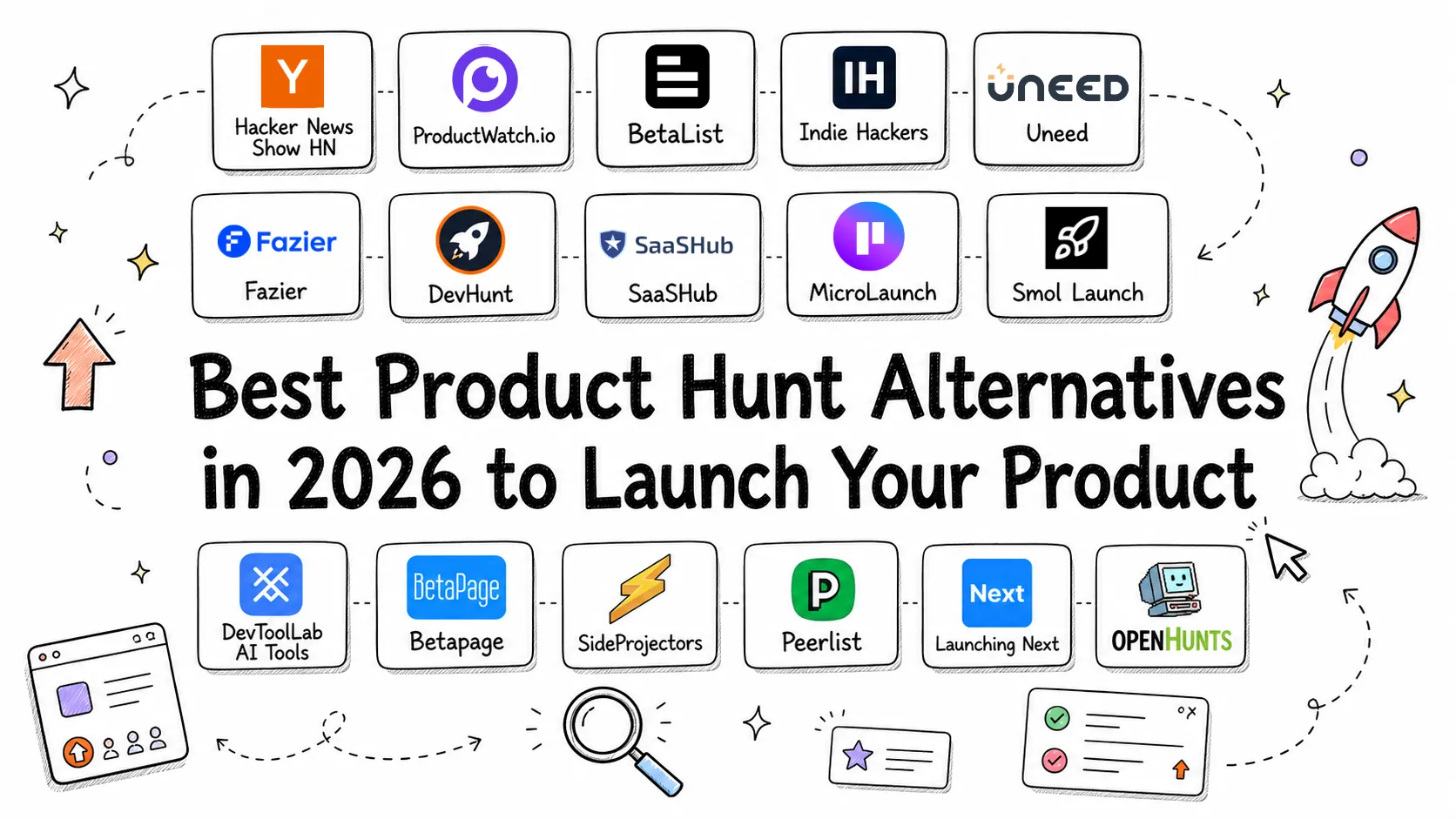
The best Product Hunt alternatives in 2026 give founders and developers something the original platform increasingly struggles to deliver: a genuine audience that finds your product on merit, not on how big your Twitter following is before launch day.
Product Hunt launched in 2013 and spent years as the default answer to “where should I launch my product?” It still gets millions of visitors per month and has been the jumping-off point for real products - Notion, Loom, and Figma all launched there. But the platform has changed, and so has the ecosystem around it.
In 2026, over 500 products launch on Product Hunt every day. The 24-hour voting window means your product lives or dies based on how many friends you can mobilize before midnight Pacific Time. Small indie products regularly get buried under well-funded launches with dedicated marketing teams. And the feedback quality has thinned - you get upvotes, but rarely the kind of conversation that tells you whether you built the right thing.
None of this means Product Hunt is useless. It still drives real traffic for the products that crack the top 10 on any given day. But it works reliably for a narrower slice of launches than it used to. For most indie makers, bootstrapped founders, and developer tool builders in 2026, the best launch strategy involves multiple platforms - including several that barely existed three years ago. The goal is not to win any single leaderboard. It is to accumulate backlinks from permanent directory listings, earn newsletter features that get forwarded and re-shared, and return to launch communities every time you ship something worth talking about.
This guide covers the 10 best Product Hunt alternatives available right now, what each one is actually good for, and how to build a launch strategy that does not depend on a single platform’s algorithm.
Summary
Top 10 Product Hunt Alternatives in 2026:
- Hacker News Show HN - Best for developer tools, APIs, and technical products - Submit to Hacker News
- ProductWatch.io - Community-driven daily feed with sustained visibility beyond launch day - Launch on ProductWatch
- BetaList - Best for pre-launch beta products and building email waitlists - Submit to BetaList
- Indie Hackers - Best community for bootstrapped founders and makers - Join Indie Hackers
- Uneed - Growing product launch platform for indie makers with a supportive community - Launch on Uneed
- Fazier - AI-focused product discovery platform, less crowded than Product Hunt - Launch on Fazier
- DevHunt - Weekly launch platform built specifically for developer tools - Launch on DevHunt
- SaaSHub - SaaS product directory with strong long-term SEO value - List on SaaSHub
- MicroLaunch - Curated platform for micro-SaaS products and solo developer projects - Launch on MicroLaunch
- Smol Launch - Weekly launch windows that give products more than 24 hours to gain traction - Launch on Smol Launch
Honorable Mentions:
- PitchWall - Beta product directory for early-stage launches
- DevToolLab AI Tools - AI tools directory with 800+ tools, great for long-term discovery of AI products
- SideProjectors - Community for indie side project builders
- Peerlist - Professional network with product launch capabilities
- Launching Next - Curated startup directory with dofollow backlinks
- OpenHunts - Community-driven product launch platform
Why Developers and Founders Are Looking Beyond Product Hunt
Product Hunt’s core problem is saturation. When a platform becomes the default place to launch, everyone launches there - and the signal-to-noise ratio drops. As of 2026, the homepage shows a rotating cast of daily launches where the top spots often go to products with built-in audiences, not necessarily the best products.
The 24-hour window creates a specific kind of stress: you need upvotes fast, which means mobilizing your existing network before your product is even widely known. If your launch day happens to fall alongside a high-profile product from a well-known company, you might get 200 upvotes and finish 15th - with almost none of the traffic. Timezone also matters more than it should. Products that launch at midnight Pacific often underperform compared to similar products that go live at 7am Pacific, simply because early upvotes signal the algorithm.
None of this is fatal if you have a large enough network and a product that resonates broadly. But for solo developers, indie makers, and teams building developer tools for niche audiences, the alternatives in this guide often deliver better returns with less chaos.
Comparison Table
| Platform | Best For | Launch Window | Pricing |
|---|---|---|---|
| Hacker News Show HN | Developer tools, technical products | Ongoing thread | Free |
| ProductWatch.io | Sustained discovery, all product types | Ongoing (daily feed) | Free |
| BetaList | Pre-launch, waitlist building | Permanent listing | Free |
| Indie Hackers | Bootstrapped founders, community | Forum posts, ongoing | Free |
| Uneed | Indie products, small teams | Daily launches | Free |
| Fazier | AI tools and AI-first products | Daily launches | Free |
| DevHunt | APIs, SDKs, developer tools | Weekly | Free |
| SaaSHub | SaaS, B2B software | Permanent listing | Free |
| MicroLaunch | Micro-SaaS, solo projects | Daily rotation | Free |
| Smol Launch | Indie makers, first-time launchers | 7 days | Free |
1. Hacker News Show HN
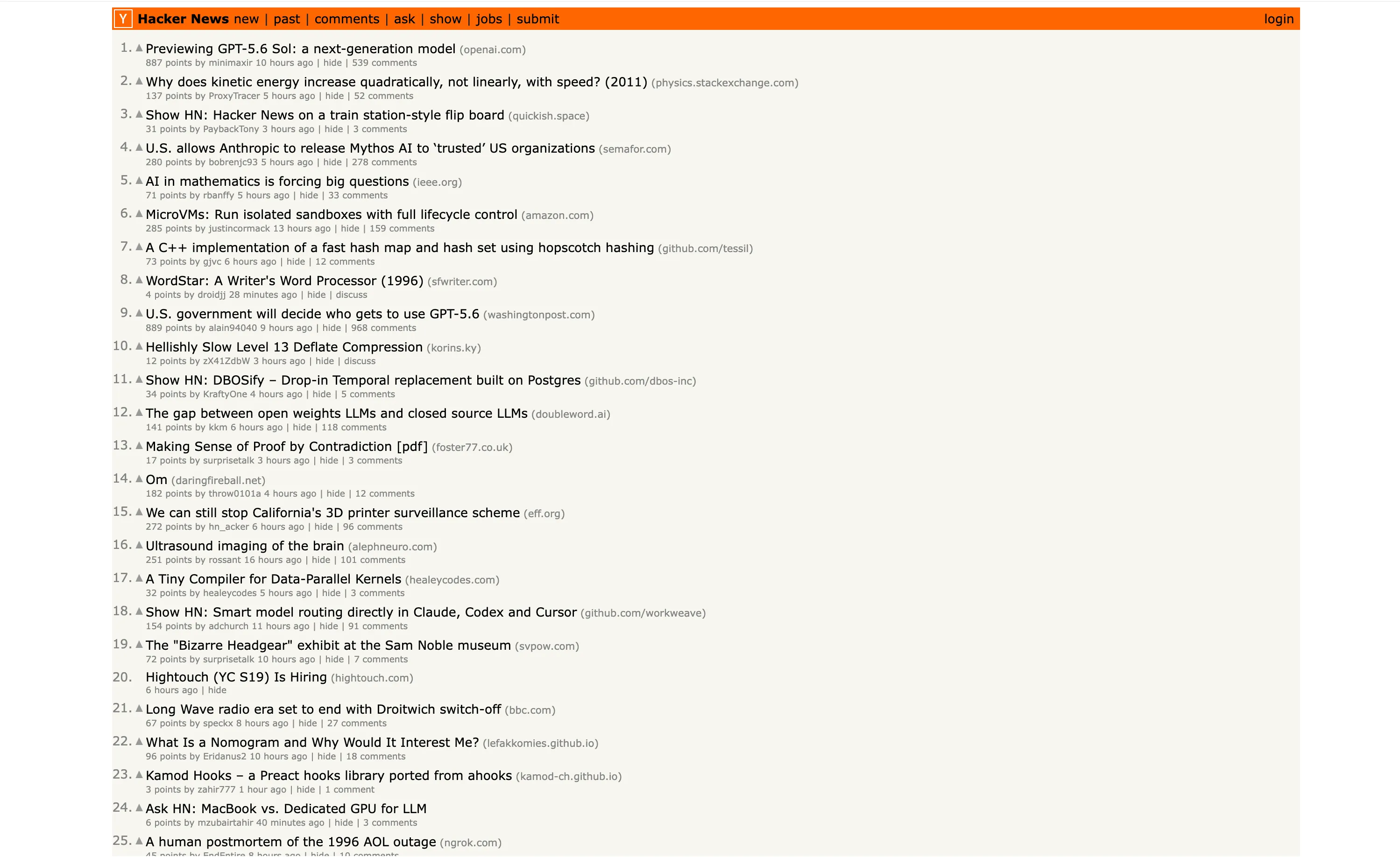
Hacker News Show HN is the most valuable launch channel for developer tools, APIs, and technically interesting products. It is a dedicated section of news.ycombinator.com where builders share what they are working on. Unlike Product Hunt, there are no sponsored placements, no voting rings, and no algorithm you can game with your existing Twitter following. Posts rise or fall based entirely on community engagement.
The audience is engineers, technical founders, and CTOs. When a developer tool does well on Show HN, it tends to generate GitHub stars, trial signups from exactly the right people, and occasionally a flood of traffic that crashes a small server. The feedback is often technical and direct - comments pointing out edge cases, suggesting alternative approaches, or asking about architecture decisions that you can actually act on.
The tradeoff is that Show HN is unforgiving for polished marketing-speak. Titles need to describe the product plainly. Pitches that lean on adjectives like “powerful” or “innovative” tend to die quietly. The community also expects something functional - if someone clicks through and cannot try the product immediately, engagement drops fast.
What works on Show HN: title starts with Show HN:, product can be accessed without a lengthy signup flow, GitHub repo is linked for open-source projects, founder is present to answer technical questions in the comments, post goes live on a weekday morning Pacific time (roughly 9am - 11am PT tends to get more traction).
What does not work: consumer apps aimed at non-technical audiences, anything requiring installation before you can evaluate it, products that are not ready to be tested.
There are no categories, no curated lists, no structured feedback. Just your post and the community. For the right product, that is more than enough.
2. ProductWatch.io
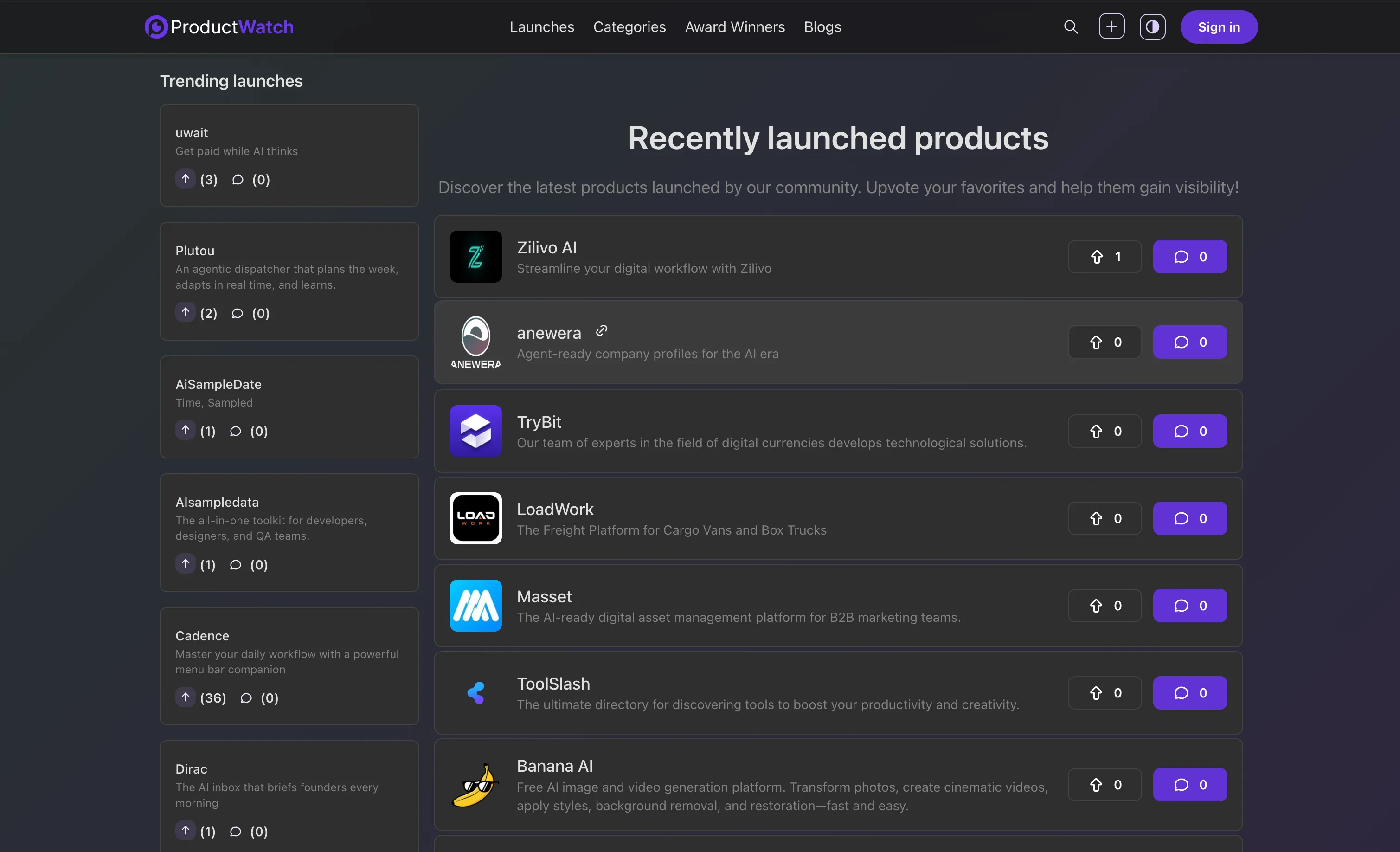
ProductWatch.io is a community-driven daily feed of new tech products, apps, startups, and innovations. Founded by Bishakh Ghosh, the platform lets users vote on, discuss, and explore what is new and trending each day - across categories including AI tools, productivity software, developer utilities, and creative applications.
The key differentiator from Product Hunt is how long products stay visible. On Product Hunt, a product that does not crack the top 10 on launch day gets buried within hours. ProductWatch.io is designed for sustained discoverability: products continue appearing in the feed and getting discovered by users who visit the platform over days and weeks, not just within the 24-hour launch window. For indie makers without a large existing audience to mobilize on day one, this extended window is a meaningful practical advantage.
The platform covers a broad range of product categories and is particularly active in the AI and SaaS spaces. Its community is composed of early adopters, developers, and founders who are actively looking for new tools to try - the kind of audience that gives useful feedback, not just passive upvotes. Submitting is free, and the review bar is reasonable for products that are functional and have a working demo or landing page.
ProductWatch.io works well as a complement to a Product Hunt launch rather than a replacement. Submit around the same time as your Product Hunt post to capture visitors from a second audience, and use the extended visibility window to collect feedback and iterate in real time.
3. BetaList
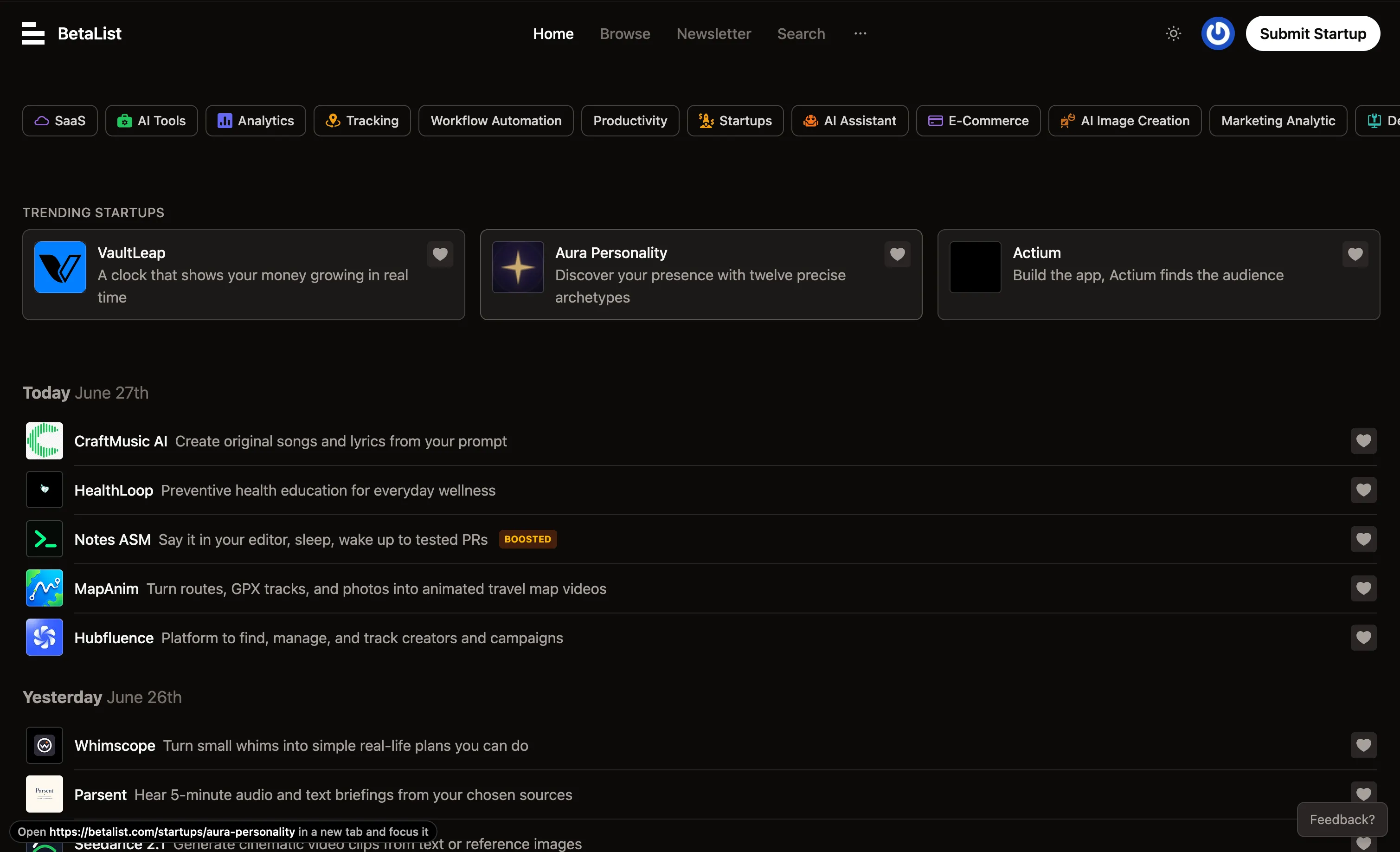
BetaList is specifically designed for products that are not fully launched yet. You submit a pre-launch product, it goes through a review process, and if accepted it appears in front of an audience of early adopters who actively seek out new tools to try. The focus is on beta and alpha-stage products that need testers and early feedback, not products looking for paying customers on day one.
The platform’s practical value is email list building. Accepted products get a dedicated page where visitors can sign up for early access, and BetaList sends your product to subscribers who have opted in to learn about new launches. For products where having 500 engaged beta testers before launch matters more than 500 paying customers, BetaList is one of the few channels that delivers exactly that.
It is also less competitive than Product Hunt. The audience understands that beta products have rough edges. If your onboarding is not polished yet, that is fine - BetaList visitors expect to encounter early-stage software. The review process does filter for minimum quality, so placeholder websites or empty products do not make it through, but the bar for “ready to show people” is lower than on Product Hunt.
The main limitation is that BetaList is not a direct revenue channel. The people who sign up are early adopters and testers, not necessarily buyers. It works best as a pre-launch step, 2 to 4 weeks before you are ready to convert signups into paying users.
4. Indie Hackers
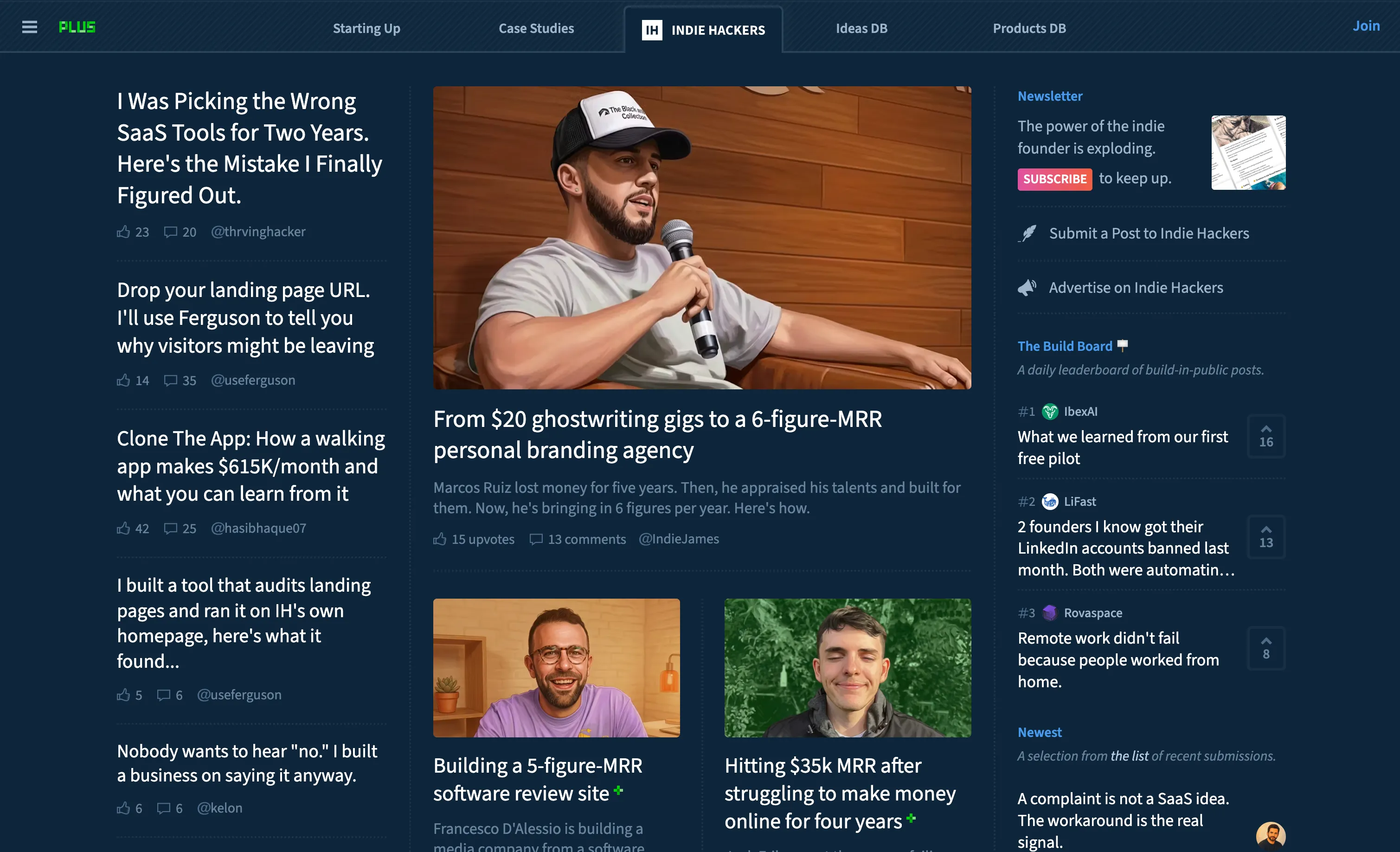
Indie Hackers is not a product directory - it is a community. There is no submit button, no voting, no leaderboard. What it offers instead is a forum full of people who have built or are building bootstrapped products, and who genuinely want to help others do the same.
Launching on Indie Hackers looks different from Product Hunt. You write a post about what you built, why you built it, what your MRR looks like, what your customer acquisition costs are, and what you are struggling with. The posts that do well are specific and honest. “I built a time tracker for freelancers and got to $800 MRR in three months - here is what worked and what did not” gets way more traction than “I launched a new SaaS today, check it out.”
The community has genuine skin in the game. Indie Hackers readers have seen countless launch posts and know when someone is being real versus performing. When you post something honest, you get responses from founders who have solved similar problems, potential customers who identify with the problem you are solving, and sometimes press coverage from journalists who follow the forum for story leads.
The traffic from Indie Hackers tends to be smaller than a good Product Hunt day, but it converts better. These are people who understand the challenges of building a product, who are often willing to pay for tools that solve real problems, and who share things they like within tight-knit communities.
5. Uneed
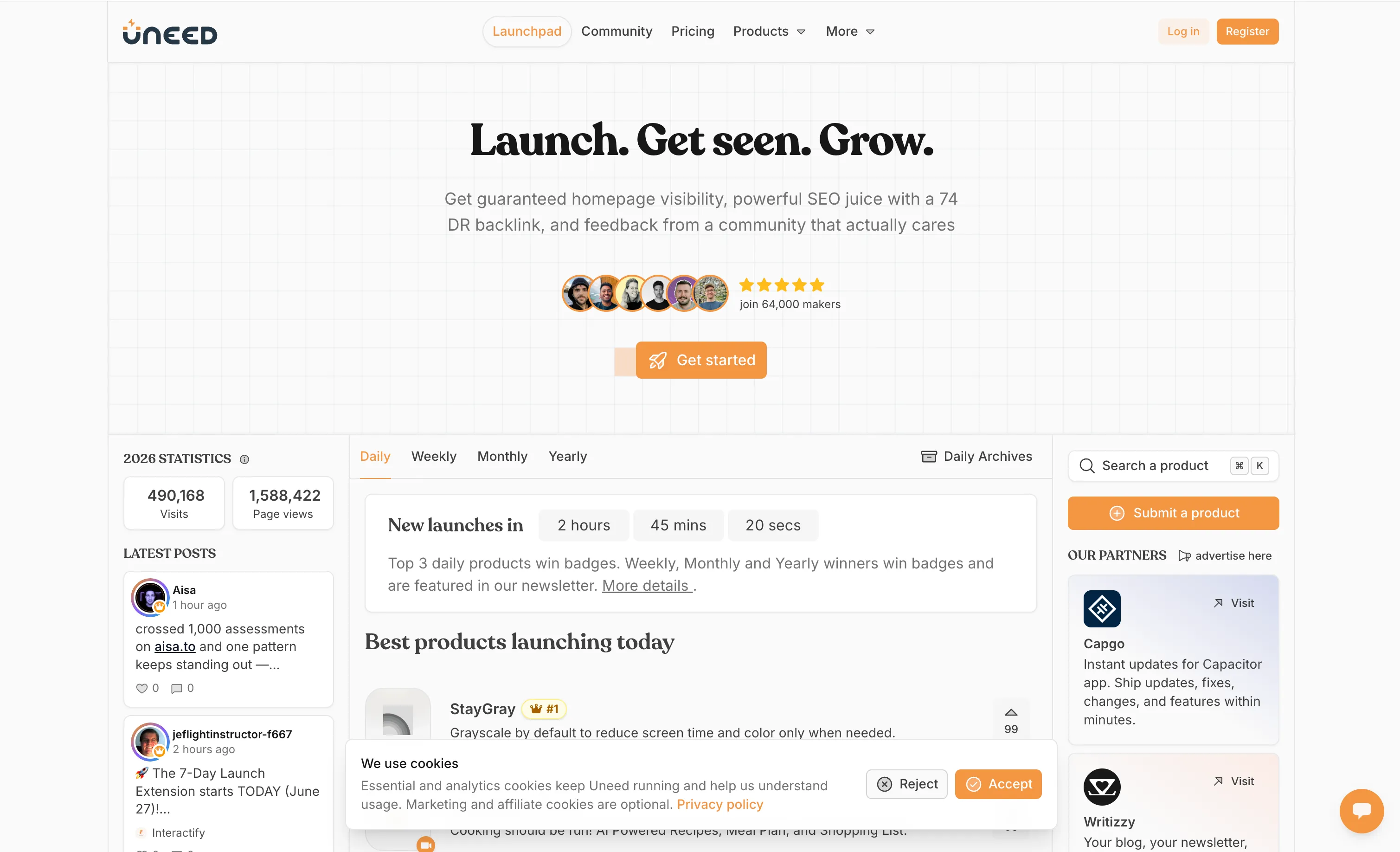
Uneed is a product launch and discovery platform built by and for indie makers. Products are submitted, go through a lightweight review, and then appear on the platform for daily voting. The community skews toward solo developers and small teams building tools they would actually use themselves.
What sets Uneed apart from the larger platforms is the atmosphere. The makers who hang out there are genuinely supportive - they vote on things they find useful, leave real comments, and share products they like. The competitive dynamic that characterizes a Product Hunt launch day is largely absent. This makes it a good fit for products that need early community validation more than viral exposure.
The platform has been growing steadily, and the quality of products listed has improved alongside its reputation. It covers a broad range of product categories - productivity tools, developer utilities, AI apps, design tools - so it is not limited to a single niche. Submissions are free, and the review process is light enough that most reasonable products get listed within a few days of submission.
6. Fazier
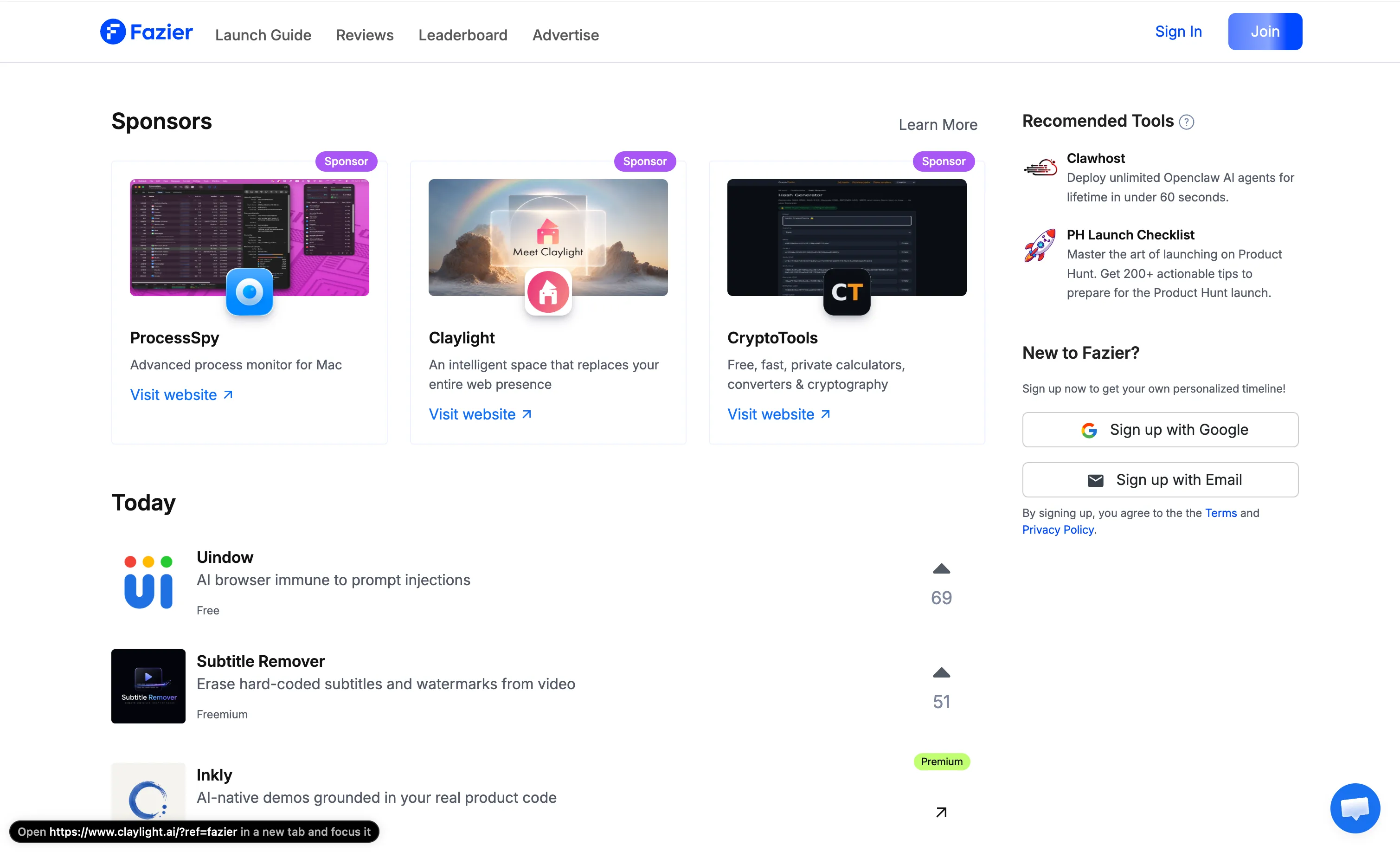
Fazier is a product launch platform with a focused angle: it caters specifically to AI tools and AI-first products. If you have built a product that sits in the LLM, automation, or AI assistant space, Fazier puts your product in front of an audience that is already primed to care about it.
The platform is indexed well for AI-related search queries, which means it generates some long-tail organic discovery beyond the initial launch. Product pages show up when people search for AI tools in specific categories, extending the value beyond your launch day. For AI products with lower price points - tools charging $10 to $50 per month - Fazier tends to bring in buyers who are specifically looking for AI tools to add to their stack.
Because it is narrower in focus than Product Hunt, it is significantly less crowded. You are not competing against general consumer apps or hardware products. Every product on Fazier is relevant to the same AI-interested audience, which keeps the signal-to-noise ratio reasonable.
7. DevHunt
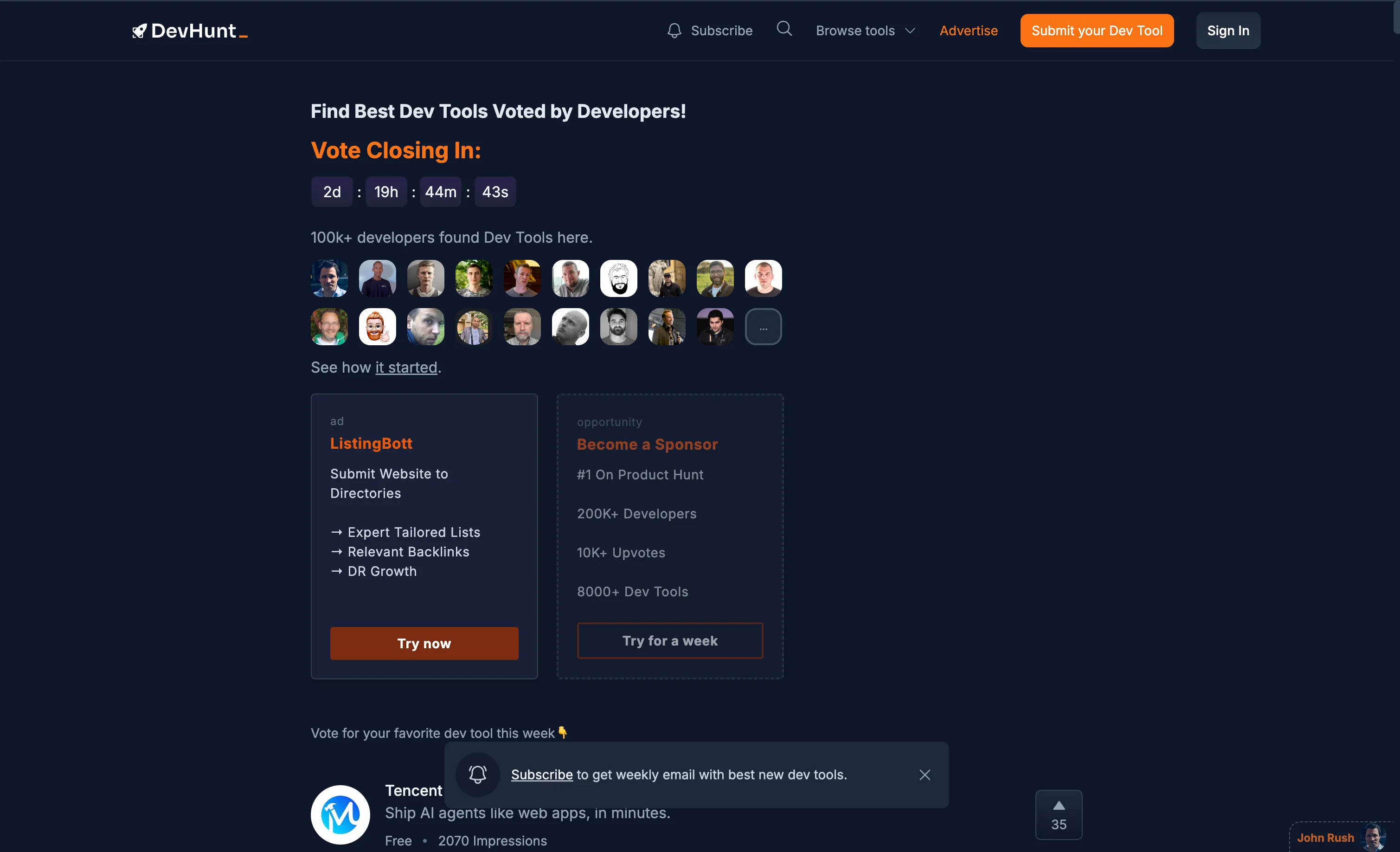
DevHunt runs product launches on a weekly schedule rather than daily. Each week a new cohort of developer-focused tools launches together, and the community votes throughout the week. Products stick around long enough to be discovered by people who check the site a few times over several days, rather than disappearing into the archive after 24 hours.
The audience is almost entirely developers. DevHunt covers APIs, CLI tools, SDKs, IDE extensions, testing frameworks, monitoring tools, and anything else a developer would directly use. Consumer apps and general productivity tools are not a good fit. If your product requires understanding a README before you can appreciate it, DevHunt’s audience gets that.
The weekly window matters more than it might seem. On Product Hunt, if your launch day is slow, you can fall off the front page before people in other time zones even wake up. On DevHunt, a product that picks up traction on day three can still finish in the top three for the week. This removes some of the launch-day anxiety and gives products that depend on word-of-mouth more room to build momentum.
8. SaaSHub
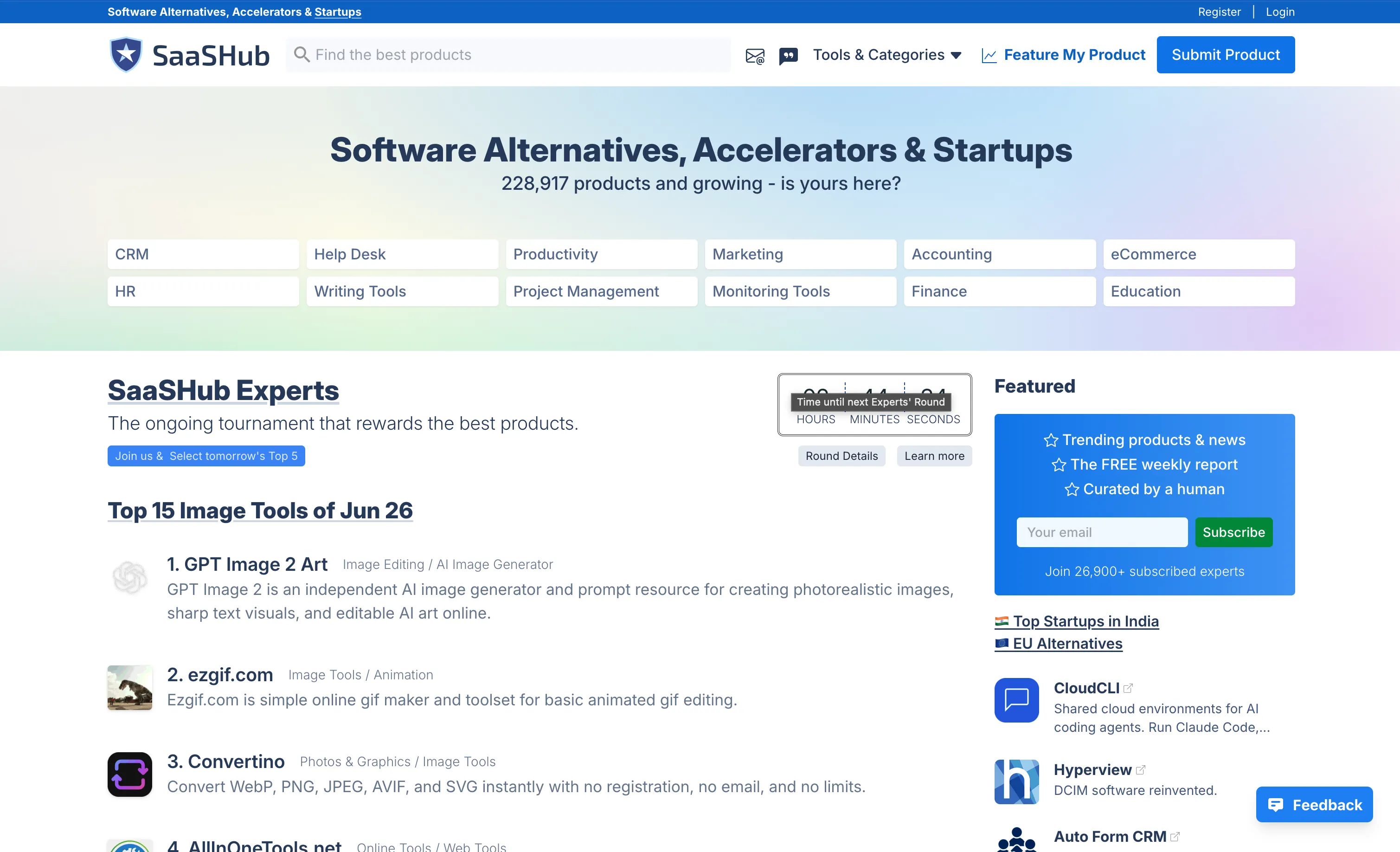
SaaSHub is a software discovery and comparison platform that runs differently from any of the launch platforms above. There is no voting, no time window, no community upvoting. Instead, you create a product listing and SaaSHub indexes it for long-term organic discovery.
The value here is SEO. SaaSHub ranks well for searches like “[competitor name] alternatives” and “best [category] tools.” If someone is looking for an alternative to a well-known product in your space, SaaSHub often shows up in the first few results. Your listing on SaaSHub captures people who are actively comparison shopping - which tends to mean higher purchase intent than general product discovery.
For a SaaS business, a SaaSHub listing is worth creating even if you have no intention of doing a formal launch there. It is a permanent, indexed presence that compounds over time. The more reviews and ratings your product accumulates, the better it ranks for relevant searches. It is less exciting than a launch day spike, but it is the kind of distribution that keeps generating leads months and years later.
9. MicroLaunch
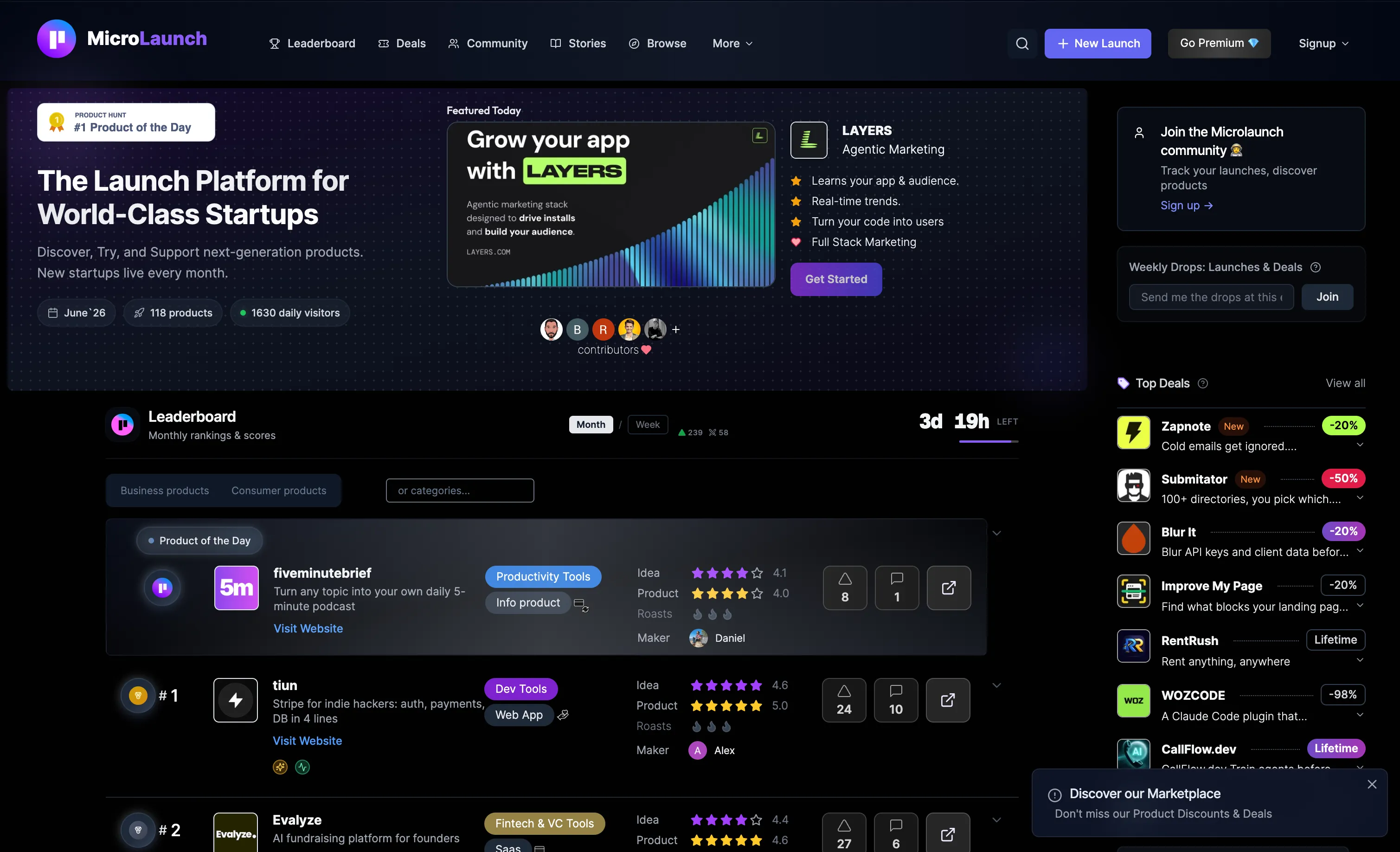
MicroLaunch is a curated launch platform that focuses specifically on micro-SaaS products and small, focused tools. The product pages are clean, the community is tight-knit, and the emphasis is on products that are genuinely useful rather than ambitious visions.
The platform runs daily launches with a rotation format, so your product gets featured on its launch day and then remains discoverable in the archive. Products are reviewed before being listed, which keeps quality up and means the audience has some confidence that what they are browsing is worth their time.
MicroLaunch works particularly well for solo developers who built something small and useful - a single-purpose tool, a focused utility, a Chrome extension that does one thing well. Products that would seem underwhelming against a multi-team startup on Product Hunt often shine on MicroLaunch, where the audience understands and appreciates the “small and focused” philosophy.
10. Smol Launch
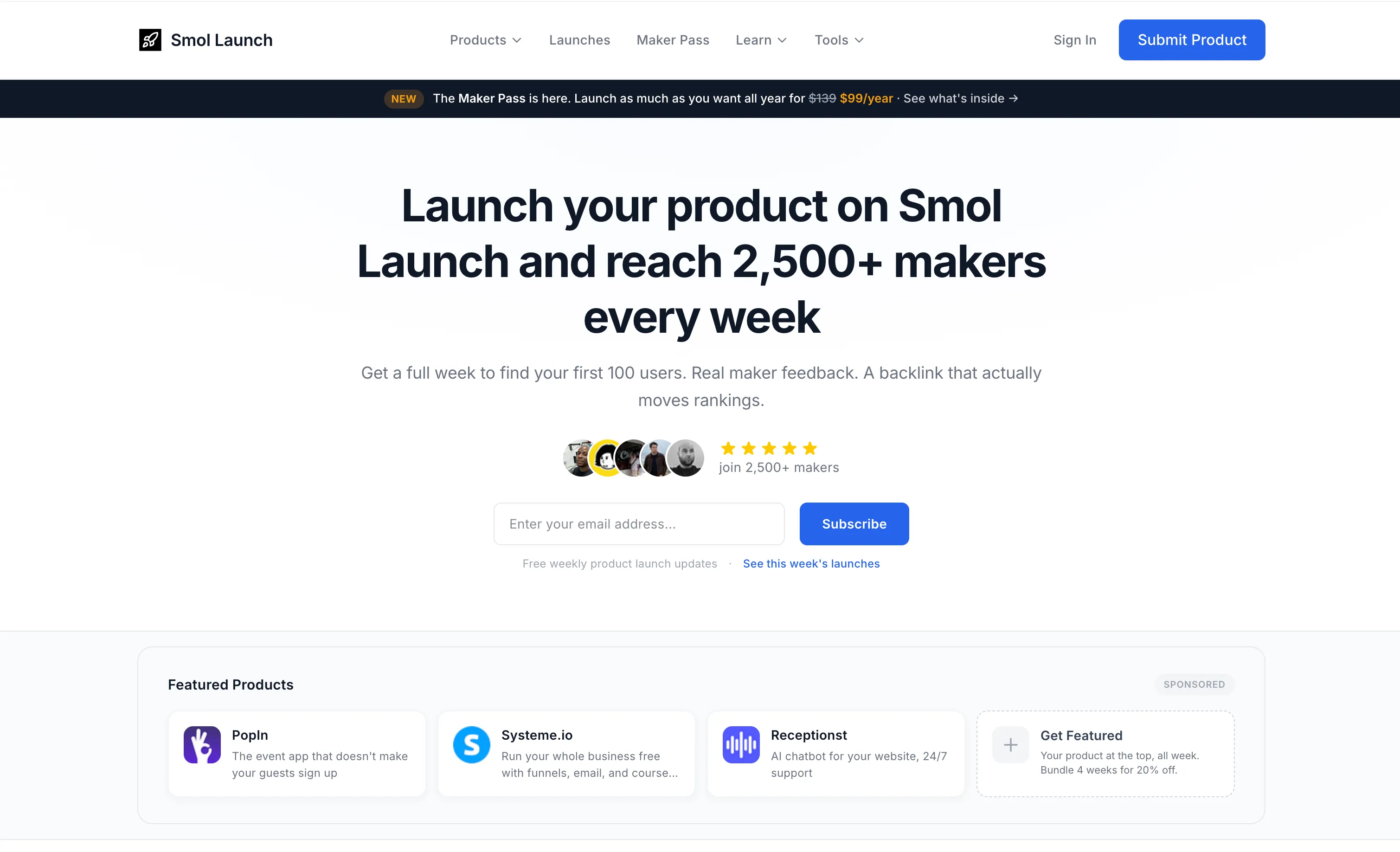
Smol Launch gives products a 7-day launch window instead of 24 hours. That sounds like a small change, but it fundamentally changes the launch dynamic. You have time to reach your audience across time zones, collect feedback and iterate before the window closes, and build momentum through shares and organic word-of-mouth rather than a coordinated one-day push.
The community is explicitly indie-maker focused. The name itself signals the vibe - this is not the place to launch a Series A startup. It is the place to launch a tool you built on weekends, an API wrapper that solves a specific frustration, or a SaaS that has 50 users and is growing organically.
The reduced competitive pressure makes it easier to get genuine feedback. When you are not in a race to collect upvotes in the first six hours, you have time to respond thoughtfully to comments, ask follow-up questions, and actually learn something useful about how people perceive your product. For first-time launchers especially, the 7-day window is significantly less stressful than the Product Hunt format.
Honorable Mentions
Several other platforms are worth knowing about depending on your product type.
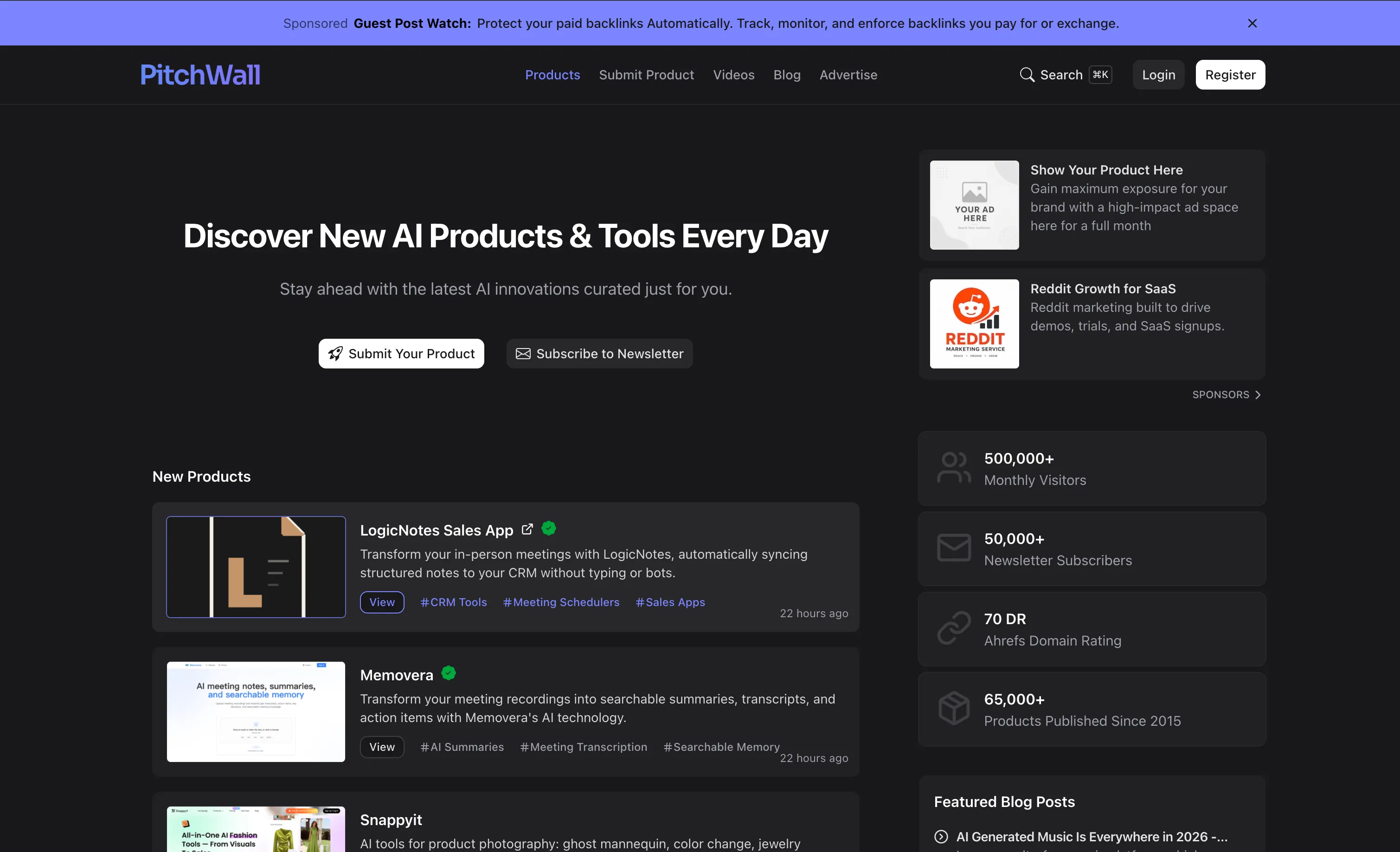 PitchWall is similar to BetaList but with a slightly different submission process and community. It is worth submitting to both if you are in pre-launch mode, since they draw somewhat different early adopter audiences.
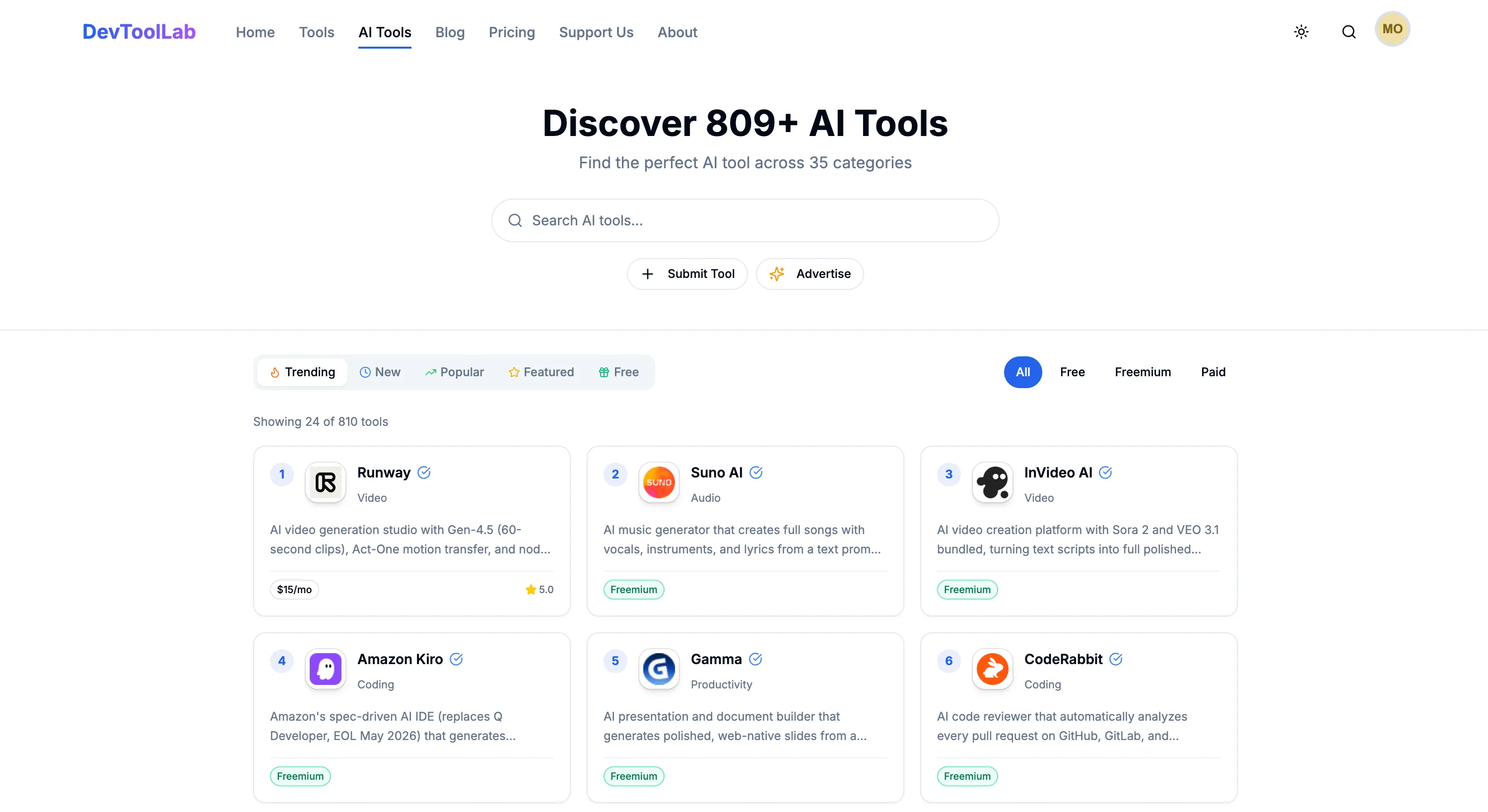 DevToolLab AI Tools is an AI tools discovery directory with 800+ tools across 35 categories including code and development, productivity, video, research, and content creation. Developers can submit their AI tool to get listed, and the platform surfaces tools by trending, new, popular, and featured rankings. It does not have a community upvoting system like Product Hunt, but it is a strong long-term discovery channel specifically for AI tools - the kind of directory that generates steady organic traffic from developers searching for AI solutions in a specific category.
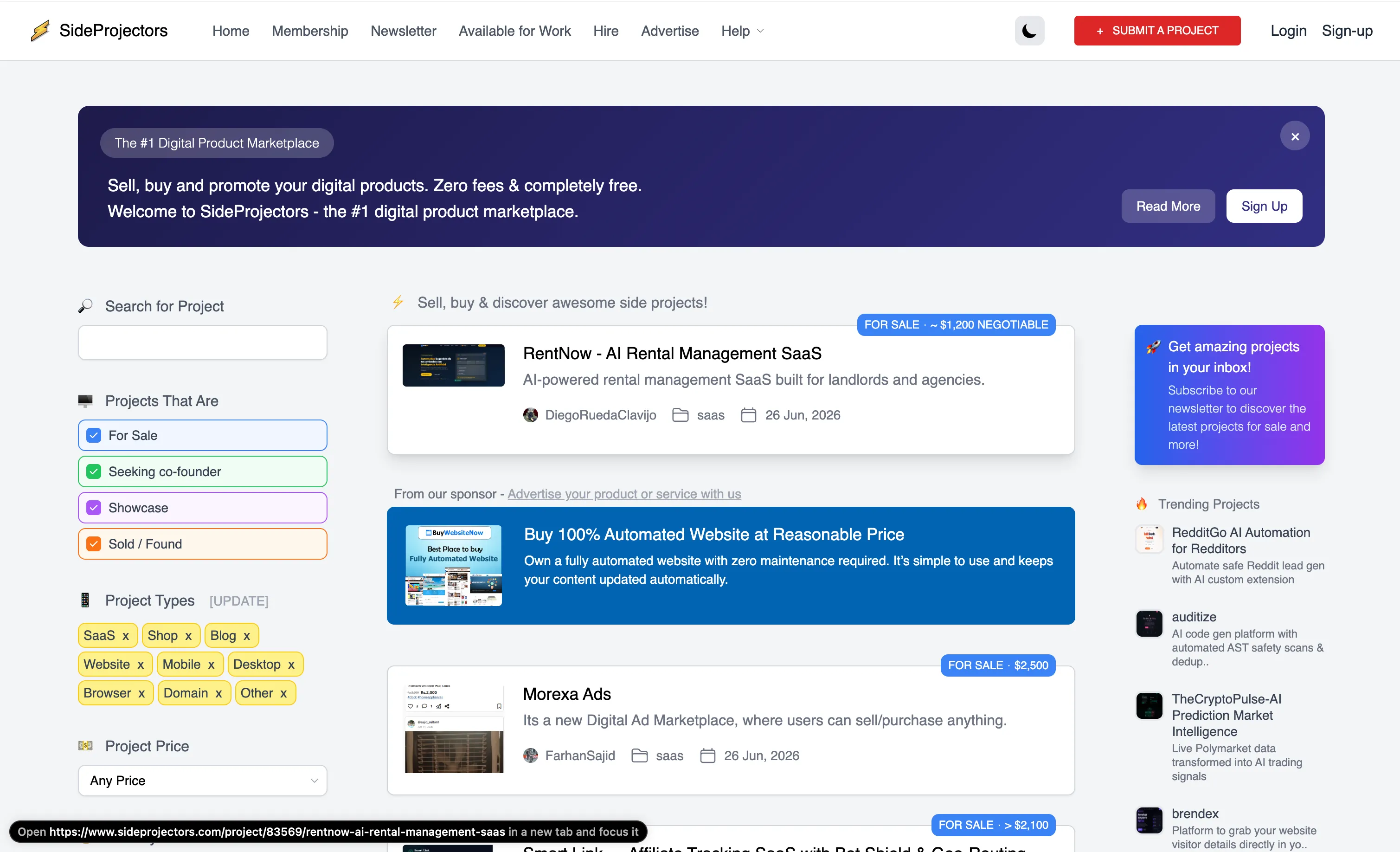 SideProjectors is a community specifically for side projects, including a marketplace where you can sell or acquire projects. If you built something as a side project that you want to either grow or eventually exit, SideProjectors reaches people who understand that context. Listings also generate dofollow backlinks from a domain with solid authority.
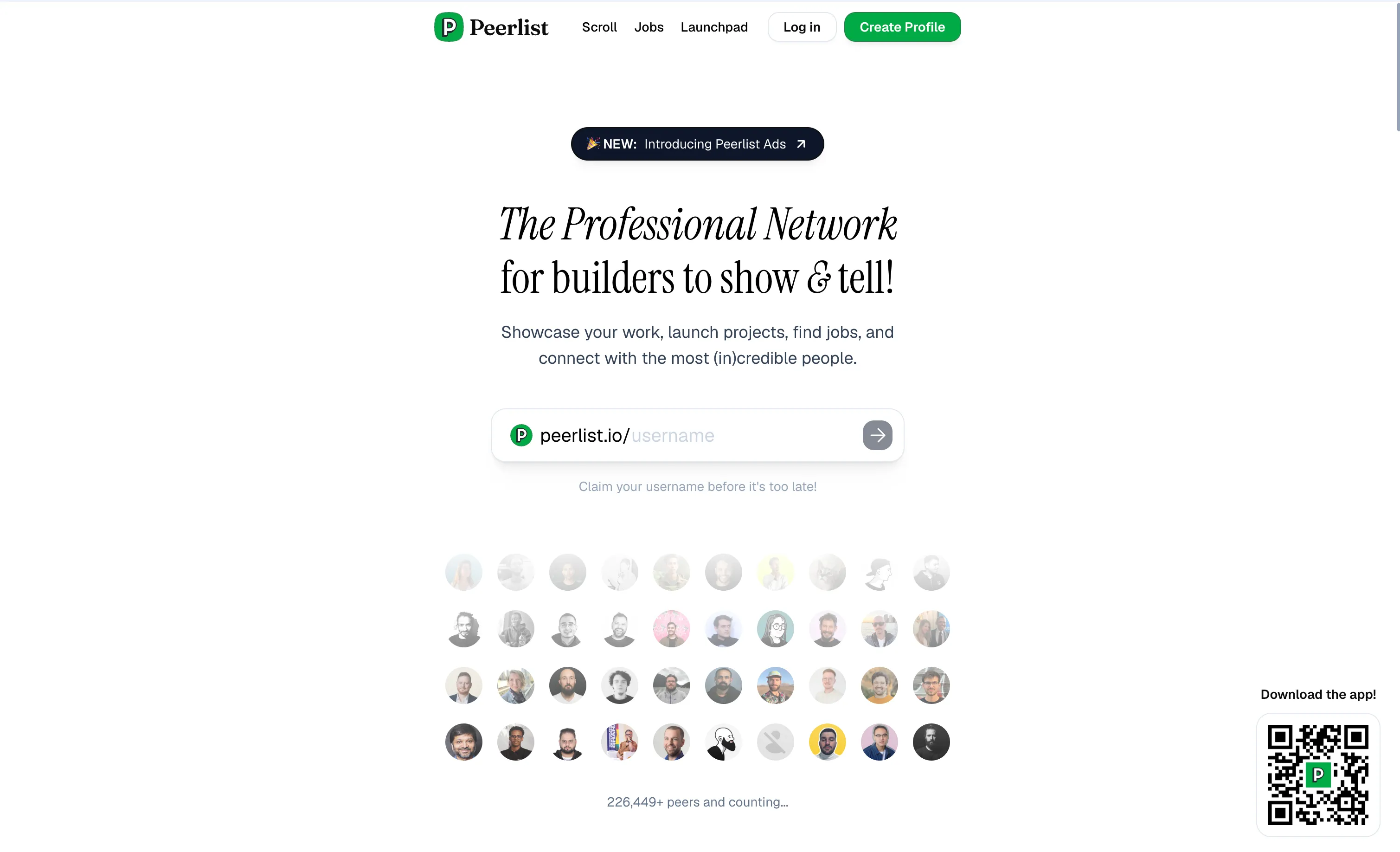
Peerlist is a professional networking platform for developers and designers that has added product launch capabilities. It combines building a professional presence with announcing what you are working on, which makes it useful for founders who want to build their personal brand alongside their product.
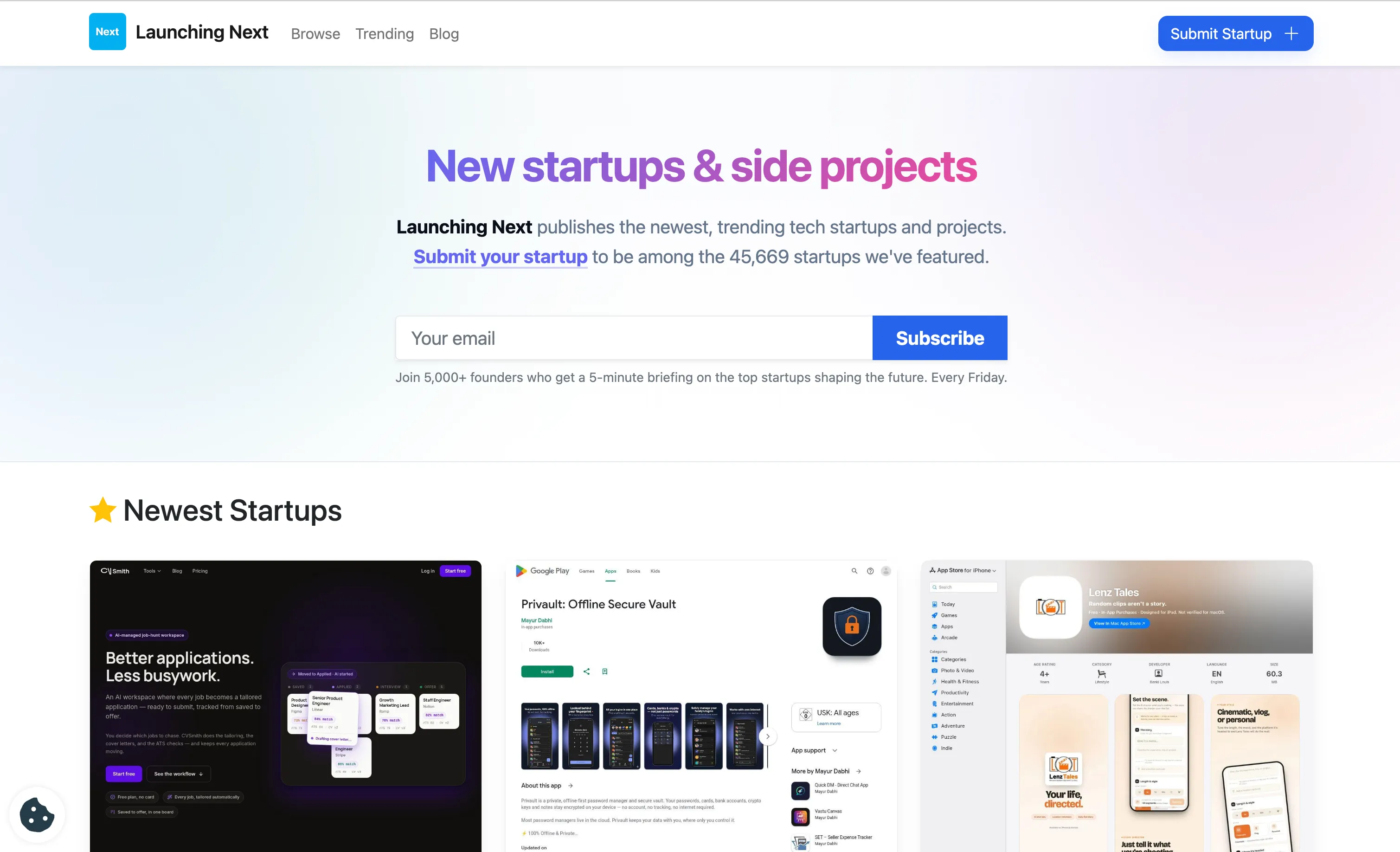
Launching Next is a curated startup directory with a permanent listing format and decent domain authority. It is less about community engagement and more about creating a permanent, indexed page that benefits SEO over the long term.
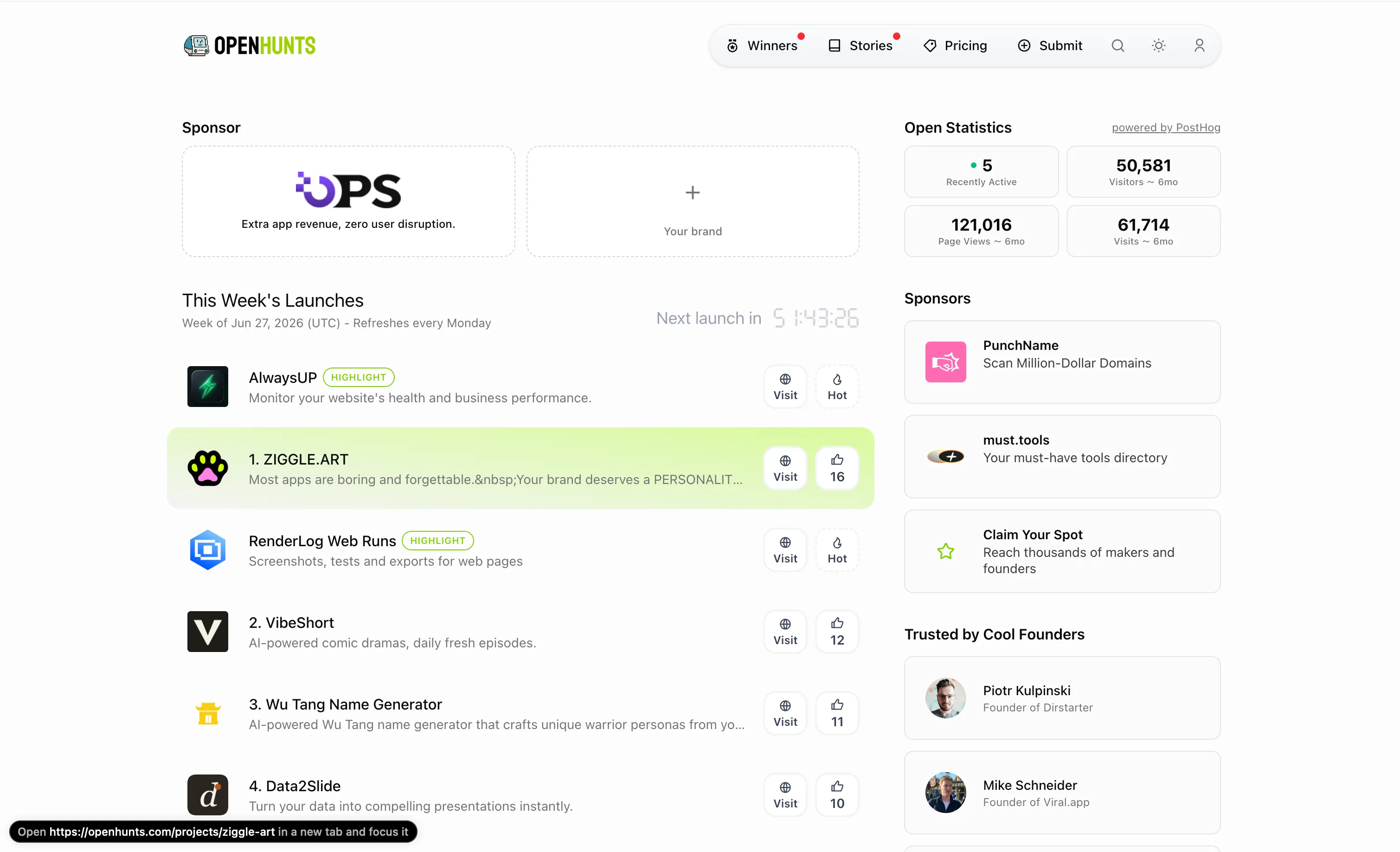
OpenHunts positions itself as a community-driven alternative to Product Hunt with longer listing visibility. Products do not get buried after 24 hours, which gives products that grow slowly through word-of-mouth a better chance of finding their audience.
How to Build a Multi-Platform Launch Strategy
The most common mistake in 2026 is treating your launch as a single event on a single platform. There is a deeper framing error underneath that: thinking the goal is to win a leaderboard. The actual goal is long-term discoverability - high-DR backlinks from permanent directory listings, newsletter features that get forwarded and re-shared, and enough repeated presence that your product keeps showing up when people go looking.
Submit to every directory you can. The difference between submitting to 5 platforms and submitting to 20 is not five times the work. Most submissions take under 10 minutes once you have your copy ready. Each listing creates a permanent indexed page and a backlink from a domain with real authority. Collectively, they compound your SEO standing in a way that a single front-page day on any launch platform cannot. The directory platforms in this guide - SaaSHub, Launching Next, AlternativeTo, SideProjectors, and the honorable mentions above - are worth submitting to even if they never send you a single direct visitor on launch day.
Target newsletters alongside directories. Product discovery newsletters reach readers who are actively looking for new tools - and a newsletter mention tends to be re-shared. Subscribers forward it to colleagues, the author reposts it, and each of those touchpoints creates more reach and more backlinks. Find newsletters in your product’s category and pitch them directly with a short, honest description of what you built and who it is for.
Launch again when you ship something meaningful. Most platforms in this guide accept resubmissions for major feature updates. Shipping a significant new capability and relaunching on DevHunt or Uneed is a legitimate strategy for staying in the spotlight six months after your initial launch. Hacker News Show HN welcomes a new post for a genuinely significant update. Treat each meaningful release as a new launch event rather than a changelog entry.
A reasonable baseline sequence for an initial launch: submit to BetaList and Launching Next two to four weeks out to build a waitlist and establish your presence. On launch week, post to Hacker News Show HN if your product is technical, Indie Hackers if you have a compelling story, and two or three daily launch platforms (Uneed, Smol Launch, or Fazier depending on your category). Over the following month, work through the full directory list. Then start the newsletter outreach. When you next ship something significant, restart the cycle on the launch platforms.
Choosing the Right Platform for Your Product
The right platform depends heavily on what you built and who you built it for.
If you are building a developer tool - an API, a CLI, an SDK, an open-source library - Hacker News Show HN should be your first priority, with DevHunt as a backup. These are the two platforms where the audience is most likely to be your actual users, and where technical quality matters more than marketing polish.
If you are in pre-launch and not ready for paying customers, BetaList is the right move. Collect email addresses, get early feedback, and use the momentum to shape your product before you open the gates.
If you built an AI product, Fazier reaches exactly the audience you want. It is smaller than Product Hunt but more targeted, and being less crowded means your product actually gets seen.
If you built a micro-SaaS - a focused tool with a narrow use case and a price point under $50 per month - MicroLaunch and Smol Launch are designed for exactly this kind of product. The audience there understands and values focused tools.
And if you are a bootstrapped founder with a story to tell - real numbers, real struggles, real lessons - Indie Hackers is where that story will resonate most.
Conclusion
Product Hunt is not the only game in town, and for most products it is not the best one either. The 10 platforms in this guide are free, reach real audiences, and most give your product more than 24 hours to be discovered. The bigger shift is in how you think about launching: not as a single event you win or lose, but as an ongoing process. Submit everywhere your product belongs, target newsletters that reach your audience, and return to launch communities each time you ship something worth talking about. The backlinks and mentions accumulate. So does the discoverability.
For a longer list to work through once you have exhausted the platforms above, ProductWatch maintains a roundup of the 50 best Product Hunt alternatives in 2026, which is a useful reference for finding more directories to submit to.