Top 10 AI Models for Scientific Research and Writing in 2026
Updated on Dec 22, 2025 · 16 mins read
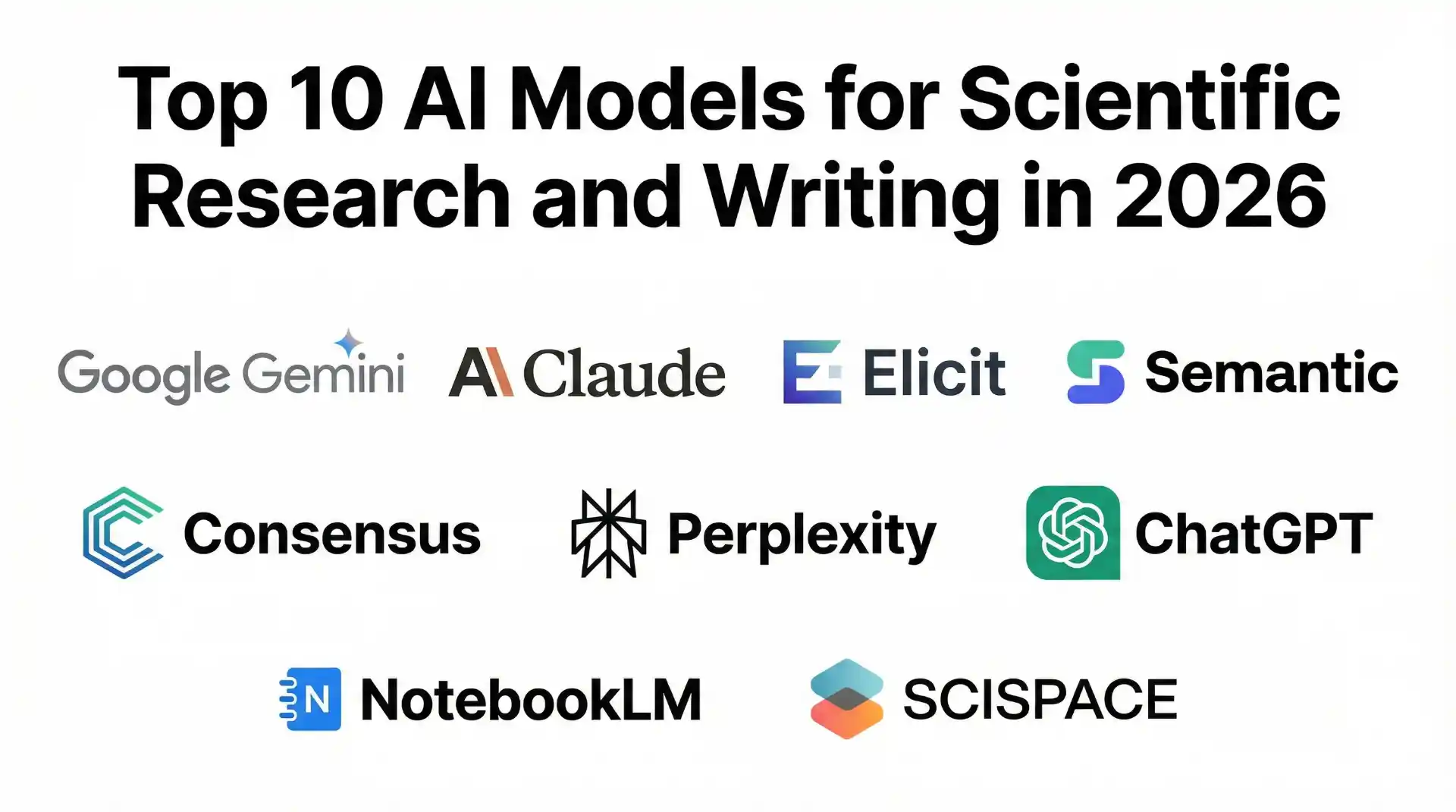
Scientific research has entered a new era with AI models that can search, analyze, and synthesize research papers at unprecedented speed. Whether you’re conducting a literature review, writing a research paper, or trying to understand complex scientific findings, these AI tools can dramatically accelerate your workflow while maintaining academic rigor.
The key differentiator for research-focused AI tools is their deep research mode the ability to autonomously search through academic databases, analyze multiple papers, identify patterns across studies, and synthesize findings with proper citations. Unlike general-purpose AI, these specialized tools understand the nuances of academic literature and can distinguish between preliminary findings and established consensus.
In this guide, we’ll explore the top 10 AI models for scientific research and writing in 2026, focusing on their deep research capabilities, citation accuracy, and practical applications for researchers and developers.
Comparison Table for AI Research Tools
| AI Tool | Best For | Starting Price | Key Strength |
|---|---|---|---|
| ChatGPT (Deep Research) | Comprehensive research reports | Free / $20/mo (Pro) | Multi-source synthesis, detailed analysis |
| Google Gemini (Deep Research) | Google ecosystem integration | Free / $19.99/mo | Google Scholar integration |
| Perplexity AI | Real-time research with citations | Free / $20/mo | Inline citations, academic focus mode |
| Claude (Research Mode) | Long document analysis | Free / $17/mo | 200K context window, nuanced analysis |
| Elicit | Literature reviews & data extraction | Free / $10/mo | Purpose-built for academic research |
| Semantic Scholar | Paper discovery & citation analysis | Free | 200M+ papers, semantic search |
| Consensus | Evidence-based answers | Free / $10/mo | Scientific consensus detection |
| Scite AI | Citation verification | $10/mo | Smart Citations (supporting/contrasting) |
| SciSpace | Paper comprehension & writing | Free / $12/mo | 150+ tools, 280M papers |
| NotebookLM | Source-grounded analysis | Free / Plus | Document-based AI with citations |
Summary
Why Use AI for Scientific Research?
- AI models with deep research capabilities can analyze hundreds of papers in minutes
- Automated literature reviews save weeks of manual searching and reading
- Citation analysis helps identify seminal works and emerging research trends
- Smart synthesis distinguishes between scientific consensus and contested findings
Top AI Research Tools:
- ChatGPT Deep Research: Comprehensive multi-source analysis with 30+ page reports
- Google Gemini Deep Research: Multi-step research with Google ecosystem integration
- Perplexity AI: Real-time search with inline academic citations
- Claude Research Mode: 200K context for analyzing lengthy papers
- Elicit: Purpose-built for literature reviews and data extraction
- Semantic Scholar: Free AI-powered search across 200M+ papers
- Consensus: Evidence-based answers showing scientific consensus
- Scite AI: Smart Citations showing if papers support or contrast claims
- SciSpace: 150+ research tools with systematic review support
- NotebookLM: Source-grounded analysis for uploaded documents (Free / Plus)
Key Features to Look For: Deep research mode, citation accuracy, academic database access, source verification, and paper analysis capabilities
Why Use AI for Scientific Research and Writing
Traditional literature reviews can take weeks or months of manual searching, reading, and synthesizing information. AI research tools have fundamentally changed this process by automating the most time-consuming aspects while maintaining—and often improving—the quality of research synthesis.
Modern AI research assistants offer several key advantages over manual methods. First, they provide speed and scale: tools like ChatGPT’s Deep Research can analyze dozens of papers in minutes, gathering information that would take a human researcher days to compile. Second, they enable comprehensive coverage by searching across multiple databases and sources simultaneously, reducing the risk of missing relevant papers. Third, they offer citation verification through tools like Scite that analyze whether subsequent papers support or contradict findings.
When selecting an AI research tool, consider your specific needs. For comprehensive literature reviews, Elicit and Semantic Scholar excel at paper discovery and data extraction. For real-time research with citations, Perplexity AI provides inline references. For deep analysis of specific documents, Claude’s 200K token context window allows you to upload and analyze entire papers. Most tools offer free tiers to test before committing to paid plans.
Best AI Models for Scientific Research and Writing in 2026
Let’s explore the top AI models available for scientific research, examining their deep research capabilities, citation features, and ideal use cases.
1. ChatGPT Deep Research (OpenAI)
ChatGPT with Deep Research mode represents OpenAI’s most powerful offering for academic and scientific research. Available to Plus and Pro subscribers (starting at $20/month), Deep Research transforms ChatGPT into an autonomous research agent that can spend up to 30 minutes conducting comprehensive investigations across the web.
What sets ChatGPT Deep Research apart is its ability to synthesize information from dozens of sources into cohesive, detailed reports. Users report receiving 20-30 page analyses with proper citations, covering everything from literature reviews to market research. The system uses the o1 reasoning model to plan its research approach, identify relevant sources, and synthesize findings in a logical structure.
For scientific research, Deep Research excels at gathering information from arXiv, PubMed, and academic repositories. It can identify consensus across multiple studies, highlight contradictory findings, and present nuanced conclusions. The tool is particularly powerful for interdisciplinary research where insights span multiple fields.
Key Features of ChatGPT Deep Research:
- Autonomous Research Agent - Conducts multi-step research independently for up to 30 minutes
- Multi-Source Synthesis - Gathers and synthesizes information from 30+ sources per query
- Detailed Reports - Produces comprehensive 20-30 page research documents
- Citation Integration - Includes inline citations and source references
- Reasoning Transparency - Shows research plan and reasoning process
- Export Options - Download reports as formatted documents
ChatGPT Deep Research Pricing:
Deep Research is available starting with ChatGPT Plus at $20/month. The Pro plan ($200/month) offers unlimited access and priority processing for intensive research workflows.
2. Google Gemini Deep Research
Google Gemini Deep Research leverages the Gemini 3 model to deliver powerful research capabilities with seamless integration into Google’s ecosystem. Available to Gemini Advanced subscribers ($19.99/month), Deep Research acts as a personal research assistant that can explore complex topics on your behalf.
Gemini Deep Research excels at multi-step research planning. When you submit a query, it first creates a research plan that you can review and modify before execution. This transparency allows researchers to guide the AI’s investigation and ensure it focuses on relevant aspects. The tool then systematically explores each aspect, gathering information from web sources and presenting findings in a structured format.
A key advantage is Gemini’s integration with Google Scholar and the broader Google ecosystem. Researchers can export findings directly to Google Docs, and the system can access academic papers indexed by Google. The Gemini 3 model has shown improvements in all stages of research, from planning to delivering more insightful and detailed reports.
Key Features of Gemini Deep Research:
- Research Planning - Creates reviewable research plans before execution
- Multi-Step Investigation - Systematically explores each aspect of complex topics
- Google Ecosystem Integration - Direct export to Google Docs and Workspace
- Google Scholar Access - Leverages Google’s academic paper index
- Real-Time Web Search - Access to current information and sources
- Multimodal Analysis - Can analyze images, charts, and diagrams in papers
Gemini Deep Research Pricing:
Available with Gemini Advanced at $19.99/month, which includes access to the latest Gemini models, increased usage limits, and integration with Google Workspace.
3. Perplexity AI Deep Research
Perplexity AI has established itself as a leading AI-powered answer engine with a strong focus on citations and source transparency. The Deep Research feature, available to Pro subscribers ($20/month), takes this further by conducting in-depth investigations that can save hours of manual research.
Perplexity’s strength lies in its real-time search capabilities combined with inline citations. Every claim is backed by a source, and users can click through to verify information directly. For scientific research, Perplexity offers an “Academic” focus mode that prioritizes peer-reviewed sources and academic databases over general web content.
Deep Research in Perplexity works by breaking down complex queries into sub-questions, researching each systematically, and synthesizing findings into comprehensive reports. The system is particularly effective for staying current with rapidly evolving fields, as it accesses real-time information rather than relying solely on training data.
Key Features of Perplexity AI:
- Inline Citations - Every claim linked to its source for verification
- Academic Focus Mode - Prioritizes peer-reviewed and academic sources
- Deep Research Mode - Multi-step investigation for complex queries
- Real-Time Information - Access to current research and publications
- Follow-Up Questions - Suggested queries to deepen investigation
- Collections - Organize research into saved collections
Perplexity AI Pricing:
Free tier available with limited queries. Pro subscription at $20/month includes Deep Research, higher usage limits, and access to multiple AI models including GPT-5 and Claude.
4. Claude Research Mode (Anthropic)

Claude by Anthropic offers Research and Advanced Research modes that serve similar purposes to deep research features in competing products. While Claude doesn’t use the “Deep Research” label, its capabilities for scientific research are substantial, particularly for document analysis.
Claude’s standout feature is its massive 200,000 token context window, which allows researchers to upload and analyze entire research papers, book chapters, or even multiple papers simultaneously. This makes Claude exceptionally powerful for close reading and detailed analysis of scientific literature. The model excels at understanding nuance, identifying logical gaps, and providing thoughtful critique.
For scientific writing, Claude is known for producing natural, well-structured prose that maintains academic tone without being stilted. Researchers often use Claude for drafting literature review sections, summarizing complex methodologies, and identifying connections between disparate papers. The model’s training emphasizes being helpful, harmless, and honest—particularly important for academic work where accuracy matters.
Key Features of Claude Research Mode:
- 200K Context Window - Analyze entire papers or multiple documents at once
- Document Upload - Direct PDF and document analysis capabilities
- Nuanced Analysis - Excels at identifying subtle arguments and logical structures
- Natural Writing - Produces well-structured academic prose
- Extended Thinking - Advanced reasoning for complex research questions
- Honest Uncertainty - Clearly indicates when confidence is low
Claude Pricing:
Free tier available with limited usage. Pro subscription at $17/month includes higher rate limits, extended thinking capabilities, and priority access during peak times.
5. Elicit
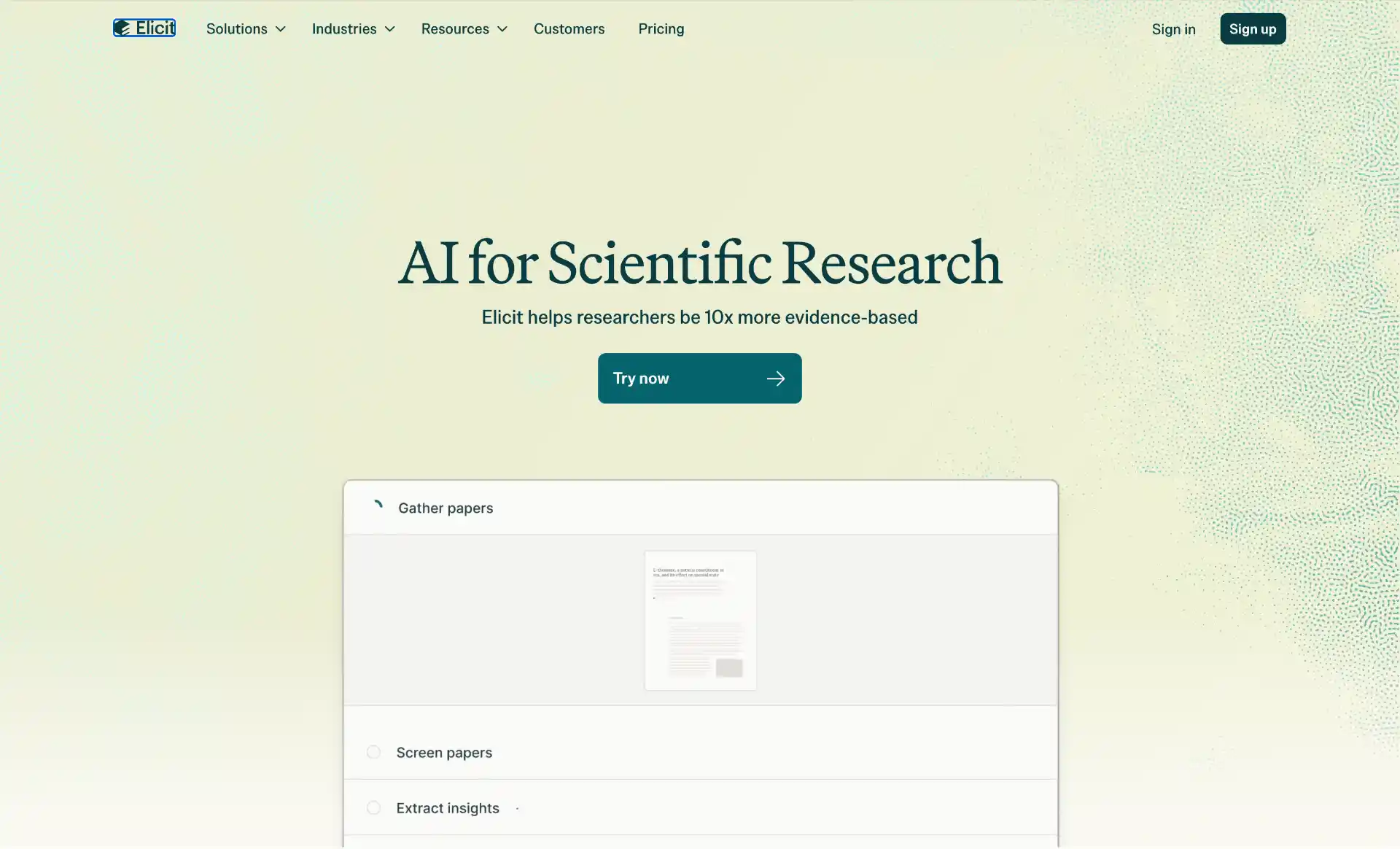
Elicit is purpose-built for scientific research, designed specifically to help researchers find, analyze, and synthesize academic literature. Unlike general-purpose AI tools, Elicit is trained on the specific workflows researchers use for literature reviews, systematic reviews, and data extraction.
With access to over 125 million papers, Elicit can search for relevant literature, extract key findings, and organize information into structured formats. The platform is used by over 2 million researchers in academia and industry. What makes Elicit unique is its focus on the specific tasks researchers need: finding papers that answer questions, extracting data into tables, and identifying gaps in the literature.
Elicit’s systematic review features allow researchers to create reproducible search strategies, track which papers have been reviewed, and extract structured data across multiple studies. This is particularly valuable for meta-analyses and evidence synthesis where consistency is crucial.
Key Features of Elicit:
- Research-Specific Design - Built specifically for academic research workflows
- 125M+ Paper Database - Comprehensive access to academic literature
- Data Extraction - Extract findings into structured tables across papers
- Literature Mapping - Visualize connections between papers and concepts
- Systematic Review Support - Tools for reproducible, rigorous literature reviews
- Question-Based Search - Find papers that directly answer research questions
Elicit Pricing:
Free tier with limited features. Plus plan at $10/month for individual researchers. Team and enterprise plans available for organizations.
6. Semantic Scholar
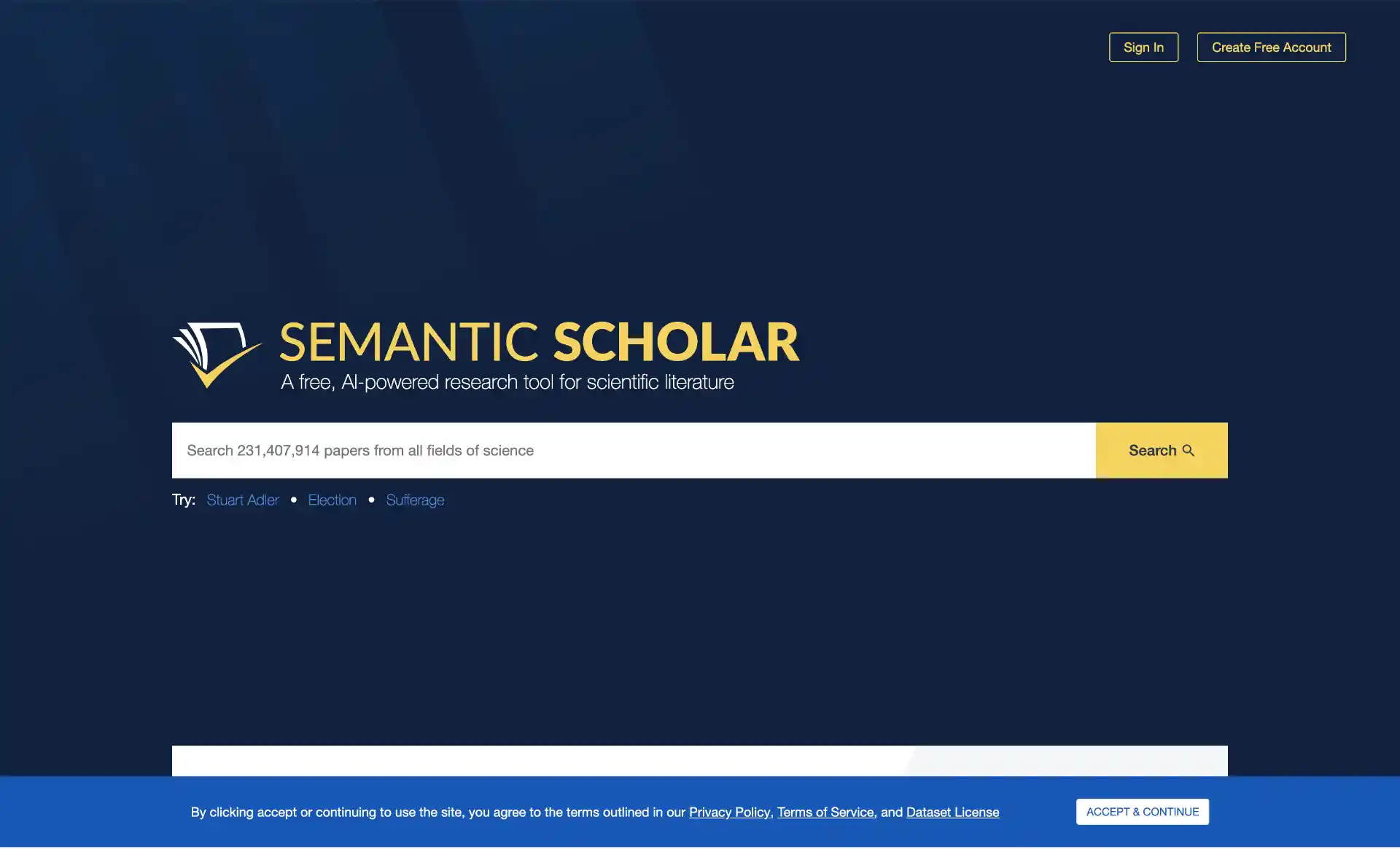
Semantic Scholar, developed by the Allen Institute for AI (AI2), is a free AI-powered research tool that uses advanced natural language processing to help researchers discover relevant scientific literature. With over 200 million papers indexed, it’s one of the most comprehensive academic search engines available.
What distinguishes Semantic Scholar from traditional search engines is its semantic understanding of research content. Instead of just matching keywords, it understands the meaning behind queries and can find papers that address your research questions even when they use different terminology. The TLDR feature provides AI-generated summaries of papers, helping researchers quickly assess relevance.
Semantic Scholar also offers powerful citation analysis tools, showing influential citations, research trends, and connections between papers. The Semantic Reader feature provides an AI-enhanced reading experience with inline definitions, citations in context, and paper summaries. For developers, Semantic Scholar provides a robust API for building research tools.
Key Features of Semantic Scholar:
- 200M+ Papers - One of the largest academic paper databases
- Semantic Search - AI-powered understanding of research queries
- TLDR Summaries - AI-generated paper summaries for quick assessment
- Citation Analysis - Identify influential citations and research trends
- Semantic Reader - Enhanced paper reading experience
- Free API - Build custom research tools with the Semantic Scholar API
Semantic Scholar Pricing:
Completely free to use. API access available for developers and researchers building custom tools.
7. Consensus
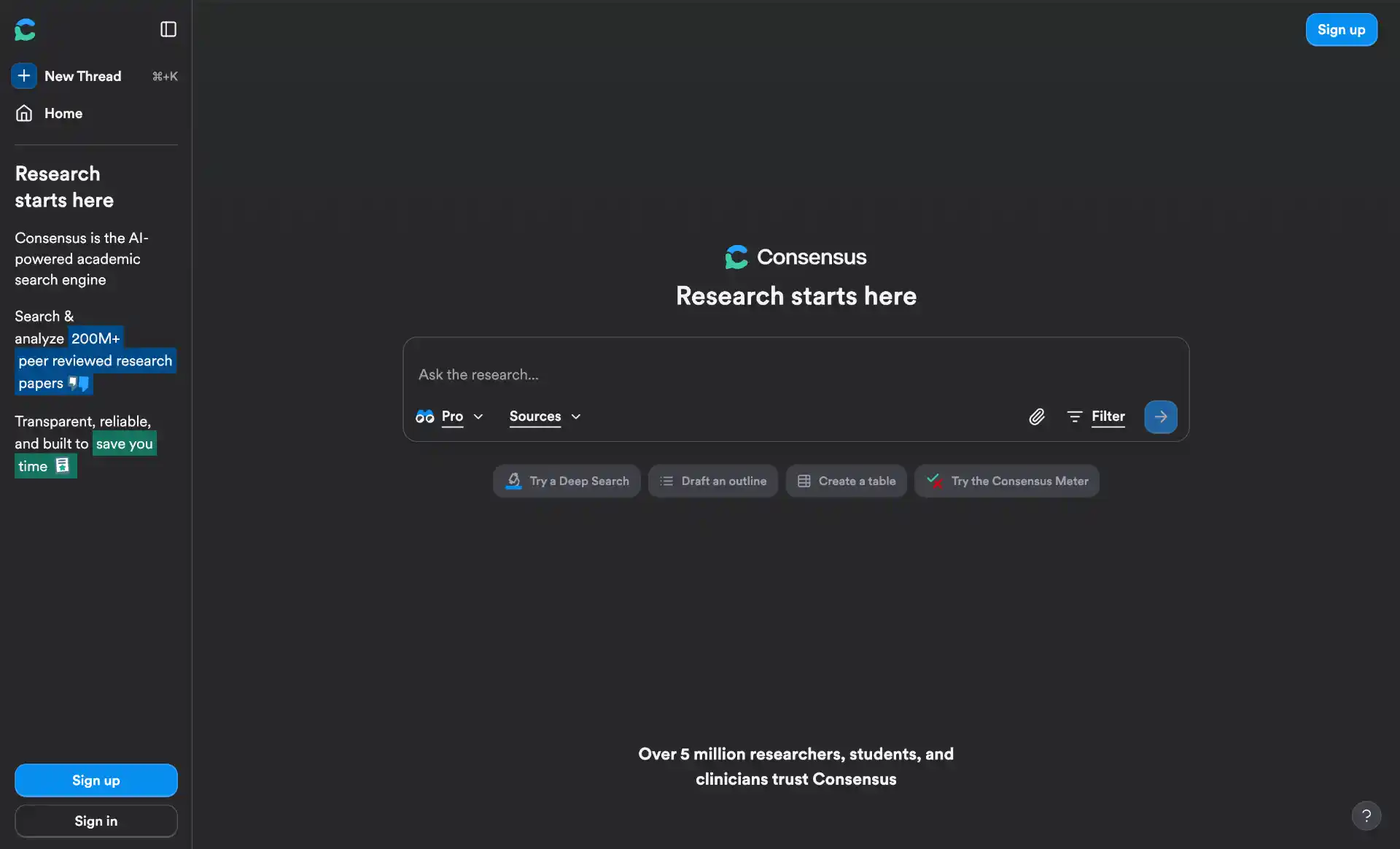
Consensus is a research engine specifically designed to extract and aggregate scientific findings from peer-reviewed research. Unlike general search engines, Consensus focuses on answering research questions with evidence-based insights, showing whether the scientific literature supports or contradicts specific claims.
The platform’s unique value proposition is its “Consensus Meter”—an AI-powered analysis of whether papers in the search results support, oppose, or are neutral on the query topic. This feature is invaluable for quickly understanding the state of scientific consensus on contested topics. Consensus draws from the Semantic Scholar database, providing access to over 200 million peer-reviewed papers.
Consensus recently launched Deep Research capabilities that allow for more comprehensive investigations, producing detailed reports with synthesis across multiple studies. The tool is particularly popular among students, journalists, and anyone who needs quick access to evidence-based answers without reading dozens of papers.
Key Features of Consensus:
- Consensus Meter - Shows whether research supports or contradicts claims
- Evidence-Based Answers - Synthesizes findings from multiple studies
- 200M+ Paper Access - Powered by Semantic Scholar database
- Deep Research Mode - Comprehensive multi-paper analysis
- Study Snapshots - AI-generated summaries of key findings
- Citation Export - Easy export of references in multiple formats
Consensus Pricing:
Free tier with limited searches. Premium at $10/month for students and professionals. Enterprise plans available.
8. Scite AI
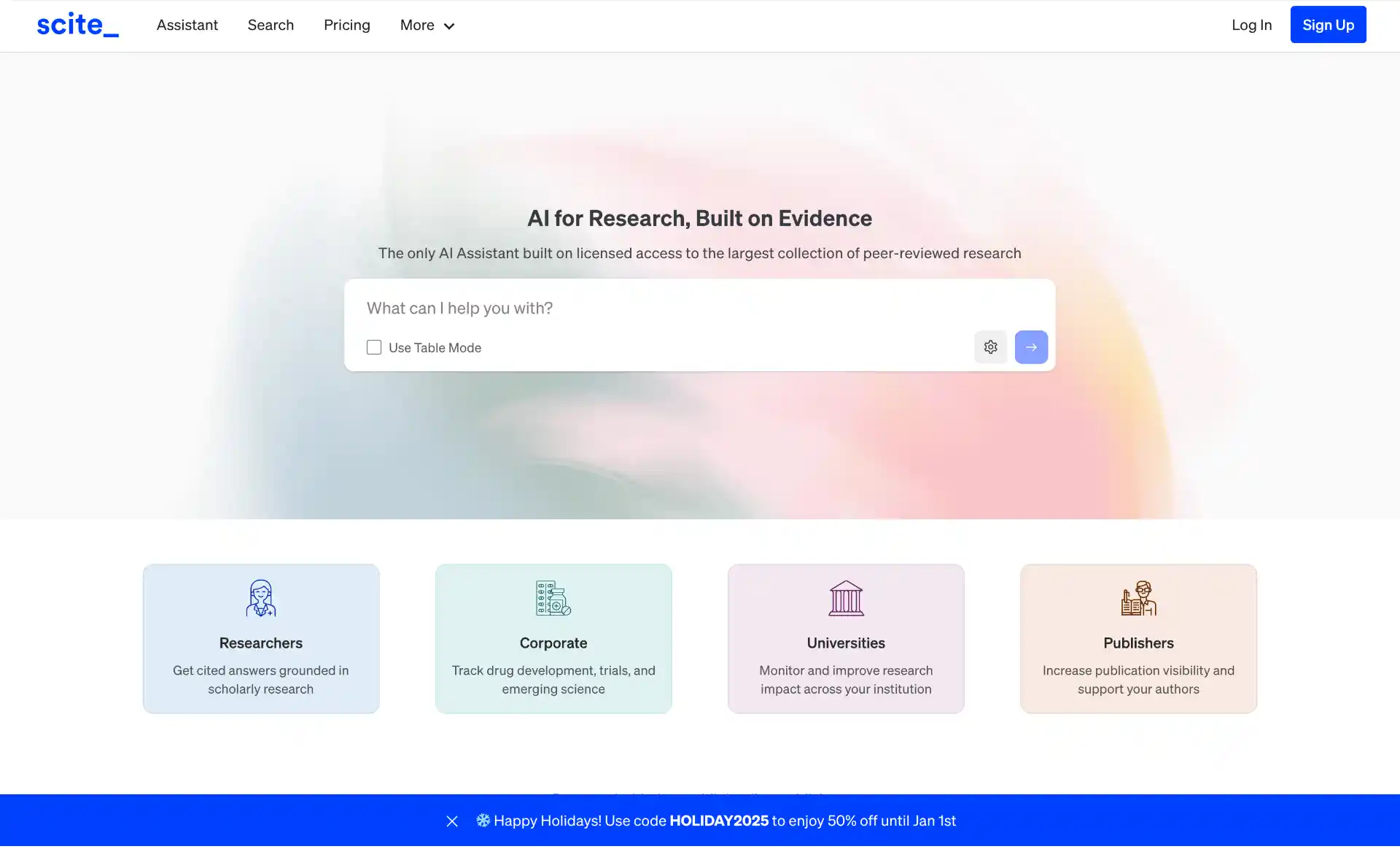
Scite AI revolutionizes how researchers evaluate scientific literature through its Smart Citations technology. Unlike traditional citation counts that only show how often a paper is cited, Scite analyzes the context of citations to show whether subsequent papers support, contrast, or simply mention the original findings.
This citation intelligence is transformative for research quality. A paper might have 1,000 citations, but if 800 of them contradict its findings, that context matters enormously. Scite extracts over 1.2 billion citation statements from 187+ million research articles, making it the most comprehensive citation analysis tool available.
Beyond Smart Citations, Scite offers an AI research assistant that can answer questions based on the full text of research papers, not just abstracts. The platform helps researchers find reliable papers, identify controversial claims, and understand how findings have been received by the scientific community.
Key Features of Scite AI:
- Smart Citations - Shows supporting, contrasting, and mentioning citations
- 1.2B+ Citation Statements - Comprehensive citation context database
- AI Research Assistant - Question-answering based on full-text papers
- Scite Rankings - New metrics for measuring research veracity
- Reference Check - Verify citations in manuscripts before submission
- Browser Extension - See Smart Citation data while browsing papers
Scite AI Pricing:
Free tier with limited features. Individual plan at $10/month. Institutional subscriptions available through libraries.
9. SciSpace
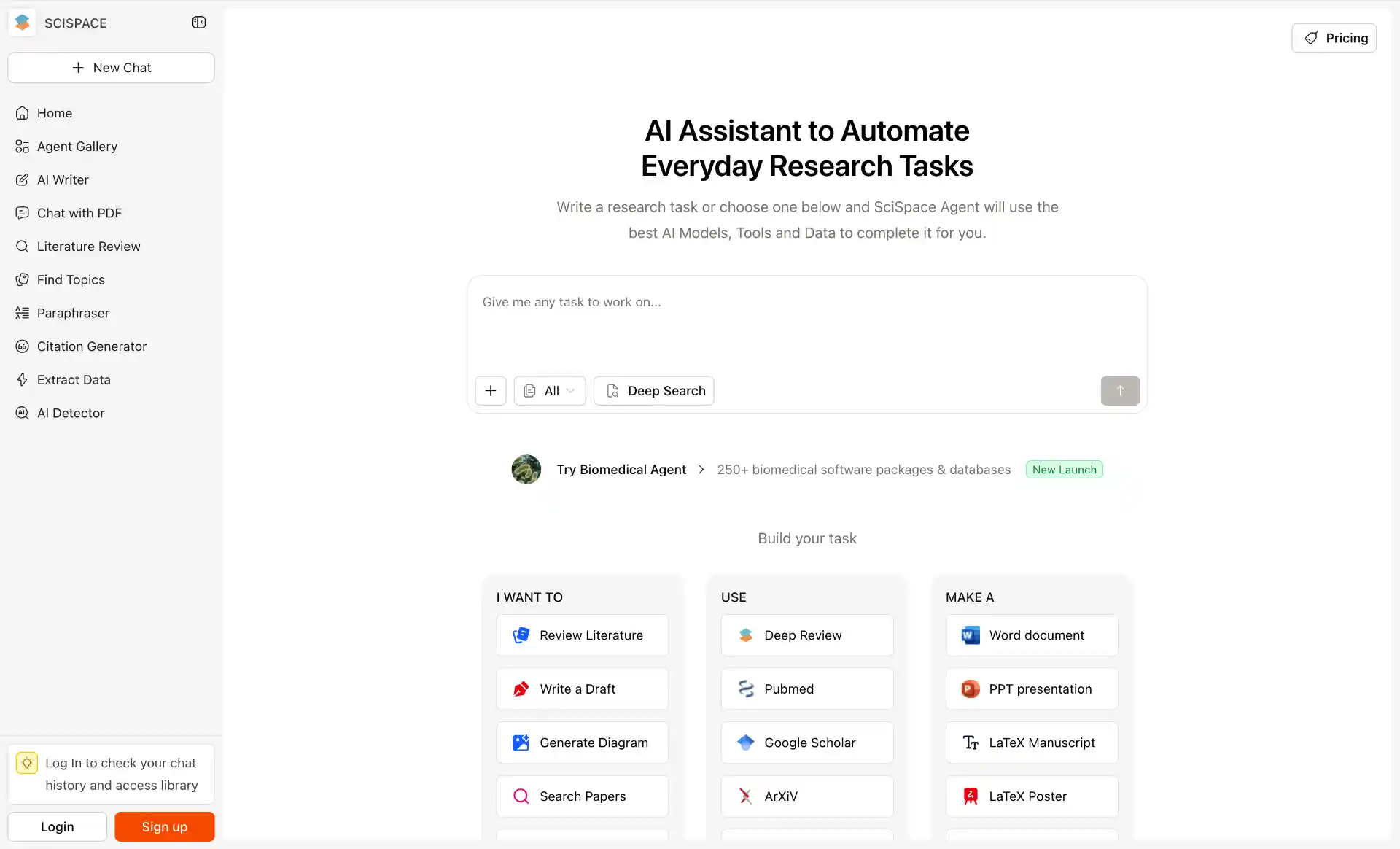
SciSpace positions itself as an AI Super Agent that links over 150 research tools with access to 280 million papers. The platform is designed to cut research time by up to 90% through automated literature search, systematic reviews, manuscript drafting, and journal matching.
SciSpace’s Copilot feature allows researchers to chat with papers, getting explanations of complex concepts, methodology clarifications, and answers to specific questions about the research. This is particularly valuable for researchers working across disciplines who need to quickly understand papers outside their primary expertise.
The platform also offers powerful writing assistance, helping researchers draft manuscripts, format citations, and match their papers to appropriate journals. SciSpace integrates with reference managers and offers Chrome extension access for seamless workflow integration.
Key Features of SciSpace:
- 150+ Research Tools - Comprehensive suite of research capabilities
- 280M Paper Database - Extensive access to academic literature
- Paper Copilot - Chat with papers to understand complex content
- Systematic Review Support - Streamlined literature review workflows
- Manuscript Drafting - AI assistance for academic writing
- Journal Matching - Find appropriate journals for your research
SciSpace Pricing:
Free tier available. Premium plans starting at $12/month for individual researchers. Team and institutional plans available.
10. NotebookLM
NotebookLM from Google takes a unique approach to AI-powered research by keeping all analysis grounded in the sources you provide. Unlike other AI tools that draw from general training data, NotebookLM only analyzes and references the documents you upload, eliminating the risk of hallucinated citations or unsupported claims.
This source-grounded approach is particularly valuable for researchers who need to analyze specific papers, reports, or documents without outside information contaminating the analysis. You can upload research papers, book chapters, or even audio content, and NotebookLM will create structured overviews, answer questions based solely on those sources, and generate various outputs like study guides or briefing documents.
A standout feature is NotebookLM’s ability to generate Audio Overviews—essentially podcast-style discussions of your research materials. This novel format helps researchers digest complex information while multitasking. While there is a free tier, NotebookLM Plus is available through Google One AI Premium for enhanced features.
Key Features of NotebookLM:
- Source-Grounded Analysis - All responses based only on uploaded documents
- No Hallucinations - Cannot make claims not supported by your sources
- Audio Overviews - AI-generated podcast discussions of materials
- Multiple Source Types - PDFs, Google Docs, web links, audio, and video
- Study Guides - Auto-generated structured overviews
- Citation Tracking - Click through to see exact source passages
NotebookLM Pricing:
Free tier available with basic features. NotebookLM Plus is included with Google One AI Premium subscription for enhanced capabilities and higher usage limits.
Honorable Mentions: Other AI Research Tools Worth Considering
While the ten tools above represent the leading AI platforms for scientific research, several other tools deserve recognition for their unique capabilities:
Undermind - Specializes in deep academic literature search using multi-agent AI systems. Considered by many librarians as the most thorough AI tool for literature discovery, particularly for niche topics.
ResearchRabbit - Free tool that creates visual maps of related papers. Often called “Spotify for research papers” because it recommends relevant papers based on your library.
Connected Papers - Creates visual graphs of paper relationships, helping researchers understand the landscape of a research area and discover relevant prior and derivative works.
Litmaps - Combines citation mapping with literature discovery, allowing researchers to track how ideas evolve through citation networks over time.
How to Integrate AI Research Tools into Your Workflow
Successfully incorporating AI into your research workflow requires thoughtful integration rather than wholesale replacement of existing methods:
Literature Discovery Phase: Start with Semantic Scholar or Elicit to identify relevant papers. Use Consensus to quickly understand the state of scientific agreement on your topic. ResearchRabbit can help find papers you might have missed through traditional searches.
Deep Analysis Phase: Use Claude or NotebookLM to deeply analyze key papers. Upload PDFs and ask specific questions about methodology, findings, and limitations. ChatGPT or Gemini Deep Research can provide comprehensive overviews of entire research areas.
Citation Verification: Before citing papers, check Scite to understand how those papers have been received. Are they well-supported by subsequent research, or have findings been contradicted? This helps ensure you’re citing reliable sources.
Writing and Synthesis: Use Claude or ChatGPT for drafting literature review sections, but always verify claims against original sources. SciSpace can help with formatting and journal matching.
Staying Current: Set up alerts in Semantic Scholar for new papers in your area. Use Perplexity AI for quick updates on rapidly evolving topics.
Conclusion
AI research tools are reshaping how academics discover, analyze, and write research. Tools like ChatGPT and Gemini excel at deep research, Perplexity and Scite focus on transparent citations, while Elicit and SciSpace support academic workflows.
Used wisely, these tools speed up research without replacing human judgment. Start with free versions, mix tools as needed, and treat AI as a research accelerator not a substitute for critical thinking.