10 Best AI Social Media Automation Tools in 2026
Updated on Sep 21, 2026 · 12 min read
Social media automation has moved beyond scheduling calendars. In 2026, the most useful tools behave more like narrow AI agents: they generate drafts, adapt content by channel, spot lead signals, trigger follow-ups, and help teams close the loop from post to pipeline.
If you are evaluating this space, a practical way to compare tools is to split your workflow into two lanes: publishing automation and outreach/lead automation. Some products are stronger at multi-channel content operations, while others are built for intent detection and outbound on LinkedIn. This guide focuses on tools that actually automate work across those lanes, including your suggested tool, Gojiberry.
Summary
- For high-intent outbound and LinkedIn lead workflows, start with Gojiberry.
- For developers and agent builders who want to manage social media accounts through one API or MCP server, look at Zernio.
- For LinkedIn-first content + relationship nurturing + lead conversion workflows, evaluate Taplio.
- For LinkedIn-native AI writing, scheduling, analytics, and engagement from a LinkedIn-verified API app, check MagicPost.
- For secure LinkedIn content production with strong editing, scheduling, and analytics workflow, use AuthoredUp.
- For creator-focused LinkedIn workflow with custom feeds, unreplied comment tracking, and writing assistant support, evaluate PerfectPost.
- For end-to-end AI creation plus automated social publishing, check Predis.ai.
- For trigger-based automations (recurring, RSS, ecommerce) with AI agents, consider Ocoya.
- For large social teams that need AI writing plus enterprise social operations, shortlist Hootsuite OwlyWriter AI.
- For enterprise teams that want AI across publishing, engagement, analytics, and listening, review Sprout Social AI.
Honorable mention:
- Buffer AI Assistant - simple scheduling with AI drafting built in, assistant-style rather than autonomous
Comparison Table for AI Agent-Driven Social Media Automation Tools
| Tool | Best For | What Stands Out | Watch Out For |
|---|---|---|---|
| Gojiberry | B2B teams that want AI-assisted LinkedIn outreach from intent signals | Intent-signal tracking, ICP filtering, automated LinkedIn outreach | Primary focus is outbound and lead gen, not full social publishing suites |
| Zernio | Developers and teams building their own social agents or embedded posting | Unified API for posting, messaging, and advertising across 16 social platforms, plus an MCP server with 490+ tools | API-first and agent-ready rather than a dashboard you post from, so it expects development work |
| Taplio | LinkedIn creators, founders, and GTM teams | AI-assisted writing, scheduling, engagement, lead-oriented LinkedIn workflows | Best fit is LinkedIn-centric strategy, not broad multi-network automation |
| MagicPost | LinkedIn-centric teams that want safer API-based publishing workflows | LinkedIn-verified API app, style-aware AI writing, scheduling, analytics, and engagement lists | Focused on LinkedIn rather than broad multi-network orchestration |
| AuthoredUp | LinkedIn creators and teams focused on post quality and analytics | Editor + drafts + calendar + analytics + saved posts in one secure LinkedIn studio | More content-ops focused than autonomous outreach automation |
| PerfectPost | LinkedIn growth loops based on engagement workflow | Custom feeds, unreplied-comment tracking, writing assistant, scheduling, and analytics | Primarily optimized for LinkedIn creator workflows |
| Predis.ai | Teams that want AI content creation and auto-posting in one place | Automates content creation to publishing with configurable posting cadence | You still need brand and approval controls to avoid generic output |
| Ocoya | Agencies and ops teams running automation playbooks | AI agents plus trigger-based workflows (recurring, RSS, ecommerce) | Needs upfront workflow design to get reliable outcomes |
| Hootsuite (OwlyWriter AI) | Mature social teams managing multiple channels | AI caption and hashtag generation integrated into established social workflows | Can be heavier than needed for very small teams |
| Sprout Social AI | Enterprise social, service, and insights teams | AI across publishing, listening, analytics, and workflow guidance | Most value appears when teams can use advanced features deeply |
Best AI Agent-Driven Social Media Automation Tools
1. Gojiberry

Gojiberry is one of the more direct options if your main target is social-led outbound and lead generation. Its positioning is clear: detect intent signals, score prospects against your ICP, and automate personalized LinkedIn outreach that can convert to meetings.
As of May 2026, Gojiberry’s product pages emphasize AI agents running continuously on buying signals, with campaign tracking tied to replies and meetings. For teams that treat LinkedIn as a demand channel instead of a branding channel, this is a useful model because it compresses lead discovery, qualification, and first outreach into one loop.
The best fit is B2B founders, small sales teams, and growth teams that want to reduce manual prospect research. If your requirement is broad social publishing across many networks, Gojiberry should usually be paired with a dedicated publishing platform.
2. Zernio
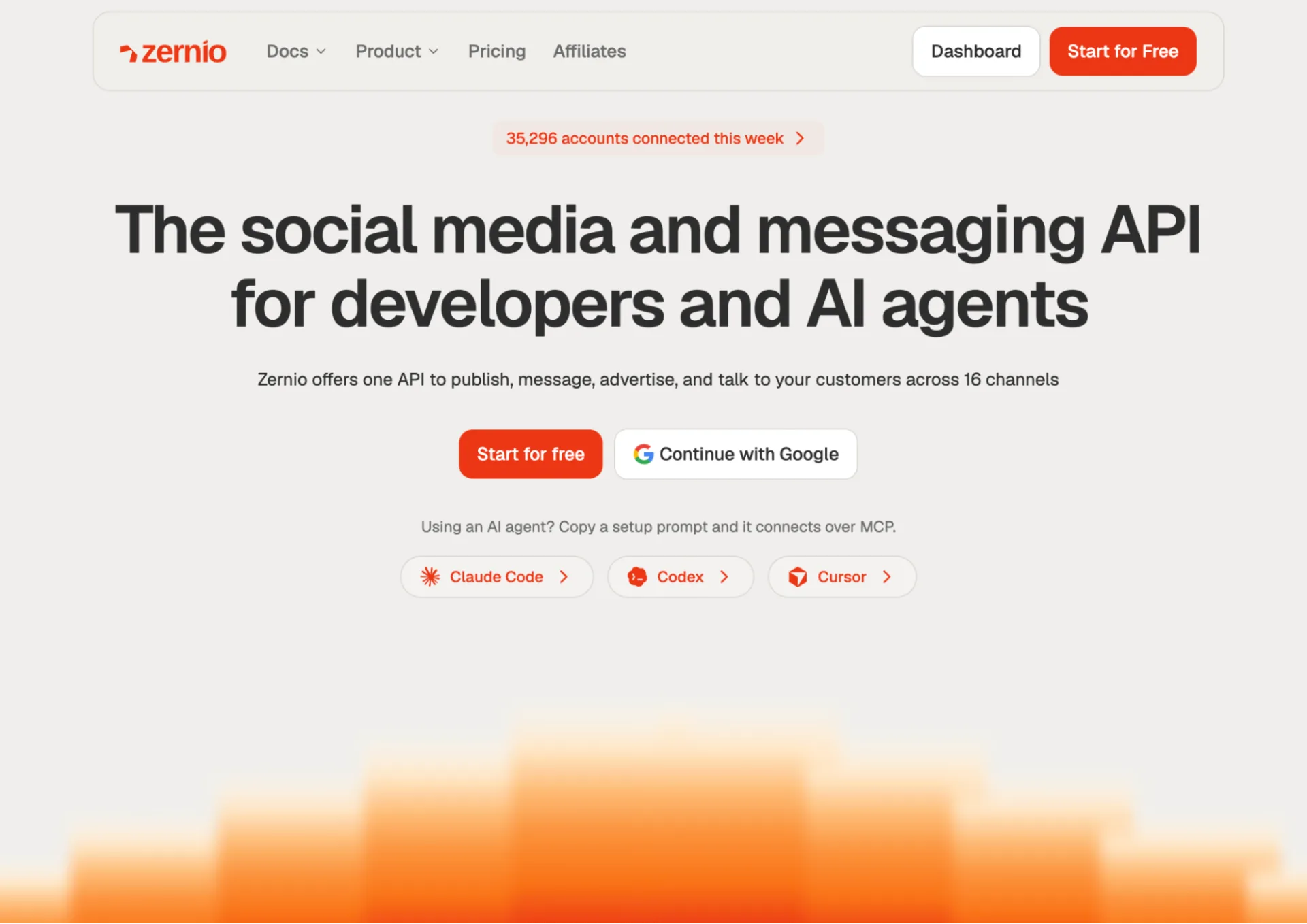
Zernio is a unified social media API built for automation, connecting you to 16+ platforms through a single integration. Beyond publishing, it lets you run social ads, track analytics, reply to comments and mentions, and manage direct messages. That makes it a good choice for teams that want to automate their social media or add social features to their own products.
With Zernio’s MCP server, AI agents like Claude or OpenAI’s models can run social media for you. An agent can write and schedule posts, see what performed well, and then reply to comments based on what it learns. Since Zernio also covers WhatsApp, SMS, and voice, the same agent can reach people on both social and messaging channels.
Zernio works with each platform’s official API, so it stays reliable for products and AI agents that handle a lot of activity. It fits SaaS products that embed social publishing, agencies offering multi-tenant social media reporting to clients, and developers running agent-driven workflows. If nobody on the team writes code, a dashboard-first tool from this list will get you further.
3. Taplio
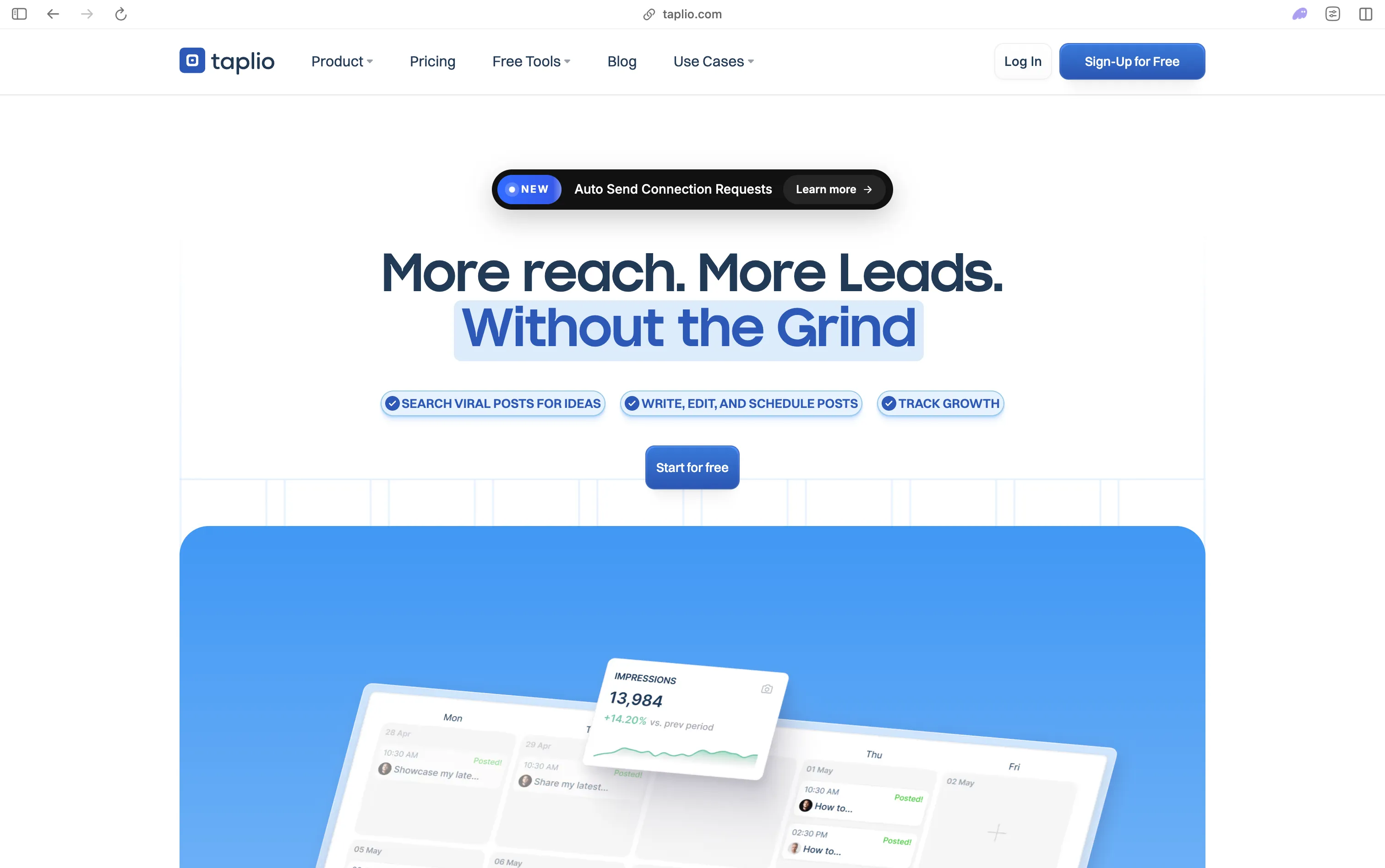
Taplio is built for LinkedIn-centric growth and gives a strong blend of content automation and lead-oriented workflows. It combines AI-assisted post writing with scheduling, engagement support, and lead conversion capabilities for people who primarily operate on LinkedIn.
What makes it practical is that the writing and scheduling workflow is tightly connected to engagement and relationship building. Instead of treating social posting and lead generation as separate tools, Taplio keeps them in one stack. For solo operators and GTM teams running founder-led or expert-led content, that usually improves consistency.
During trials, verify how well it supports your actual weekly cadence. The key question is not whether it can generate posts, but whether it can help you keep publishing quality, respond to the right people, and move conversations into business outcomes.
4. MagicPost

MagicPost is a LinkedIn-focused platform that combines AI-assisted writing, scheduling, analytics, and engagement workflows in one place. A notable difference from many similar tools is its LinkedIn-verified API positioning and emphasis on official, compliant connections rather than unofficial workarounds.
As of May 2026, MagicPost highlights style-aware post generation, scheduling (including comments), post-performance analytics, and engagement lists for prospects or collaborators. The platform also emphasizes an inspiration layer with large post datasets, which can help teams move faster from idea to publish-ready draft.
MagicPost is usually strongest for teams that operate heavily on LinkedIn and want one environment for writing plus distribution plus post-ops. If your automation plan spans multiple social networks equally, you will often pair it with a broader scheduler.
5. AuthoredUp
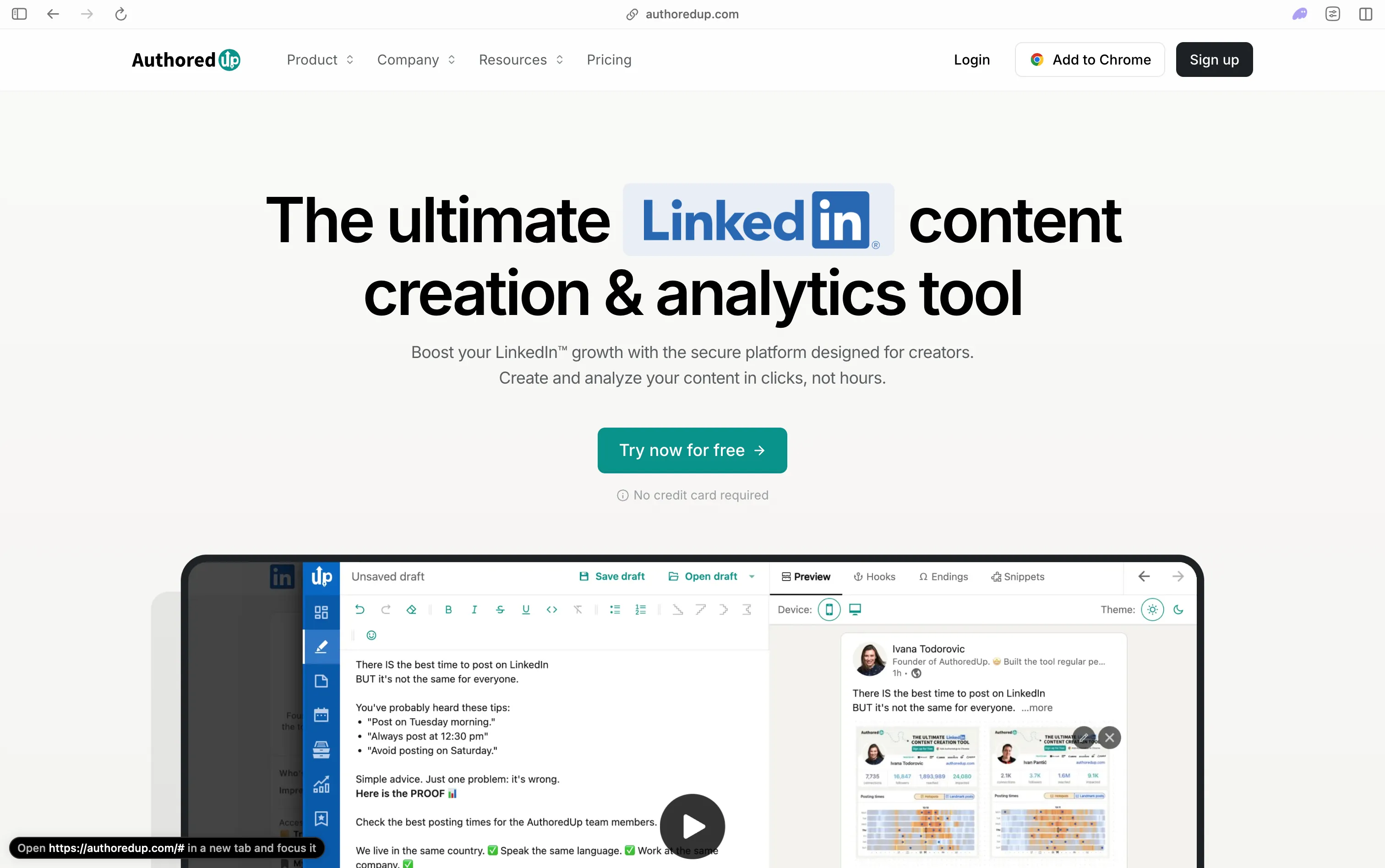
AuthoredUp is an all-in-one LinkedIn content creation and analytics workspace. It is particularly useful for teams that need stronger editorial control, consistent formatting, and historical content analysis without adding a heavy enterprise stack.
Its core flow is editor + drafts + calendar + analytics + saved posts. As of May 2026, AuthoredUp also emphasizes security and privacy posture (including no cookie collection, GDPR positioning, and EU hosting), which can matter for teams evaluating account risk and data handling.
AuthoredUp is best when your challenge is publishing quality and consistency on LinkedIn rather than outbound automation at scale. It can sit alongside outreach-focused tools if you want separate systems for content quality and lead motion.
6. PerfectPost
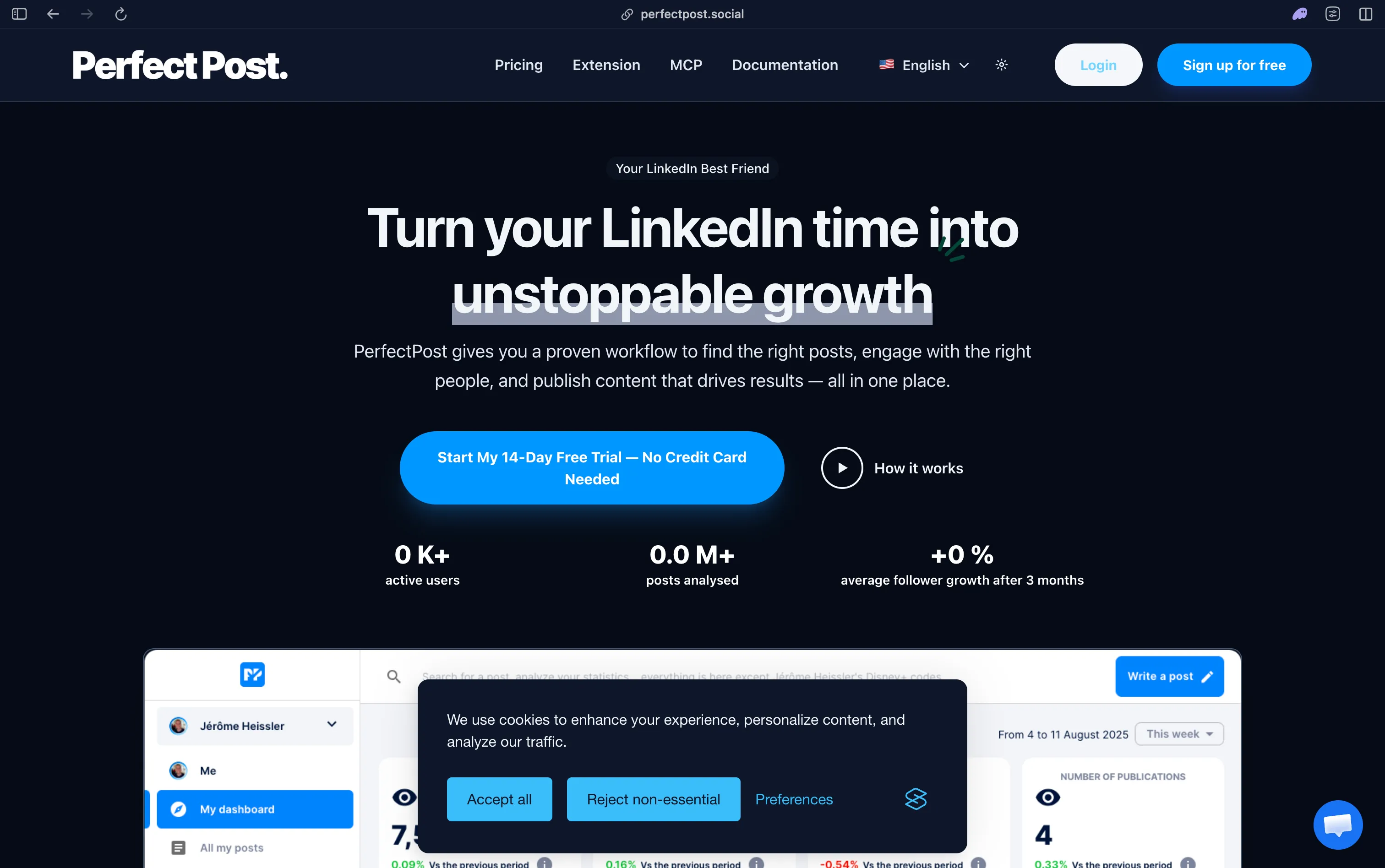
PerfectPost frames itself as a LinkedIn growth workflow rather than just a scheduler. Its model combines discovery, engagement, and publishing in a daily loop so users spend less time scrolling and more time acting on high-signal interactions.
As of May 2026, PerfectPost highlights custom feeds, a top-commenter view, unreplied-comment tracking, scheduling, analytics, and a writing assistant, including support through its browser extension directly inside LinkedIn. For creators and founder-led teams, this can make day-to-day execution much tighter.
PerfectPost is a strong fit if your growth strategy depends on comment-level engagement and consistent publishing loops. It is less of a broad multi-channel suite and more of a LinkedIn operating console.
7. Predis.ai
Predis.ai is a strong option for teams that want AI-driven content production and auto-posting in one place. Its scheduler workflow is positioned around automating both creation and publishing, which is useful for teams that struggle to keep a consistent content calendar.
As of May 2026, Predis highlights automated posting flows where you configure preferred timing and cadence, then let the system generate and publish. For lean teams managing multiple accounts, this can remove a large amount of repetitive execution work.
The tradeoff is creative quality control. Predis can speed up throughput significantly, but it still needs brand constraints and review logic so output stays specific to your audience and does not flatten into generic social copy.
8. Ocoya
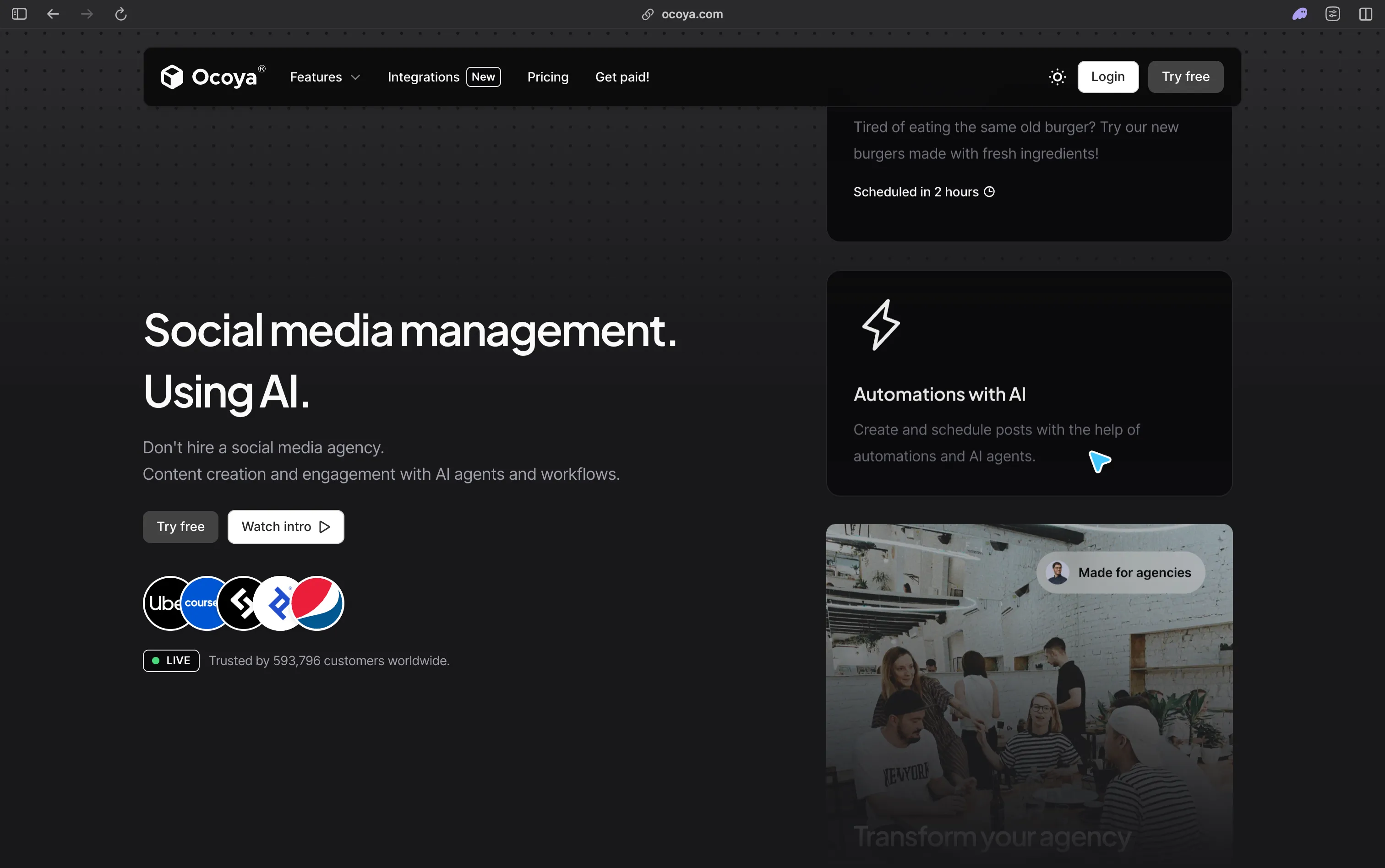
Ocoya positions itself as an AI-powered social operations platform with automation workflows. A notable differentiator is its trigger-based automation model, where recurring schedules, RSS events, or ecommerce updates can trigger post generation and publishing.
Its product pages also describe AI agents for content creation and automation. That makes Ocoya useful for teams that want rule-based operational flows instead of one-off post drafting. If your social operations include repeatable patterns, like “new item added,” “new blog live,” or “daily category content,” this structure can save real time.
Ocoya is usually most effective when someone on the team owns automation design. Without a clear workflow design, even capable automation features can become noisy or over-automated.
9. Hootsuite (OwlyWriter AI)
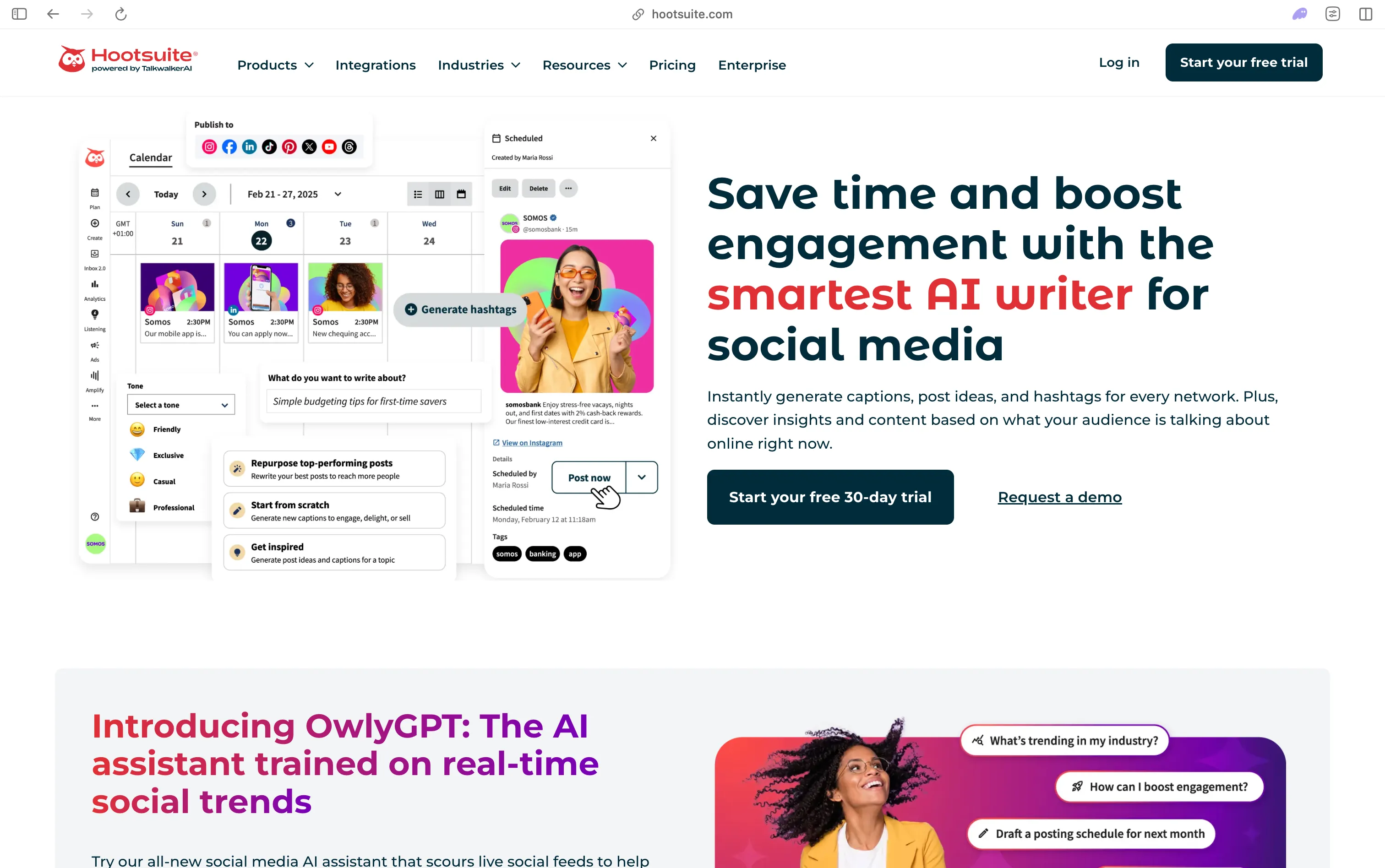
Hootsuite OwlyWriter AI extends Hootsuite’s established social management stack with AI writing support. The core value is not just generation of captions and hashtags, but integrating AI generation inside planning and multi-channel social operations.
As of May 2026, Hootsuite describes OwlyWriter AI and OwlyGPT as tools for faster ideation and trend-aware publishing guidance. For teams that already use Hootsuite for scheduling, approvals, and reporting, this is a practical way to add AI without changing your operating stack.
This is generally a strong fit for structured social teams with clear processes. If your needs are lightweight and you only need occasional AI drafting, it may be more platform than necessary.
10. Sprout Social AI

Sprout Social AI frames AI as a cross-platform capability that touches publishing, engagement, analytics, and listening. Sprout’s AI pages describe AI Assist for generating and refining copy, along with broader intelligence workflows tied to performance and decision support.
As of May 2026, Sprout also references Trellis as a strategic AI agent layer within its platform messaging. That is useful for enterprise teams that need AI support beyond drafting content, especially when social data needs to inform customer care, brand, and leadership reporting.
For teams with mature social operations, Sprout can function as a central social intelligence layer. For smaller teams, value depends on whether you will actually use the deeper analytics and listening workflows regularly.
Honorable Mention
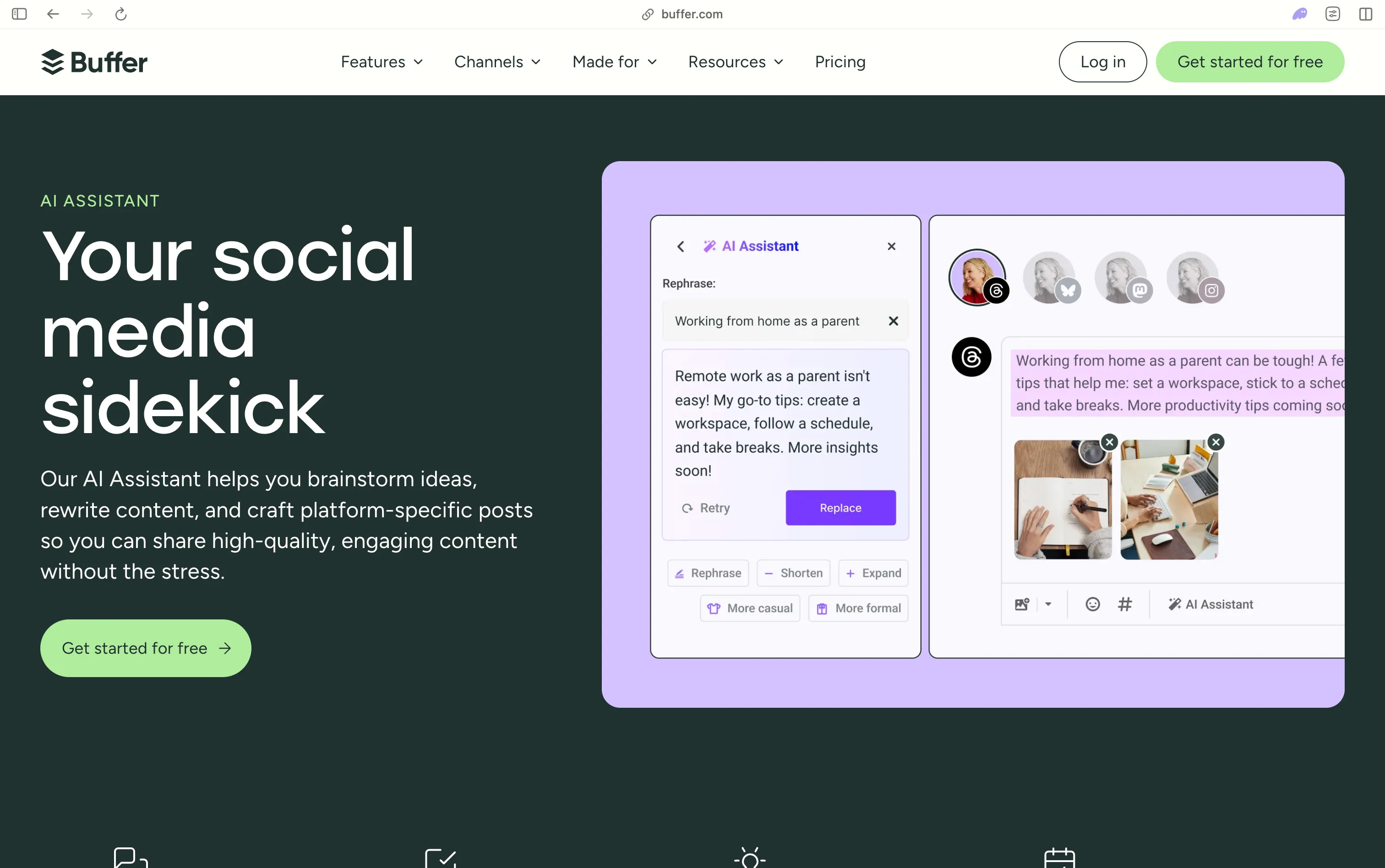
Buffer AI Assistant adds AI drafting - idea generation, rewrites, channel-friendly copy - to Buffer’s simple scheduling workflow, which suits smaller teams and independent builders who want consistent execution without operational overhead. It is assistant-style rather than an autonomous campaign agent, so if you need lead-scoring signals or outbound automation, pair it with one of the tools above.
How to Choose the Right Tool
Selection becomes simpler when you decide your bottleneck first. If your biggest problem is inconsistent posting, prioritize content creation plus scheduling automation. If your biggest problem is pipeline generation from social channels, prioritize tools that detect intent signals and automate outreach. If your biggest problem is cross-team governance, prioritize platforms with approvals, analytics, and workflow controls. If the bottleneck is a brand-new TikTok account that looks empty next to competitors, a starter package from Twicsy can add early social proof while your publishing tool builds organic reach.
In practice, many teams get better outcomes with a two-tool stack: one publishing engine and one outreach engine. That split is often more reliable than trying to force one platform to do every job. If you want broader context on agentic marketing stacks, this guide on AI agents for marketing is a useful companion. For content production workflows, AI tools for blog and content writing can help shape your editorial layer.
A Practical 90-Day Rollout
Most teams should avoid full automation on day one. Start with two to four weeks in approval mode so you can calibrate prompts, tone, and targeting. Then shift repeatable tasks into automation while keeping high-risk interactions human-reviewed.
In month two, keep a stable KPI set and review weekly. Focus on posting consistency, qualified reply rate, lead conversion quality, and time saved per week. In month three, scale only the workflows that keep producing stable, high-quality outcomes.
This phased model usually outperforms aggressive automation because it balances speed with control. AI social tools become much more useful when they are treated as operational systems, not one-click magic.
Common Mistakes to Avoid
The biggest mistake is automating before defining brand and compliance guardrails. Teams often launch fast, then spend weeks cleaning up tone issues and inconsistent messaging. Another common issue is measuring only vanity metrics like impressions while ignoring qualified conversations and pipeline contribution.
It is also common to overload one platform with conflicting goals. Publishing, support, lead outreach, and analytics each have different requirements. A cleaner architecture is to map each workflow to the best-fitting tool and connect them through process, not force-fit.
Conclusion
The best AI social media automation tools in 2026 are not just “AI writers.” They are workflow systems that connect planning, content execution, engagement, and lead motion. For outbound-heavy teams, Gojiberry and Taplio are strong starting points. For developers and agent builders, Zernio turns the whole stack into one API and an MCP server. For LinkedIn operating depth, MagicPost, AuthoredUp, and PerfectPost add strong workflow options. For multi-channel publishing automation, Predis.ai and Ocoya are practical choices. For larger social operations, Hootsuite and Sprout provide deeper operational coverage, while Buffer remains a clean option for teams that want simplicity.
Pick the tool based on your current bottleneck, run a controlled 90-day rollout, and optimize for consistent execution quality rather than feature count.